business

Dangote Refinery’s IPO closes with investors from 120 countries
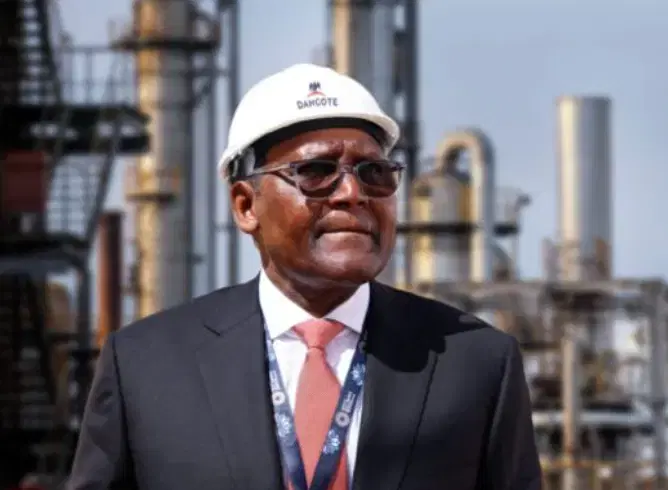
Dangote Refinery’s IPO closes with investors from 120 countries

A Nigerian oil refinery owned by Africa’s richest man Aliko Dangote has closed the continent’s biggest initial public share offering, claiming to have raised funds from investors in 120 countries. The IPO for the Lagos-based Dangote Petroleum Refinery was initially due to close on October 13 but was extended by two weeks to allow more Africans to participate.

A Nigerian oil refinery owned by Africa’s richest man Aliko Dangote has closed the continent’s biggest initial public share offering, claiming to have raised funds from investors in 120 countries. The IPO for the Lagos-based Dangote Petroleum Refinery was initially due to close on October 13 but was extended by two weeks to allow more Africans to participate.

The company did not disclose how much money was potentially raised by the offering, after saying its target was $1.6 billion. But Aliko Dangote said earlier this month that it had exceeded that goal by “more than three, four times”. “This is a historic achievement for Africa. It shows what is possible when we believe in our continent, work together and invest in our shared future,” he said in a statement late Tuesday.

The massive refinery has a capacity of 700,000 barrels per day and aims to double its output to 1.4 million barrels per day, potentially making it the world’s largest refinery, surpassing the Jamnagar refinery in India. Investors from all 54 African countries and five other continents participated in the offering, the company said. “Investor applications spanning 120 countries demonstrate the extraordinary international interest in our business and the confidence that investors are placing in the future of this refinery,” Aliko Dangote said “The opportunity to own a stake in a major African industrial enterprise has reached investors across every African country and all six inhabited continents,” he added.

In July, the refinery secured $2.5 billion in investment from private investors. Last month, the company broke ground on a planned $16 billion refinery on Kenya’s Lamu island, with a projected capacity of 700,000 barrels a day. Africa currently imports more than 70 percent of its refined fuel, according to an Africa Finance Corporation (AFC) report in April.

  • refinery
  • dangote
  • investor
  • country
  • ipo
  • africa
  • continent
  • aliko

Summaries and tags are generated automatically. Stay informed with VidiaNews.

Related news

Dangote challenges Ghana to tap into West African market of 450 million people, boost local production
business

Dangote challenges Ghana to tap into West African market of 450 million people, boost local production

Nigerian business magnate Aliko Dangote has urged Ghana to look beyond its domestic market and position itself to exploit the vast commercial opportunities across West Africa, saying the country has access to a regional market of about 450 million people. Addressing participants at the maiden Invest in Ghana Summit on Monday, November 16, Mr Dangote urged Ghanaian entrepreneurs and investors to adopt a broader business outlook by considering the entire West African subregion as a potential market.

Read →
One-quarter of my family were born in Ghana – Dangote
business

One-quarter of my family were born in Ghana – Dangote

Africa’s richest man, Aliko Dangote, has revealed a deep family connection to Ghana, disclosing that about one-quarter of his family members were born in the country. “One-quarter of my family were born here,” he told participants at the maiden Invest Ghana Summit in Accra on Monday, November 16, explaining that the connection extended to his father’s elder brother and other members of the family.

Read →
Mahama calls on local and foreign investors to tap into US$10bn New Economy Programme
business

Mahama calls on local and foreign investors to tap into US$10bn New Economy Programme

President John Mahama has urged local and international investors to take advantage of Ghana’s US$10 billion New Economy Programme, which is expected to mobilise investments across eight priority sectors between 2027 and 2030. He made the appeal at the maiden Invest Ghana Summit 2026 in Accra on Monday, November 16, where he highlighted the private sector’s role in driving manufacturing, creating jobs and transforming the economy.

Read →
Dangote plans sugar investment in Ghana, targets nearly 50,000 jobs
business

Dangote plans sugar investment in Ghana, targets nearly 50,000 jobs

African business magnate Aliko Dangote has announced plans to partner with the Ghanaian government to invest in sugar production, a project he says could create nearly 50,000 jobs. President John Mahama, in his address at the summit, said the Dangote Group’s planned investments, including the proposed sugar project in the Bono East Region, demonstrate how African businesses can expand across borders.

Read →
Ghana showcases carbon market leadership, urges African unity on critical minerals at COP31
business

Ghana showcases carbon market leadership, urges African unity on critical minerals at COP31

Ghana’s leadership of AGN Ghana’s role in the climate negotiations has also attracted attention, with the country chairing the African Group of Negotiators (AGN) for the first time in the 31-year history of the United Nations Framework Convention on Climate Change (UNFCCC). The AGN is chaired by Nana Dr. Antwi-Boasiako Amoah, a climate negotiator who has spent much of his career advancing Africa’s interests in international climate negotiations and has trained more than 300 Ghanaians in the field over the years.

Read →
business

Mahama urges investors to guarantee markets for farmers to boost production

President John Dramani Mahama has called on private investors to establish dependable markets for agricultural produce, saying guaranteed buyers would encourage farmers to increase production. Speaking at the maiden Invest Ghana Summit in Accra on Monday, November 16, 2026, President Mahama urged investors to complement government efforts by establishing processing and storage facilities and committing to purchase crops from local farmers.

Read →