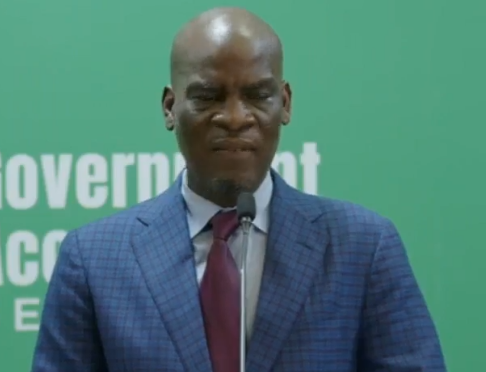
Ghana must not confuse access to AI tools with readiness for AI-powered education – KNUST lecturer

Coordinator of AI Courses at the Kwame Nkrumah University of Science and Technology (KNUST), Prof. Eric Appau Asante, is advocating for the establishment of practical national and institutional guidelines to regulate the use of AI in education. Prof. Eric Appau Asante was speaking on the topic “AI in Teacher Education: Navigating Innovation and Implementation” at the 17th Congregation of Wesley College of Education.
Coordinator of AI Courses at the Kwame Nkrumah University of Science and Technology (KNUST), Prof. Eric Appau Asante, is advocating for the establishment of practical national and institutional guidelines to regulate the use of AI in education. This he says will help avoid poorly governed technologies becoming embedded in teaching and learning practices.
He warned that AI integration could deepen existing inequalities if well-connected urban schools benefit more than rural institutions with limited resources. Prof. Eric Appau Asante was speaking on the topic “AI in Teacher Education: Navigating Innovation and Implementation” at the 17th Congregation of Wesley College of Education. He admonished educational authorities to ensure that AI-generated educational content reflects Ghana’s curriculum, local languages, cultural experiences and the teaching materials available to schools.
The Coordinator of AI Courses at KNUST said access to AI technology alone would not address the fundamental challenges confronting Ghana’s education sector. “AI cannot repair a classroom roof, provide electricity where none exists or replace a teacher who has not been recruited,” he said, cautioning against adopting technologies without considering the realities of schools across the country.
Prof. Asante challenged Wesley College of Education to build on its tradition of intellectual and character formation by becoming a model for responsible, classroom-centred AI integration. He cited the European Union’s AI Act, which classifies certain AI applications in education, including some systems used for admissions, assessment and placement, as high-risk because errors and bias could affect learners’ futures.
He called on colleges of education, the Ghana Tertiary Education Commission, the National Teaching Council, curriculum authorities, school leaders and policymakers to make AI literacy an essential component of teacher preparation rather than an occasional training activity. “Let us train teachers who can use modern tools without surrendering educational judgement.
AI in Ghanaian education should be measured by improvements in learners’ opportunities rather than the number of technological tools introduced into schools. ”A nation that equips its classrooms with AI but neglects its teachers is not transforming education; it is merely digitising its weaknesses,” he said. Principal of Wesley College of Education, Dr.
Kennedy Ameyaw Baah, said teachers are expected to be innovative and capable of using the technology to benefit learners and prepare them to compete in an increasingly globalised education environment. Principal of Wesley College of Education, Dr. Kennedy Ameyaw Baah “Teachers are expected to be innovative and they have the command to use it to benefit the learners.
AI is not a human but the human factor of Ai must be fully utilized to make lessons more useful. And prepare themselves to be competitive in the global world as far as teaching is concerned,” he said.
- education
- ghana
- teacher
- knust
- technology
- school
- college
- access