FG approves East, West super grids to raise transmission capacity to 19,000MW
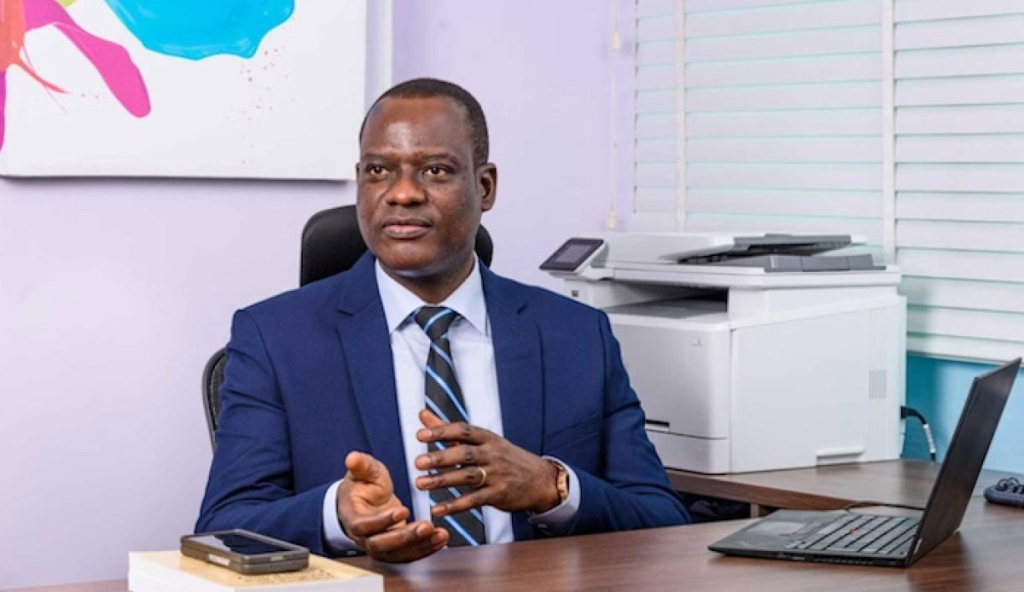
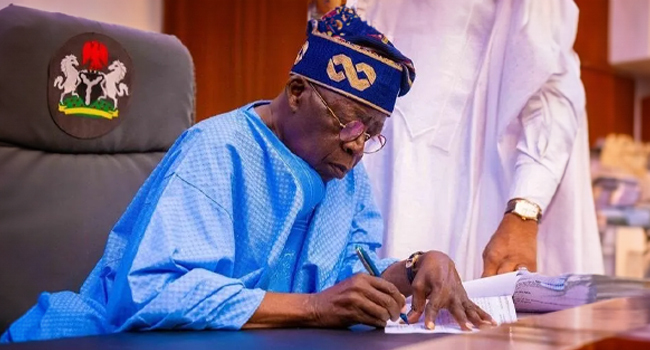
By Johnbosco Agbakwuru The Federal Government on Wednesday said it has approved the commencement of procurement for the proposed East and West Super Grids as part of efforts to strengthen the national electricity network and raise transmission capacity from about 5,000 megawatts to 19,000MW within two years. The Minister of Power, Joseph Tegbe, disclosed this while briefing State House correspondents at the end of the Federal Executive Council, FEC, meeting presided over by President Bola Tinubu, at the Council Chamber, Presidential Villa, Abuja.
By Johnbosco Agbakwuru The Federal Government on Wednesday said it has approved the commencement of procurement for the proposed East and West Super Grids as part of efforts to strengthen the national electricity network and raise transmission capacity from about 5,000 megawatts to 19,000MW within two years. The Minister of Power, Joseph Tegbe, disclosed this while briefing State House correspondents at the end of the Federal Executive Council, FEC, meeting presided over by President Bola Tinubu, at the Council Chamber, Presidential Villa, Abuja. The Minister explained that the projects would improve grid resilience and enable the country to evacuate more electricity to consumers.
“The East and West Super Grids are not projects for one part of the country,” Tegbe said. “They cut across the north and south of Nigeria, strengthening the backbone that must carry power from where it is generated to where it is needed.” The initiative is designed to address one of the sector’s central contradictions: Nigeria has more than 13,000MW of available generation capacity, but its transmission network can reliably wheel only about 5,000MW.
Tegbe said the super grids would improve resilience, reduce grid instability and allow more electricity to reach homes, businesses and industries. “The target is simple,” he said. “We want a grid that can evacuate the power we already have, not one that leaves generation stranded while consumers remain in darkness.” The Minister explained that the corridors would strengthen transmission links from Sokoto through Abuja and other locations into parts of southern Nigeria.
Beyond the super grids, the council approved three immediate interventions for Abuja and the Lagos axis, two of the country’s most important electricity demand centres. The first is a 33kV double-circuit underground and overhead line connected to the Katampe Transmission Substation, a major hub serving the North-Central region. The second covers the design, manufacture and supply of three 300MVA, 330/132/33kV transformers for the Ikeja West Transmission Substation, a critical node supplying Lagos.
The third will reconstruct and upgrade the 35.6-kilometre Itumola–Mapasin–Shagamu 132kV single-circuit line into a double-circuit line to serve rising demand along the Lagos–Shagamu corridor. “These are not glamorous projects, but they are the projects that determine whether power actually gets to the consumer,” Tegbe said. He added that the high-capacity transformers would have to be manufactured abroad because Nigeria does not yet have the domestic capacity to produce equipment of that specification.
“Some companies have started assembling transformers locally, but these large units require specialised manufacturing,” he said. “They can take between three and six months to produce, and global demand is rising because of artificial intelligence and data centres.” The ministry has also begun a nationwide technical audit of electricity infrastructure, dividing the country into three major energy zones: Lagos and its industrial corridor, Abuja–Kaduna–Kano, and Enugu–Onitsha–Benin.
Tegbe said the audit, ongoing for four weeks, would identify ageing and weak assets that require replacement or rehabilitation. “We will no longer spend money on the wrong projects,” he said. “The audit will show us exactly where the system is failing and where investment will deliver measurable impact.” The government is prioritising the Lagos–Ogun, Benin–Edo–Port Harcourt and Abuja–Kaduna–Kano corridors, with the Lagos–Ogun corridor alone accounting for about half of national energy demand.
On sector liquidity, Tegbe disclosed that the Federal Government had paid N1.23 trillion of the N3.3 trillion owed to gas suppliers and other power-sector stakeholders. He said the outstanding liabilities had constrained gas supply to generation companies and weakened confidence across the electricity value chain. “We have paid N1.23 trillion, and we intend to finish the job,” Tegbe said.
“But we must also stop new debts from accumulating.” The payment was made through bonds under the Presidential Power Sector Debt Reduction Programme, which is intended to improve liquidity for generation companies, support gas supply and restore investor confidence. Tegbe said the government was also reviewing the electricity market structure to strengthen payment discipline and reduce the risk of fresh arrears.
Stranded equipment ordered cleared The President has also directed the Ministry of Power, Nigerian Ports Authority and Nigeria Customs Service to clear more than 300 containers of stranded electricity equipment at the nation’s ports. Tegbe described the backlog as unacceptable, noting that some containers had reportedly remained uncleared for between 14 and 20 years.
“It is unacceptable that equipment meant to strengthen the grid has been sitting at the ports for years,” he said. “The President has directed that this must be resolved.” He attributed the delays
- transmission
- capacity
- east
- grid
- west
- tegbe
- lagos
- electricity