I set up a free school for Afghan girls – and the Taliban blindfolded me and broke my nose and jaw
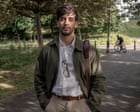
When Basir Arian was summoned to the Taliban headquarters, he knew he had to go. After the Taliban regained control of Afghanistan in August 2021, he had set up an online English study programme for girls when they were banned from attending school.
When Basir Arian was summoned to the Taliban headquarters, he knew he had to go. To defy them meant death. The torture left him devastated and sure he had to leave the country
‘I knew that sooner or later, they would come for me,” says Basir Arian. After the Taliban regained control of Afghanistan in August 2021, he had set up an online English study programme for girls when they were banned from attending school. In May 2022, he was eating lunch in the western city of Herat, when he got a call from an unfamiliar local number. A Talib official told Arian to come to the intelligence directorate within 20 minutes and to bring his phone.
“I’ll never forget that moment,” he says. “If you disobey this order, they will kill you. You have to try not to make them angry.” He told a friend where he was going, and they hurriedly discussed what to do if he didn’t return.
Taliban fighters searched him at the gate. Inside, there was a huge courtyard with military vehicles. Armed Taliban with long beards and dusty slippers were everywhere; even the men sitting behind desks had guns. Arian tried to stay calm. He finds it very hard to talk about this part, but wants people to know what happened.
He was told to sit in a hallway, where he was left waiting for a few hours. Then a tall, bald young Talib called him into an office. Here, a senior official played a WhatsApp voice message in which Arian encouraged some of the students not to lose hope, to motivate them. He accused Arian of working with infidels, being a puppet of the west and “an apostate”. He insulted his appearance. Then he spoke to the tall Talib, saying: “Let’s teach him.”
The tall young man blindfolded Arian and led him through a long hallway, down about two floors and into a basement room. He tied Arian’s hands. Arian could hear that two or three others were there. They spoke in Pashto: “His excellency says we must teach him a lesson.” They called him “an infidel”, and “a dog”. Something hard struck his nose and jaw – he realised it was the butt of a rifle – and he was kicked until he lost consciousness.
He came to, lying in a lot of blood. One of his fingers was broken, his upper body was beaten and his nose and jaw were badly injured. He asked to have his blindfold removed and his hands untied, which a different man did. He was in a small and very dirty cell.
Arian was born in 1997, in rural Afghanistan, near the border with Iran, into a community already broken by the Soviet invasion in 1979 and the civil war that erupted after it left in 1989. His father – a tailor – had a talent for maths, but only had a few years of primary education and wanted something better for his son. “My dreams began because of my father’s belief in me,” says Arian.
He remembers the excitement of walking with his cousins to the village’s first school, on the day it opened in 2003. There were no buildings, just tents, which – like the books, pencils, even the biscuits they were given at break – were all provided by the United Nations Children’s Fund.
There were landmines buried for miles across this dry, sandy region. The wind carried dust – some days, they could barely see a metre in front of their faces. Every few weeks a schoolmate gathering firewood or a mother fetching water would step on a mine and lose a leg or an arm, or sometimes, says Arian: “There was nothing left to save.”
There was not enough rainfall to grow much, although people kept trying. When he was about 10, for the first time, Arian saw a rose that someone had brought from the city. Drinking water came from a spring, and Arian walked for miles with his father and their donkey to fetch it. Once, they saw the distant shape of an aeroplane in the sky, and Arian’s father pointed upwards and said to his young son: “One day, you’ll travel in one of those.”
His family were poor but, unusually, their home had books, which Arian’s father ordered from Iran or brought from the city. Arian read Robinson Crusoe and The Little Prince, and his father introduced him to classical Persian poetry. He passed every exam with top marks, but people laughed at his father’s belief in education, and thought it unrealistic. By the time he was 15, Arian was the only student left in his class.
In 2012, he left his village to continue his schooling in Herat. His new classroom had walls, desks and chairs, and better trained teachers, but he worried about being teased for his country accent. Two years later, he was the first person from his area to be admitted to the engineering faculty at Herat University. “My parents were overjoyed,” he says. The family moved so that his siblings and cousins could keep studying as well.
When he started university, Arian was skinny and fragile, and he began going to the gym. “The gym was my therapy,” he says. He read hungrily, to try to understand the situation in his country. He noticed newer versions of “political Islam”, which were “hostile towards women”. He went to poetry readings, took part in debates and spoke on local television about social issues, corruption and human rights. He became well known locally, and started to get threats from various religious groups. “I was not alone,” he says, but “part of a network of brave men and women.”
In 2017, he graduated and was keen to help rebuild the country. The following year, he was in a taxi in Kabul, looking for work, when a suicide bomber exploded his device 100 metres away. The blast wave caused a cloud of dust, smoke and body parts to hit the car windows and the smell was terrible. Arian’s ears were ringing as the taxi driver reversed away from the explosion. He was deeply shocked and it dawned on him how very hard it was to respond with logic to that sort of violence. “All of a sudden, you can be wiped out,” he says.
In 2019, Arian was elected as a youth representative to the Loya Jirga, a traditional assembly of political, community and religious leaders called upon at critical points in Afghanistan’s history to debate issues of national importance. Here, he saw the division and mistrust between urban professionals with smartphones and men from remote rural areas with very traditional dress and beliefs. By the time he took part in a second Loya Jirga in 2020, the country was on the verge of collapse. The US had withdrawn most of its troops: Arian says he could guess “the end of this story”.
More people were coming to the city, displaced by fighting and the climate crisis, and Arian decided to study for a master’s in urban planning over the border in Iran. He was home on a visit in August 2021, when Afghanistan finally fell to the Taliban. Arian felt that the world had abandoned them. It was like watching a building collapse, he says, or “like an emotional breakdown”. His mother cried a lot, because she had lived through the first Taliban era (which had ended in 2001, after the US invasion). Arian and his friends stayed awake all night, in shock, exchanging messages and going through their social media accounts, hiding content that put them at risk.
Women stopped being seen in public. The city was flooded with Taliban fighters, roaring around on motorbikes or crammed into military vehicles they had captured, celebrating with flags and songs. It was surreal and frightening: many had never been to a city before, and wanted to try ice-cream and pizza, but Arian knew they could kill without hesitation. His friends exchanged hushed news of raids, revenge killings and disappearances.
Arian’s sister was in secondary school. A few weeks later, the driver of the vehicle that normally collected her from the end of the road said that girls were no longer allowed. Arian saw her standing in her uniform with her schoolbag, crying. She wanted to become a doctor.
Something inside him “exploded” and he decided to act. He made contact on LinkedIn with an American teacher and film-maker, and they came up with a plan for a free online English school. Arian registered hundreds of Afghan girls as students, and the American teacher recruited 23 volunteer English-language teachers from around the world. Some classes were held in the middle of the night, because of the different time zones.
In May 2022, Arian had to return to Afghanistan to renew his visa. It was during this visit that he received the call from the Talib official to come to the intelligence directorate. After he awoke in the cell, he was given bread and water, and was told he could pray. He objected, saying that in Islam it is forbidden to pray with blood on your clothes. He couldn’t sleep, thinking about his mother, suffering from his injuries, and worrying that his face would be disfigured. Before dawn, he was taken to a washroom and again told to pray, which he did. When he touched his face, it was in spasm.
In the morning, he was once again blindfolded, and taken back up to the same office as before, where he was forced to sign a statement saying that he was sorry, and warned not to talk about it, or he would be killed. He got his phone, was released, and took a tuk-tuk to the hospital.
An X-ray showed that his nose was broken in four places and his jaw was broken. The doctor had to wait a few weeks for Arian’s face to heal a little before he could operate on his jaw. After that, he had surgery on his nose, before returning to Iran as soon as he could.
He didn’t want “to let the girls down”, so he tried to keep the online classes going with the help of a volunteer, but stopped any new recruitment. His face healed, but he was “mentally devastated”, and struggled to recover. “It was just not fair. I couldn’t forgive them,” he says. After about a month, he was able to return to the gym, which helped him unwind. He finished his dissertation and graduated.
He wasn’t allowed to work in Iran and was on the verge of homelessness when he applied for a Chevening scholarship – a prestigious, fully funded chance to study for a one-year master’s degree in the UK. It was a long, complex and competitive process, followed by a two-hour visa interview. Against the odds, he won a place to study international development at the Institute of Development Studies based at the University of Sussex. He flew from Tehran in September 2024. As the plane descended towards Gatwick, he thought of his father’s prediction, years before. He was worried he might be stopped, but the woman at passport control smiled and said: “Welcome to the UK!”
His new life was not easy. Some international students on his course were hostile and made racist comments about Afghans. “I did not expect the sense of isolation I sometimes felt,” he says. Arian gave an interview on BBC Persian criticising the Taliban’s policies. When the course ended, most other students flew home, happy and proud, with gifts for their families. Arian had nowhere to go. Returning, especially after the BBC interview, could mean death. Applying for asylum was not something he chose freely, he says, but was “a decision that reality forced upon me”.
He arrived at the Home Office in Croydon with only a few pounds left. They asked lots of questions and told him to call a helpline and ask for urgent accommodation. He phoned again and again, but, he says: “They just said someone will call you, send this or that document.” He was homeless for six days, spending the nights in a park, and the days in Starbucks, where he charged his phone.
Then he was told to go to Croydon police station, where a taxi picked him up. Two women, one from China, the other from Hong Kong, were already in it. The driver told them they were heading for Liverpool. The only thing Arian knew about Liverpool was the football team.
He was taken to an asylum hotel, arriving late at night. The staff were kind, but it felt “like being in detention”. Everyone was traumatised and depressed. There was not enough food, and what was available was terrible quality – Arian lost weight, couldn’t sleep and felt very low. There were other Afghans “all fleeing from torture by the Taliban”, some because of their beliefs or ethnicity, some because they had served in the previous regime. There were also Iranians and refugees from other conflicts. Sometimes, they were warned to stay inside, because of the risk of protests. They got £1.30 a day and were not allowed to work.
Arian didn’t have a solicitor and knew little about the asylum process, but handled it himself, researching online. It was stressful, but swift compared with others in the hotel. He had an interview in October 2025, and a couple of days later got an email granting him refugee status. He left the hotel after two months.
After four months volunteering at a construction company to get UK experience, Arian got his first paid job as a civil engineer this summer. He is also translating into Farsi The Places in Between, a book about Afghanistan by Rory Stewart. He is grateful to be safe, and for the support he has had, and is excited about working and contributing to this country. He says the media are often “wrong and unjust” on these issues. “Migrants are the most defenceless group, and some politicians pin every problem on them. It’s not fair to reduce millions of people to a single threatening cliche.”
Arian rejects the idea that suffering “makes you stronger”, and says that some experiences just take things away from you. He has a sense of how fragile life can be, and doesn’t take stability for granted: “You start preparing yourself, almost automatically, for the worst.” He says his own life hasn’t given him confidence in a happy ending.
His father’s belief that a better future was possible, which he says he absorbed as a child, helped him to keep going. Reading and studying were always important to him, and he writes a lot of lists to instil a sense of order. Going to the gym has been crucial, especially when other parts of his life felt stuck or out of control. And “human connection really matters”, he says, including the random pleasant interactions which, in a new country, can make such a difference. All these things help him find the strength to move forward.
The impact of the torture stayed with him long after his physical injuries had healed. He says it was a feeling of violation, of having his dignity and control taken away: “Coming to terms with the fact that someone chose to do that was very difficult.” For him, recovery is about “finding a way to live with what happened, without allowing it to take over”.
He can’t forget the realities for so many people still in Afghanistan, especially women, without education, healthcare or other basic freedoms. In March, the UK government introduced a temporary ban on study visas for all Afghans, so, for now, the route he took is barred. It is a heavy burden – trying to use his voice and do the best he can with the opportunities he has, but also to be realistic about what he can’t change.
His message for other refugees is to “hold on to your human dignity”. He says it’s possible to “come out of even the deepest darkness, as I did”.
- taliban
- school
- arian
- girl
- nose
- jaw
- basir
- headquarters