lifestyle

Toblerone owner sues British vegan chocolate brand over chunky shape
Toblerone owner sues British vegan chocolate brand over chunky shape

Catherine’s Originals denies Mondelēz claims in London high court of ‘passing off’ and trademark infringement The owner of Toblerone is taking legal action against a tiny British vegan chocolate brand which it claims has been copying the Swiss chocolate bar’s famous chunky shape. Mondelēz has filed papers at the high court in London accusing Catherine’s Original’s of “passing off” and trademark infringement with its O’bar – a length of chocolate divided into segments each with a rounded semi-oval hump.

Catherine’s Originals denies Mondelēz claims in London high court of ‘passing off’ and trademark infringement

The owner of Toblerone is taking legal action against a tiny British vegan chocolate brand which it claims has been copying the Swiss chocolate bar’s famous chunky shape.

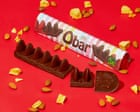
Mondelēz has filed papers at the high court in London accusing Catherine’s Original’s of “passing off” and trademark infringement with its O’bar – a length of chocolate divided into segments each with a rounded semi-oval hump.

The 200g bars cost £9.20 for a milk or plain variety, and as much as £10.55 for more exotic flavours such as pumpkin spice or cinnamon swirl. A standard milk chocolate Toblerone can be bought for £2.50.

Catherine’s Originals, founded by the then teenager Catherine Dodd in 2021, makes its chocolate in Walberton in SussexEngland and sells them via markets, online or by subscription.

Dodd said the shape of her bars reflected an O for Originals. “We stand firmly behind the product and identity we’ve created,” she said.

“We strongly disagree with the claim concerning O’bar and are working with our legal team to defend our position. Honestly, it’s fairly frightening for a small business we’ve put so much care and hard work into building. But being a smaller business does not mean being afraid to stand up for what we’ve created.”

The brand’s legal adviser, Stephen Lowry, at Brandsmiths added: “Our client disagrees with the claim and considers O’bar to have its own distinctive design and identity. We look forward to addressing the matter through the appropriate legal process.”

Mondelēz International, which also owns Britain’s Cadbury brand and Côte D’Or coffee as well as Toblerone, said: “The iconic Toblerone shape is one of the most recognised and distinctive product designs in the UK and across the world, and has been a hallmark of the brand since 1929.

“We have a responsibility to protect our trademarks and intellectual property, which we take seriously. We have attempted to resolve this matter constructively and directly with Catherine’s Originals over several months but unfortunately have been unable to reach an agreement. We cannot comment further on ongoing legal matters.”

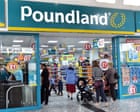
The latest battle over Toblerone comes after budget chain Poundland was forced to delay the launch of its Twin Peaks bar in 2017, which had two humps rather than the single peaks of Toblerone, after a legal warning from Mondelēz.

The bar eventually relaunched after Poundland modified the colour of the packaging and the shape of the bar and is still on sale today.

  • chocolate
  • owner
  • vegan
  • brand
  • chunky
  • shape
  • catherine
  • mondelēz

Summaries and tags are generated automatically. Stay informed with VidiaNews.

Related news

Why do we measure root ginger in ‘thumbs’ and centimetres rather than weight?
lifestyle

Why do we measure root ginger in ‘thumbs’ and centimetres rather than weight?

In other words, if Nick were to use a smidge more (or less) ginger than Cloake in, say, her dal, it’s unlikely to make or break it. However, Nick is right in that ginger does vary hugely in shape, Cloake says: “If it was a very thick piece, or it wasn’t thumb-shaped, I’d cut it so the cumulative flesh of the ginger was roughly the same as the cumulative flesh of a thumb.

Read →
Investors turn on Google owner Alphabet after profit miss, ad slowdown and high spending
business

Investors turn on Google owner Alphabet after profit miss, ad slowdown and high spending

Net profit slid 25% from a year earlier to $26.2bn, well short of expectations, though revenue rose to $127.6bn Shares in Google parent Alphabet fell more than 10% in after-hours trading Wednesday, erasing tens of billions of dollars in stock market value from the $4tn tech giant. The company had reported lower-than-expected profit and a slowdown in its advertising business while it maintained big spending on AI.

Read →
Russell Brand tells trial he had sex obsession but consent is ‘non-negotiable’
crime

Russell Brand tells trial he had sex obsession but consent is ‘non-negotiable’

Former comedian, in court on rape and sexual assault charges, denies setting goal to sleep with 5,000 women Russell Brand has told a court he had an obsession with sex as a younger man but denied setting himself a “goal” to sleep with 5,000 women. The former comedian, 51, said as he gave evidence in his rape trial that he had never forced himself on a woman, telling jurors consent was “non-negotiable” and “more important than sex itself”.

Read →
Business secretary writes to Poundland owner as administration fears build
business

Business secretary writes to Poundland owner as administration fears build

The business secretary has written to the owner of Poundland amid fears that the cut-price retailer could collapse into administration, threatening to overshadow John Healey’s budget. Sources said that Gordon Brothers, the US investment firm that bought the 600-store Poundland chain for £1 last summer, looks set to appoint administrators to the struggling retailer.

Read →
Russell Brand gives evidence in rape and sexual assault trial – latest updates
crime

Russell Brand gives evidence in rape and sexual assault trial – latest updates

Brand, 51, has been charged with three counts of rape, three counts of sexual assault and one count of attempted indecent assault Winter is asking Brand about the first alleged complainant, a woman who alleged she was raped by the comedian after meeting him on the fringes of the Labour party conference in Bournemouth in 1999. Brand told the court she had invited him to her hotel room, and that he “thought at the bare minimum it’s better than sleeping in shared accommodation” with his team, and that he “hoped and thought that there was a possibility of sex”.

Read →