How to stop the US-Israel war on Iran

Arab states must reject Israeli hegemony and build a regional security framework independent of Washington.
The war that Israel and the United States launched against Iran on February 28 is in a lull, not at an end. Major combat has paused, diplomacy has stalled and both sides are preparing for the next round. To understand why the fighting will soon resume, we need to understand the motivations of the two governments that started it. Neither of them wants peace. Israel’s leadership seeks domination over the Middle East, and the United States seeks to preserve its domination over the world. Simply to state these aims is to underscore that both governments are operating in a world of delusion.
Israel’s political leadership is consumed by the belief that Israel’s survival depends on its military supremacy over the Arab world and on the permanent subjugation or elimination of the Palestinian people. This belief is a form of collective madness, yet it is the doctrine that governs Israeli policy. Israel’s leaders cannot accept that peace is within reach. In the Arab Peace Initiative of 2002, the Arab states offered Israel full normalisation in return for a Palestinian state on the 1967 borders, and that offer still stands. Peace cannot be built on genocide in Gaza or on hatred of the Palestinian people and the drive to remove them from their land. Yet that is the path Prime Minister Benjamin Netanyahu has chosen, and he now campaigns on it openly, with his “national religious” allies, including Itamar Ben-Gvir and Bezalel Smotrich, who twist religion in the service of hatred and killing.
The United States is consumed by its declining power. Iran has been a target for more than 70 years. In 1953, the CIA and British intelligence overthrew Iran’s elected prime minister, Mohammad Mossadegh, after he nationalised Iran’s oil. The United States then installed the shah and backed his police state until the Iranian people overthrew it in 1979. The US has never forgiven Iran for escaping from US domination. The US backed Saddam Hussein’s deadly war against Iran in the 1980s, and followed with four decades of economic warfare, covert operations, cyberattacks and assassinations. Trump tore up the 2015 nuclear agreement in 2018, bombed Iran’s nuclear sites in June 2025, and then, in February of this year, joined Israel in open war, killing Iran’s supreme leader in the opening strikes.
Washington’s fixation on Iran is in the service of American hegemony. In The Grand Chessboard (1997), Zbigniew Brzezinski named Iran one of five “geopolitical pivots,” states that matter less for their own power than for where they sit. Iran commands the Gulf and the Strait of Hormuz. Brzezinski wrote that an “antihegemonic” coalition of China, Russia and Iran could emerge “only if the United States is shortsighted enough to antagonize China and Iran simultaneously.” Well, yes, Washington has been that shortsighted and reckless.
The signs that the war will restart are not hidden. This week, War Secretary Pete Hegseth visited Israel to discuss renewed joint strikes, and Israeli sources report that the plans target Iran’s petrochemical facilities and nuclear sites. The White House has promised that the United States will not attack Iran before the November 3 midterm elections, which is another way of announcing a timetable for war. The US naval blockade of Iran’s ports has passed its 100th day. Trump rejected Iran’s proposal for a seven-day ceasefire in September, even though Tehran says the offer remains on the table.
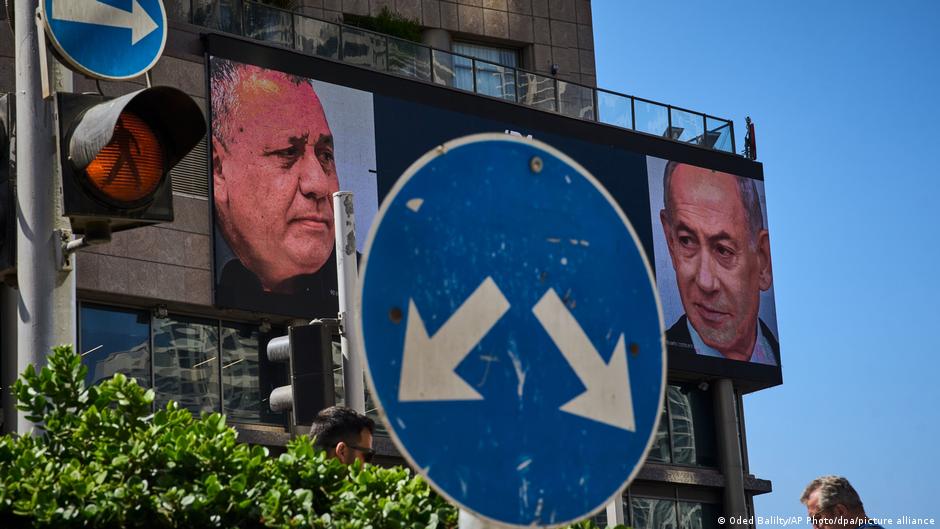
Israel’s October 27 election adds fuel to the fire. On October 18, Trump endorsed Netanyahu, saying the United States would “finish the job” against Iran only with Netanyahu in charge. On October 21, at a rally in Dimona (home to the reactor where Israel secretly built its own nuclear arsenal), Netanyahu declared that the only way to end the Iranian threat is to overthrow the regime and said he had issued that directive to the army, Mossad and the security services.
Iran has understandably drawn its own conclusions. Its commanders have announced a new offensive doctrine that includes preemptive strikes and attacks on bases in neighbouring countries used for operations against Iran, and they warn that renewed attacks would bring a global energy crisis. Attacks on shipping in the Strait of Hormuz reached a new peak this month.
This is the reality that the Arab world, especially the Gulf countries, now faces. The US bases across the Gulf did not bring security in this war. They turned their host nations into targets. The US-Israeli strategy of divide and conquer, which cast Iran as the region’s permanent enemy and invited the Arab states to shelter under American power while accepting Israeli hegemony, has brought war to the region, economic loss to the Gulf, and mass killings in Palestine and Lebanon.
The only way to stop this madness is for the Arab world to tell the United States that enough is enough. The Arab states should declare that they will never accept Israeli hegemony, that there must be a sovereign State of Palestine and that the region’s security will come from regional cooperation rather than from Washington. The solution could be two states, as in the Arab Peace Initiative, or one binational democratic state, or a confederation. What matters is that Israeli Jews and Palestinian Arabs, each about eight million people, live in peace, safety and self-determination. What is not possible is the perpetuation of Israel’s brutal apartheid state.
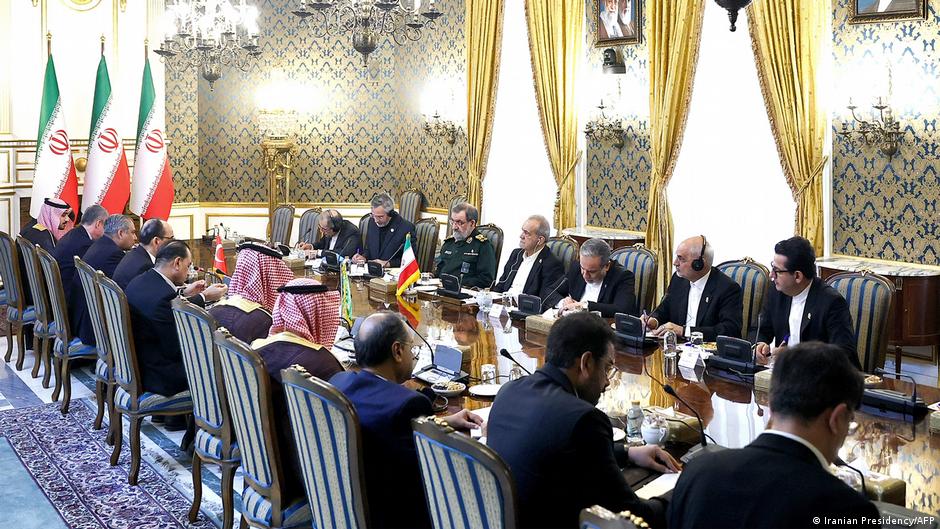
The beginnings are visible. Qatar has called for a regional dialogue among the Gulf Cooperation Council states, Turkiye and Pakistan, and Qatar, Pakistan and Oman have kept the channels of mediation with Tehran open throughout the war. These efforts should grow into a standing regional security framework that includes Iran, the Gulf states, Egypt, Turkiye, Iraq and Pakistan, built on mutual non-aggression, freedom of navigation, and a zone free of nuclear weapons that must eventually include Israel.
The Arab states have far more leverage than they recognise. If Saudi Arabia, the United Arab Emirates, Qatar and their neighbours announced that their territory and airspace will not be used for another war on Iran, and that normalisation with Israel is off the table until a Palestinian state exists, the calculations in Washington and Tel Aviv would have to change quickly. And the American people, who hate the war on Iran and side with Palestine, would cheer.
The era of US-led divide and conquer, with Iran cast as the permanent enemy of the Arab world, is over, even if Washington and Tel Aviv refuse to admit it. The Arab states should say so openly now before the next round of war begins, and in doing so, open the way to a region that provides for its own security and peace.
The views expressed in this article are the authors’ own and do not necessarily reflect Al Jazeera’s editorial stance.
- war
- iran
- israel
- state
- hegemony
- security
- framework
- washington