The high drama of volcanic wines
Volcanic soils take many forms – ash, basalt, obsidian, pumice, tuff – and interact with climate, altitude, water availability, grape variety and farming to produce wines with a very particular sense of place. Often, they have little in common with each other; a deep, rich nerello mascalese from Mount Etna’s north side bears little comparison to a light, leathery listán negro from Tenerife, say.
Vines on volcanic soil are hard to grow and their grapes are hard-won, but it all combines to produce wines with a very particular sense of place
Good stories need jeopardy. Take The Princess Bride, one of my favourite films, which I recently introduced to my mildly terrified children. It’s a cult love story of high peril: Westley, believed dead, sets out to win back Buttercup (forced into marriage with another) on a quest involving pirates, duels, torture, a miracle and a battle of wits over a goblet of poisoned wine. There is struggle, magic and, ultimately, emotional reward. You’ll need to stay with me here: volcanic vines, too, tend to have a rocky journey, albeit with happy results for the drinker.
My ears perk up at the term “volcanic wine”, despite being less a style than a geological category. Volcanic soils take many forms – ash, basalt, obsidian, pumice, tuff – and interact with climate, altitude, water availability, grape variety and farming to produce wines with a very particular sense of place. Often, they have little in common with each other; a deep, rich nerello mascalese from Mount Etna’s north side bears little comparison to a light, leathery listán negro from Tenerife, say. And yet I’m sure there is something – perhaps it’s more a feeling than a taste – that I get from wines from volcanic terroirs. “It’s a hard thing to get across,” agrees importer Nic Rizzi of Modal Wines, “but they do have an extra tension.”
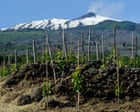
Tension is the word. Volcanic landscapes impose particular demands: on Etna, for instance, the vines’ roots have to negotiate thin, stony soil formed from lava flows and ashfall; on Santorini, vines grow in loose pumice, ash and volcanic sand, with little rainfall and fierce winds; while in the Canary Islands, the vines can grow in deep layers of black ash. These are difficult landscapes to farm, but, as we know, a rocky journey does make for a good story.
Rizzi imports wines made by Victoria Torres Pecis from La Palma in the Canaries, a place with “a majestic and wild energy”. There are black ash soils, vineyards above the cloud layer at 1,200m and ancient vines trained low to the ground to protect them from high winds. Farming here is labour-intensive; there are heatwaves and drought, and in 2021 a volcano erupted during harvest. “It takes a certain kind of person to put themselves through that pain and graft,” Rizzi says, “and that struggle comes through in the wine.” (Torres’ Las Machuqueras in today’s pick is a unicorn wine that sings deliciously of struggle.)
Not to get too woo-woo about it, but, for me, volcanic wines share an energy. Legends have been built around volcanoes; they hold a mystical place in our imaginations. But, in very real terms, wines from these terroirs are deeply complex – saline, herbal, savoury and mineral – with a sense of tension that keeps you coming back. Like all interesting characters, their charisma is hard won.
M&S Etna Rosato £14 Ocado, 12%. From high, lava-terraced vineyards comes this deeply hued, mineral rosé that goes with everything
Bodega Volcanes Carménère 2024 £12.50 Majestic, 14%. Energetic autumn red from one of Chile’s 3,000 volcanoes – expect dark fruit and umami.
De Falco Fiordilava Falanghina del Vesuvio 2024 £16 The Wine Society, 13%. The name means “flower of lava”, though it’s not floral, but rather a softly mineral falanghina from the slopes of Vesuvius.
Rampazzi Bianco Andrea Occhipinti 2025 £23.50 Sip Wines, 12%. Savoury and subtly smoky Tuscan beauty from above Europe’s oldest volcanic lake.
Cave Verdier-Logel Volcanique Gamay Rouge 2024 £20 Sourcing Table, 13.5%. At once juicy and peppery, this great-value Loire gamay hails from the volcanic basalt soils of the Massif Central foothills.
Victoria Torres Pecis Las Machuqueras 2016/19 £55 Modal Wines, 12.5%. Pricey, yes, but black ash soils, very old vines, harsh conditions and tiny yields combine to create a deeply textured and salty wine
- wine
- drama
- vine
- soil
- grape
- sense
- place
- story