Healey’s budget paves way for ‘brutal’ spending review next year, warns IFS
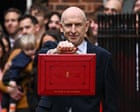
Thinktank says chancellor has given himself a mountain to climb after ducking big decisions in low-key speech John Healey has paved the way for a “brutal” spending review next year after his budget failed to cover a £28bn shortfall in the public finances needed to avoid a return to austerity, according to Britain’s leading tax and spending experts. A day after his address to the Commons, the Institute for Fiscal Studies (IFS) said the chancellor had left himself a mountain to climb by ducking several big decisions in his debut tax and spending statement.
Thinktank says chancellor has given himself a mountain to climb after ducking big decisions in low-key speech
John Healey has paved the way for a “brutal” spending review next year after his budget failed to cover a £28bn shortfall in the public finances needed to avoid a return to austerity, according to Britain’s leading tax and spending experts.
A day after his address to the Commons, the Institute for Fiscal Studies (IFS) said the chancellor had left himself a mountain to climb by ducking several big decisions in his debut tax and spending statement.
After his low-key speech designed with febrile bond markets in mind, the thinktank said Healey had left plans for overall departmental spending across the rest of the parliament broadly unchanged in cash terms.
But as the war in the Middle East fuels a surge in inflation – raising the cost of delivering public services – the chancellor has in effect pencilled in large cuts in the run-up to the next general election.
Helen Miller, the director of the IFS, said avoiding a return to austerity for unprotected government departments could require a £17bn top-up to the spending plans for 2030-31. That is before taking into account an additional £11bn needed to fund a commitment to increase defence spending to 3% of GDP.
“It effectively implies that some public services will see real-terms cuts in next year’s spending review,” she said.
With Labour having promised there would be no return to austerity, and as Andy Burnham’s government prepares for the next election, she said it appeared extremely unlikely that Healey would follow through with such cuts.
“A clear short-term risk with the chancellor’s choices is that next year – with low headroom and a spending review that looks pretty brutal for some departments – we see another season of damaging speculation about tax rises,” she said.
In his first budget as chancellor on Wednesday, Healey raised taxes on banks and landlords to fund relief for households being squeezed by the energy shock emanating from the Middle East war.
Against a highly uncertain global backdrop, Healey stuck to the government’s fiscal rules with £15bn of headroom – allowing a hit to the £23.6bn buffer left by his predecessor, Rachel Reeves, as the conflict drives up the UK government’s borrowing costs.
Faced with grim forecasts for household living standards and growth in the British economy, the IFS said it was a “reasonable choice” for the chancellor to allow for a modest reduction in headroom.
However, his deferral of some important decisions to next year’s spending review prompted the thinktank to criticise his plans for meeting the fiscal rules, because they in effect relied on him cutting public spending or announcing tax increases that he had yet to prepare the public for.
“My concern is not that it would be impossible to deliver the implied cuts to other services – that could be done. But I’m sceptical that this government would be willing to do it,” Miller said.
- spending
- healey
- budget
- way
- review
- ifs
- chancellor
- mountain


