Hold your nose: a £1.25bn subsidy for rich Rolls-Royce’s new engine had to happen
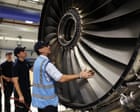
The chancellor’s budget giveaway is, unfortunately, a reflection of how life works in the global aerospace business It wasn’t a “nothing” budget for engine-maker Rolls-Royce. The company was handed £1.25bn from public coffers to part-fund the development of a next-generation engine for single-aisle commercial planes.
The chancellor’s budget giveaway is, unfortunately, a reflection of how life works in the global aerospace business
It wasn’t a “nothing” budget for engine-maker Rolls-Royce. The company was handed £1.25bn from public coffers to part-fund the development of a next-generation engine for single-aisle commercial planes.
The chancellor buried this giveaway in two short sentences in the stodgy middle of his speech, presumably because it would look too much like a case of corporate welfare just after he had grumbled about the £14bn extra we’ll be paying in debt interest this year.
And it’s not as if Rolls is on its uppers. The pride of Derby is the UK’s most radically improved major company of the past few years. It sits in fifth spot in the FTSE 100 index, sporting a market value of £105bn, and has enough spare cash to spend up to £9bn on share buy-backs this year.
But there had been an air of inevitability about this subsidy ever since the company’s chief executive, Tufan Erginbilgiç, talked earlier this year about how he would “appreciate” financial support from the government in developing the UltraFan engine. Appreciate? What he meant is that other governments would cough up if the UK didn’t.
That, unfortunately, is how life works in the global aerospace business. Subsidies are a down payment on the jobs and factories that can follow. Germany, reeling from the woes of its carmakers, would love to have a bigger slice of the hi-tech UltraFan action (and has a role in the gearboxes anyway). The US aerospace industry is a study in how generous defence contracts subsidise civil operations. Healey couldn’t ignore those facts of aerospace life.
What’s more, one can see how the possible long-term return on the £1.25bn could turn out very well. “The single biggest opportunity in aerospace over the next 50 years is to secure a UK engine position on next generation narrow body programmes,” said the government’s strategy document for advanced manufacturing. Aircraft engines are high-value products. About 80% would be exported, doing wonders for the national balance of payments. Projections of “tens of thousands of highly skilled jobs” eventually are credible.
The big “if” is that Rolls hasn’t yet got a slot on a narrow-body programme. The company exited that market a couple of decades ago; its civil aircraft side currently only supplies engines to the smaller wide-body long-haul market. Rolls needs to get on to either the Airbus or Boeing narrow-body programmes, and success or failure won’t be known until some time around 2030.
Thus the government is only contributing to a joint 10-year £2.5bn research and development programme, including a “demonstrator” engine to show off the gas turbine tech. There will be spillover benefits for defence capability but, ultimately, UltraFan needs to be on a civil project. It is a big bet – and Rolls, even if it wins, will need a corporate partner at a later stage.
The point, though, is that the UK government had to get behind the UK runner in this race. One trusts the guarantees on UK jobs and investment, beyond the 3,300 roles supported initially, will be written in triplicate in the final agreement. That must be a fundamental condition of support on this scale.
But this is an occasion to hold your nose. Rolls is plainly not a corporate pauper but, yes, it is justifiable to shove £1.25bn its way. Andy Burnham’s “reindustrialisation” talk would ring very hollow otherwise.
- engine
- nose
- subsidy
- rolls
- royce
- chancellor
- budget
- giveaway