Our disappearing currency denominations, by Adekunle Adekoya

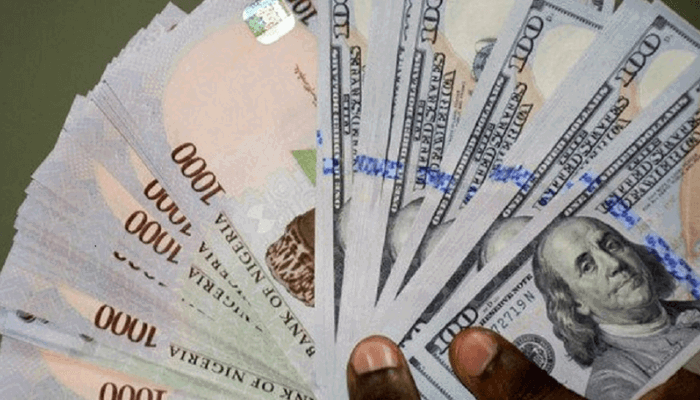
The Naira was initially denominated into N20, N10, N5, N1.00, 50 kobo, which were all paper denominations, and then we had 25 kobo, 10 kobo, 5 kobo, and one kobo denominations as coins. Now, three satchets of pure water are sold for N100, and if you want to buy just one, you pay N50.
MANY Nigerians may not know it, but one of the issues at the root of our current economic hardship is that certain denominations of our currency have become utterly worthless. For the younger generation who may not know, our currency was formerly denominated as pounds, shillings, and pence, since the colonial times till well after independence. Then, there were the £5, £1, 10/- (10 shillings), two and half shillings, one shilling, six pence, three pence, one penny and half-penny denominations.
From two shillings were coins. The two and half shillings coin was called a guinea. Twelve pence made one shilling. One penny and half-penny coins had holes in the centre, with a hexagram around it; all the coins bore the inscription “Federation of Nigeria:, with the image of the Queen of England engraved on them on the other side. We spent that money.
I remember that a loaf of bread, in 1970, the year the civil war ended, sold for two and half pence. A wrap of amala, or eba sold for one penny, and a cut of fish for the same amount. Life was easy. The little money that people had then went very far. Fast forward to 1973. To further strengthen our sovereignty, the pounds and shillings inherited from colonial authorities were jettisoned and the Naira was introduced, not long after Chief Obafemi Awolowo resigned his position as Federal Commissioner for Finance.
So, since then, we had Naira and Kobo. The Naira was initially denominated into N20, N10, N5, N1.00, 50 kobo, which were all paper denominations, and then we had 25 kobo, 10 kobo, 5 kobo, and one kobo denominations as coins. I do not think Nigerians born after 1999 have seen or used any of the coin denominations physically. Later, the N50, N100, N200, N500, and N1,000 denominations were added.
At a time, there was a bid to introduce the N5,000 note. It did not pass muster. It would seem that as larger denominations were added, smaller denominations lost value and disappeared. As a result, as smaller denominations disappeared, what they could be used to purchase simply upgraded to the next higher level. I remember very well that at owambe parties, people of the South-West who have the culture of spraying money during celebrations used mostly 50 kobo and N1.00 notes.
These days, N500 and N1,000 notes are being sprayed. Some even spray foreign currencies, particularly the US dollar To cut a long story short, by the turn of the century, all the coins have disappeared, being unable to purchase anything. When the pure water industry grew from inability of state governments to provide potable water, one satchet of pure water was being sold at N1.00.
Later, it became N2, and after, two for N5. Then, it became one pure water for N5 for a long time. Now, three satchets of pure water are sold for N100, and if you want to buy just one, you pay N50. One pure water satchet for N50!!! I recall that my school fees, as a boarding student at Remo Divisional High School, in Sagamu, Ogun State, was N50.77 for the first term of the 1973/74 session.
That N50.77 covered hostel accommodation and feeding, for three months, including textbooks and exercise books! I am recalling all these because the N50 note has almost disappeared. I can’t remember when last I saw one. It will soon be followed by the N100 note, and if things continue the same way, the N200 note will be next. And then, some smart Alec in the Central Bank will convince government to introduce the N5,000 and N10,000 notes.
Then we will be buying one satchet of pure water for N200, or three for N500!!!This is because these denominations can no longer buy anything. Even for beggars, giving the N10 or N5, or even the N50 note as alms is now impossible because these notes are nowhere to be seen. In any case, if you see them, they are worthless as they cannot be used to purchase anything.
They exist on paper as denominations, but play no role in the economy. The last time government paid attention to this aspect of our economy was during the Obasanjo years when Professor Charles Soludo was Governor of the Central Bank. Then, there was some effort at reviving the middle class, and a conscious bid to restore value to the lower denominations of our currency.
It will be recalled that it was during those years and well after Obasanjo had left government that many Nigerians resumed buying brand-new cars. Make no mistake about it, there is a connection, however unappreciated, between purchasing power of the lower currency denominations and local production. At the time when the 50k note was strong, we had Volkswagen of Nigeria and Peugeot Automobile of Nigeria.
We also had Michelin and Dunlop. We had Oluwa Glass, and Adebowale Electrical Industries. Kano was booming with industrial production, while Ibadan, Lagos, and Port Harcourt were exploding with commercial activities. The Naira was as strong as the dollar or pound sterling, if not stronger. Sadly, we let all these suffocate to death, lost the lower denominations, and our currency,
- denomination
- penny
- note
- currency
- shilling
- coin
- kobo
- water