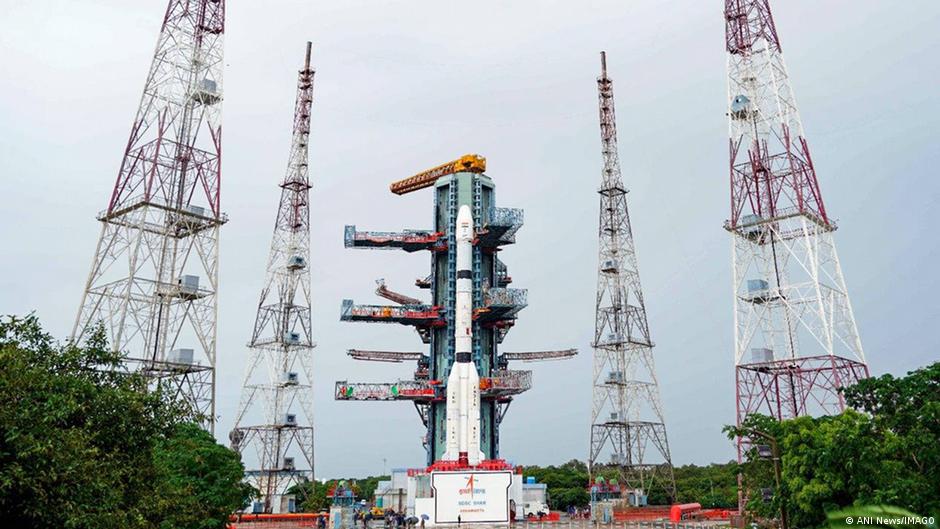
NVS-03 satellite launch successful: ISRO

The 2250 kg NVS-03 is the third satellite in the next-generation navigation satellite system envisaged for providing continuity of navigation services for the Indian Regional Navigation Satellite System series
ISRO's GSLV-F18 rocket carrying the second-generation navigation satellite NVS-03 lifts off from the Satish Dhawan Space Centre in Sriharikota, Andhra Pradesh.
The Geosynchronous Satellite Launch Vehicle (GSLV-F18) on Friday (October 30, 2026) successfully launched the NVS-03 satellite from the Satish Dhawan Space Centre in Sriharikota, according to the ISRO.
The GSLV-F18 with the NVS-03 satellite lifted off from the second launch pad of the spaceport and, 18 minutes later placed the satellite into the intended geosynchronous transfer orbit.
“The GSLV-F18 vehicle has successfully and precisely injected the NVS-03 satellite weighing 2250 kg in the intended elliptical orbit. Let me congratulate each and every team member of ISRO, industrial partners, academia for this outstanding accomplishment,” ISRO Chairman Dr. V. Narayanan said.
He added that the vehicle systems have performed as predicted and as expected.
The 2250 kg NVS-03 is the third satellite in the next-generation navigation satellite system envisaged for providing continuity of navigation services for the Indian Regional Navigation Satellite System (IRNSS) series or the Navigation with Indian Constellation (NavIC).
According to the ISRO, the satellite carries an indigenous atomic clock, along with procured atomic clocks.
“It also includes L1 signal in addition to existing L5/S signals with coverage over India landmass and a region extending 1,500 km around Indian geopolitical boundary,” the ISRO said.
NavIC is India’s independent regional navigation satellite system designed to provide accurate position, navigation, and Timing (PNT) services to users in India as well as the region extending about 1,500 km beyond the Indian landmass, which is its primary service area.
The successful launch of the NVS-03, which will have a mission life of 12 years, is expected to restore the functioning of the NavIC constellation, which has been weakened due to repeated failures of atomic clocks and the ISRO’s inability to place its previous replacement satellite, NVS-02, in its intended orbit.
It can be recalled that earlier this year, on March 13, the last functioning atomic clock aboard IRNSS-1F had stopped working.
The ISRO Chairman said that with the success of the mission, the NavIC constellation is restored to the minimum operational configuration with four satellites.
“Already three satellites are successfully working in orbit, with this satellite we will have four satellites and restore the PNT services of the country. As you know, the NavIC constellation is a strategic national asset that provides the nation independent access to PNT services. It is also used for civilian applications like real-time tracking of trains along with tracking of vehicles and shipping vessels. It is an important component of the One Nation One Time Project,” the ISRO Chairman said.
Friday’s (October 30, 2026) launch is only the third mission to be launched by ISRO in 2026, after the PSLV-C62 mission carrying the EOS-N1 Earth observation satellite on January 12, 2026, and the EOS-05 aboard the GSLV-F17 on September 4. While the PSLV-C62 mission was a failure, the GSLV-F17 mission was a success.
“This mission was accomplished with the least turnaround time of just 56 days between successive GSLV missions,” Dr. Narayanan said.
- satellite
- navigation
- launch
- isro
- system
- generation
- continuity
- service