FG deploys experts to Ogun over recurring gas emissions in schools
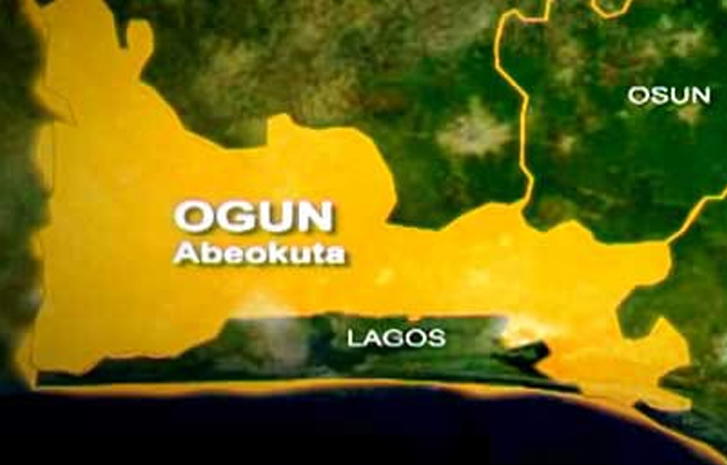
The Federal Government has deployed a specialised technical team to Ogun State to investigate recurring subsurface gas emissions that have triggered health concerns and disrupted academic activities in secondary schools across the Ijebu axis. Speaking at the briefing, the team leader and Assistant Director at the NUPRC, Prosper Okonedo, said the Commission had constituted the committee following an initial assessment conducted by the Ogun State Government.
By James Ogunnaike The Federal Government has deployed a specialised technical team to Ogun State to investigate recurring subsurface gas emissions that have triggered health concerns and disrupted academic activities in secondary schools across the Ijebu axis. The intervention, coordinated by the Nigerian Upstream Petroleum Regulatory Commission (NUPRC), is aimed at establishing the geological source of the emissions and recommending lasting solutions to the recurring incidents affecting schools and surrounding communities.
The deployment followed reports of localised gas seepages suspected to have caused oxygen depletion and breathing difficulties among students and other residents in the affected communities. Speaking during a joint press briefing and commencement of a site assessment in Ijebu Ode on Saturday, the Federal Government’s Ad-hoc Committee said preliminary indications suggested that the emissions could be associated with natural subsurface geological processes rather than leaks from petroleum pipelines.
The team, however, stressed the need for further technical investigations to establish the actual source and nature of the emissions. Speaking at the briefing, the team leader and Assistant Director at the NUPRC, Prosper Okonedo, said the Commission had constituted the committee following an initial assessment conducted by the Ogun State Government.
Okonedo explained that the Commission’s Chief Executive, Mrs Oritsemeyawa Eyesan, directed the deployment of experts from its Lagos regional office to collaborate with the state government and investigate the situation. According to him, “about two weeks ago, the Commission Chief Executive of NUPRC, Mrs. Oritsemeyawa Eyesan, advised that we set up an ad-hoc committee from the Lagos regional office to come to the state because the state government had conducted an initial assessment and submitted their report.” He disclosed that the Commission had also been investigating similar incidents in other parts of the country, including communities in Rivers and Delta states.
“Presently, we have a study group known as the Epe Study Group. They are looking into similar issues in a village community in Rivers State, and there is one right now in Delta State where we have established that gas seepage is emanating from the subsurface. “However, for this state, we cannot really say what it is right now. That is why we are here, and we are going to deploy to the site to see the situation for ourselves, even though the state government had reported seepages of gas affecting certain secondary schools in some communities,” he said.
Okonedo said the federal government was committed to working with the Ogun State government to address the situation and safeguard residents. “The government is there to ensure the welfare and well-being of the Nigerian people. If that is the paramount role of government, that is why we as a Commission have come to work with the state government to proffer solutions to whatever problem exists in this community.
“My team and I will do an assessment and come up with a report that will work well for the Nigerian people,” he added. Also speaking, the Ogun State Commissioner for Environment, Mr Ola Oresanya, described the recurring emissions as an emerging environmental challenge that requires coordinated intervention and technical expertise at the national level.
Oresanya said similar incidents had been reported in Rivers, Delta and Osun states, suggesting that the problem might extend beyond isolated communities in Ogun. “We have similar problems going on right now in Rivers, Delta, Osun, and here in Ogun State. Coincidentally for us in Ogun State, this is happening around schools. But we need to establish that what is happening around the region is similar to what we are witnessing here; it is not just a local problem,” he said.
The commissioner appealed to residents to remain calm while investigations continued, assuring them that the state government was working with relevant experts to determine the cause of the emissions. “All I want to say is that we don’t have any reason to panic. All we need to do is stay concerned, but please don’t panic. What we know and what we are bringing to the table is that the gas affecting our people is subsurface gas.
We’ve proved that over and over. “There is no gas pipeline at Owode in Ikenne, and there is no gas pipeline around Ijebu-Omu where these things are happening. It is coming from the upper crust. It is a natural occurrence, and what triggers it will be established,” Oresanya stated. He also ruled out any immediate plan to relocate residents of the affected communities, noting that the government was consulting global practices and examining appropriate public health management measures.
Meanwhile, Professor Philip Ikhiane, a Professor of Sedimentary Petroleum Geochemistry at Olabisi Onabanjo University (OOU), Ago-Iwoye, and leader of the Ogun State Technical Investigating Team, disclosed that pr
- ogun
- state
- government
- gas
- community
- emission
- commission
- school