FG issues Executive Order to end open defecation by 2030
By Gabriel Ewepu ABUJA — The Federal Government has unveiled a new Executive Order to accelerate Nigeria’s efforts to eliminate open defecation by 2030, with state and local governments urged to strengthen sanitation financing, accountability and community mobilisation. He disclosed that since the launch of the Clean Nigeria campaign in 2019, 185 of the country’s 774 local government areas had attained Open Defecation Free (ODF) status, while Jigawa and Katsina remained the only states certified as open defecation-free.
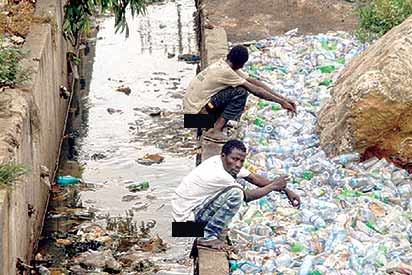
By Gabriel Ewepu ABUJA — The Federal Government has unveiled a new Executive Order to accelerate Nigeria’s efforts to eliminate open defecation by 2030, with state and local governments urged to strengthen sanitation financing, accountability and community mobilisation. The Open Defecation Free Nigeria by 2030 and Other Related Matters Order, 2025, was unveiled on Thursday during the commemoration of World Toilet Day and the seventh anniversary of the Clean Nigeria campaign in Abuja.
Vice President Kashim Shettima, represented by the Senior Special Assistant to the President on Delivery and Coordination in the Office of the Vice President, Akubo Adegbe, described the Executive Order as a decisive step towards translating government commitments into measurable sanitation outcomes. Shettima said the order marked a transition from fragmented interventions to stronger coordination, measurable results and sustainable national progress.
He disclosed that since the launch of the Clean Nigeria campaign in 2019, 185 of the country’s 774 local government areas had attained Open Defecation Free (ODF) status, while Jigawa and Katsina remained the only states certified as open defecation-free. While acknowledging the progress recorded, the Vice President said Nigeria still had considerable ground to cover, urging states yet to achieve ODF status to establish monthly and quarterly targets and make their progress publicly available.
He also warned against a reversal of gains in communities already certified as open defecation-free, stressing the need for sustained monitoring and accountability to protect existing achievements. According to him, achieving the 2030 target would require sustainable financing, reliable data, stronger institutions, effective implementation and continuous behavioural change.
Shettima called on state and local governments to take ownership of the campaign by allocating adequate resources and strengthening sanitation institutions. He also urged development partners, the private sector, traditional rulers, community leaders and civil society organisations to sustain their support for the initiative. The Vice President, who chairs the Steering Committee of the Clean Nigeria Project, reaffirmed the Federal Government’s commitment to working with subnational governments, adding that the National Economic Council would also be deployed to advance and sustain the national sanitation agenda.
Linking the campaign to this year’s World Toilet Day theme, “Sanitation and Gender Equality”, Shettima highlighted the disproportionate burden poor sanitation places on women and girls. He said inadequate access to safe and private sanitation facilities undermined their health, security, dignity, education and participation in economic and social activities.
He therefore called for inclusive policies and investments that address the sanitation needs of women, girls, persons with disabilities and other vulnerable groups. Meanwhile, the Minister of Water Resources and Sanitation, Joseph Utsev, said the Clean Nigeria campaign had evolved beyond public awareness and mobilisation into a national platform for policy coordination, institutional engagement, community participation and performance monitoring.
Utsev highlighted the revised Clean Nigeria Strategy 2025–2030, which is structured around six strategic pillars, as well as the newly introduced Clean Nigeria Real Time Monitoring and Information System, designed to improve data management, track implementation and strengthen accountability. Reflecting on the campaign’s seven-year journey, the minister identified five critical lessons, including the need to translate political commitment into adequate financing and practical action, prevent communities from relapsing into open defecation, strengthen community ownership, adopt a multi-sectoral approach and ensure reliable data informs planning and resource allocation.
Also speaking, the Minister of Youth Development, Ayodele Olawande, said his ministry was contributing to the campaign through youth mobilisation and community advocacy. He disclosed that more than 1,000 youth volunteers had been trained to promote sanitation awareness and behavioural change. Olawande said pilot interventions were ongoing in Bauchi, Kaduna, Benue, Ebonyi and Oyo states, adding that young people had an important role to play in promoting gender-responsive sanitation.
He specifically emphasised menstrual hygiene education, access to safe and private toilet facilities and the need to eliminate the stigma associated with menstruation. Goodwill messages were also delivered by the former Head of the Civil Service of the Federation, Didi Esther Walson-Jack, alongside representatives of civil society organisations, professional bodies and development partners, who reaffirmed the importance of collective action in achieving Nigeria’s 2030 open defecation elimination target.
- defecation
- order
- nigeria
- sanitation
- government
- executive
- community
- clean