Algal bloom killed more than 8,000 sharks
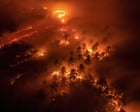
The algal bloom may have pushed some species to the edge of extinction, according to a new report looking at the impact on local sharks and rays.
After studying entries from citizen scientists across the state, a new report found more than 8,000 sharks and rays died during the toxic algal bloom.
Experts say it could be the largest mass mortality of its kind ever recorded.
Local divers and experts are hopeful some signs of recovery can be sustained.
By his count, David Muirhead has completed around 2,000 dives in South Australian waters.
Diving off Edithburgh Jetty during the early days of the algal bloom, he saw a creature he had never seen before.
"I thought, I have to take some pictures!" he said. "I only just had enough battery charge left."
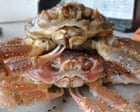
What he photographed was a pygmy thornback skate, a species so rare it has only been seen by a handful of people and usually only after being pulled up by fishing trawlers.
"I do feel sad because it was likely I was witnessing, perhaps, the end of one species," Mr Muirhead said.
The skate has a very small range, which is mostly confined to South Australian waters affected by the algal bloom.
It is a similar problem for the coastal stingaree, considered an endangered species by the International Union for the Conservation of Nature.
"For some of these species that have a naturally low abundance, or have a very restricted range that overlaps with the algal bloom, we could be looking at some level of extinction," said Charlie Huveneers, director of the Flinders University Marine and Coastal Research Consortium.
But neither the pygmy thornback skate nor the coastal stingaree are considered threatened species by the federal government, despite being among dozens of ray species impacted by the bloom.
A spokesperson for the environment department said any person can nominate a native species for assessment under the Environment Protection and Biodiversity Conservation Act.
"The 2026 assessment cycle included a conservation theme for "nominations that support the protection and recovery of species and ecological communities at risk from the impacts from the harmful algal bloom off the Coast of South Australia," they said.
"No nominations were received for the pygmy thornback skate or coastal stingaree.
"These assessment[s] require scientific evidence to support nomination; unfortunately there [are] insufficient data available, which has impeded our ability to assess population status, which is needed to nominate species for listing."
Earlier this year, the Great Southern Reef Foundation pulled together thousands of entries for citizen scientists during the bloom, recording dead animals that had washed ashore.
More than 8,200 dead sharks and rays were reported during the bloom.
Unreported deaths mean the true toll is likely much higher.
While most of the affected species have ranges that extend into areas unaffected by the bloom, the report warns that some local populations may have collapsed.
Around 4,500 southern fiddler rays, 850 Port Jackson sharks and 670 wobbegongs were reported dead.
Professor Huveneers said his own research is also painting a bleak picture for metropolitan populations of Port Jackson sharks and fiddler rays.
"Out of the more than 150 sharks and rays we tagged before the bloom, 12 months later none have returned," he said.
While David Muirhead said he was seeing other marine species bounce back, he remained concerned about local ray populations.
"I'm seeing a lot of recovery in many of the common bony fish species and marine invertebrates," he said.
"But I think I've only seen one ray since the bloom, swimming under the steps at Second Valley."
Professor Huveneers said if shark and ray populations come back, their return was likely to be slow.
"Broadly speaking, sharks and rays have a very low reproductive output," he said.
He said populations from areas unaffected by the bloom may move in.
"Hopefully people will start seeing sharks and rays again, but it might take a while to get to the numbers we used to have."
- bloom
- algal
- shark
- specie
- edge
- extinction
- report
- impact