Okonkwo urges education reform to drive Nigeria’s development
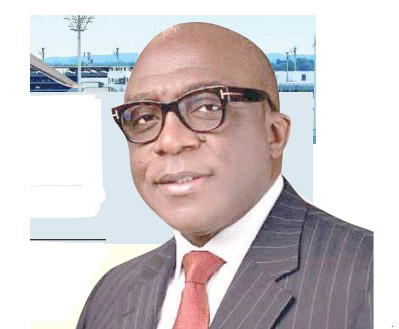
…Calls for stronger TVET, university-industry partnerships, research commercialisation Obiora Okonkwo, Executive Chairman of United Nigeria Airlines, has called for a fundamental reform of Nigeria’s education system to produce skilled, innovative and ethical graduates capable of driving national development. Okonkwo made the call while delivering the 14th convocation lecture of Afe Babalola University, Ado-Ekiti (ABUAD), on October 20, 2026.
…Calls for stronger TVET, university-industry partnerships, research commercialisation Obiora Okonkwo, Executive Chairman of United Nigeria Airlines, has called for a fundamental reform of Nigeria’s education system to produce skilled, innovative and ethical graduates capable of driving national development. Okonkwo made the call while delivering the 14th convocation lecture of Afe Babalola University, Ado-Ekiti (ABUAD), on October 20, 2026.
In the lecture titled, “Functional Education and the Nigerian Project: Strategic Human Capital Development for National Renewal,” he argued that Nigeria’s challenge was not whether its education system was functional, but whether it was adequately aligned with the country’s changing development needs. He said the demands of the 21st-century economy, driven by artificial intelligence, robotics, biotechnology, advanced manufacturing and other emerging technologies, required institutions to move beyond producing graduates with certificates to developing people with practical competencies.
According to him, universities and polytechnics must produce graduates with technical and professional expertise, problem-solving abilities, entrepreneurial skills, digital literacy and ethical leadership qualities. He warned that graduate unemployment, underemployment and skills mismatch reflected a disconnect between educational outcomes and national development priorities.
“The true purpose of higher education is not merely to prepare graduates to seek employment but to equip them to create knowledge, generate innovation, solve problems, establish enterprises, strengthen institutions and improve society,” he said. Okonkwo maintained that Nigeria’s greatest resource was not its oil, minerals or land, but the intelligence, creativity and productive capacity of its people.
He cited countries such as Singapore, South Korea, Japan and Finland as examples of nations that achieved significant economic transformation through sustained investment in education, research, technology and human capital development. The airline executive called for a shift from content-driven education to competency-based and outcome-oriented learning, saying the success of institutions should be measured by what their graduates could actually do, create and contribute to society.
He also advocated the revitalisation of Technical and Vocational Education and Training (TVET), as well as the restoration of the strategic relevance of polytechnic education. He said government investment in workshops, fabrication laboratories, engineering facilities, digital manufacturing technologies and modern equipment should be regarded as an investment in national productivity and industrial competitiveness.
The convocation lecturer further called for entrepreneurship, artificial intelligence and digital literacy to become foundational competencies across all academic disciplines. He urged stronger collaboration among universities, industries and government, noting that employers should participate in curriculum development, industrial training, research partnerships and graduate development.
On research and innovation, Okonkwo said universities and polytechnics must move beyond academic publications to developing patents, products, technologies and commercially viable enterprises. “Our institutions must move from publications to patents, from patents to products, and from products to prosperity,” he said. He also called for greater investment in innovation hubs, engineering workshops, fabrication centres, technology incubation parks and digital laboratories to support research and enterprise development.
On practical training, he cited the partnership between United Nigeria Airlines and ABUAD, under which about 20 final-year Aeronautical and Aerospace Engineering students would undertake structured industrial training with the airline annually under a renewable 10-year framework. He said the pioneer group had commenced a six-month hands-on programme at the airline’s engineering facility in Lagos, where they were receiving exposure to aircraft maintenance, avionics, safety procedures and professional aviation practices.
Okonkwo also stressed the importance of character formation, arguing that technical competence without integrity and moral responsibility could undermine sustainable development. He said universities had a responsibility to produce not only competent professionals but also trustworthy citizens, ethical leaders and responsible members of society. He identified integrity, discipline, patriotism, accountability, diligence, compassion and social responsibility as essential qualities that higher institutions must deliberately nurture.
The airline executive urged the government and regulatory agencies to shift from measuring educational quality largely through curriculum content and institutional inputs to assessing graduate capabilities and practical outcomes. He specifically called on the National Universities Commission
- education
- development
- nigeria
- okonkwo
- graduate
- university
- research
- technology