A Table for Fortune by William T Vollmann review – a hugely ambitious 3,000-page portrait of America’s decline
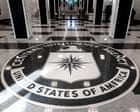
This insider’s history of the CIA explores the last 50 years of US foreign policy with granular detail and mordant humour The 250th year of the American experiment seems to invite a reckoning. Though the CIA has been fertile ground for many great American novelists – Don DeLillo, Norman Mailer – Vollmann is perhaps the first to represent the culture and daily activities of the agency in granular detail.
This insider’s history of the CIA explores the last 50 years of US foreign policy with granular detail and mordant humour
The 250th year of the American experiment seems to invite a reckoning. For a young country, the United States is overblessed – or burdened – with myths about its foundation and how the nation has conducted itself at home and abroad. William T Vollmann’s 3,000-page novel A Table for Fortune is an epic attempt, 15 years in the making, to engage with the US’s past and present at an institutional and a personal level. The four simultaneously published volumes offer both a family story and an insider’s history of the CIA, in order to show the consequences of the quest for liberty and the belief in American exceptionalism.
Vollmann’s previous novels have explored the ideological basis of American society, most notably those of the Seven Dreams series, published from 1990 to 2015, which depict the generally disastrous encounters between American settlers and Indigenous peoples. A Table for Fortune continues this project by investigating the last 50 years of US foreign policy, at the heart of which is 9/11, with the book “tracing the roots of that crime in one direction and its poisoned harvest in another”. Though the CIA has been fertile ground for many great American novelists – Don DeLillo, Norman Mailer – Vollmann is perhaps the first to represent the culture and daily activities of the agency in granular detail. His great gambit is to frame this as a dark workplace comedy of minor resentments, sexual tension and office banter. These sections are narrated by the institutional voice of the CIA itself in a relentlessly sardonic tone rife with acronyms, codenames and jargon rendered in multiple fonts. The mordant humour of the narrator, who regards all forms of death and suffering as “fun”, has a seductive quality that allows Vollmann to educate the reader about a broad sweep of geopolitical subjects ranging from the Angolan civil war to the interrogation methods of the Stasi, and in doing so chart the hypocrisies and double standards of the agency.
The central character of the novel is an analyst codenamed DAVE, recruited by the CIA in 1967 on account of his photographic memory. DAVE is lecherous, emotionally repressed, unhappily married, and a true believer in the fight against communism. His only true pleasure is learning secrets and imagining himself “mindwinging” over enemy territory. Hearing Simon and Garfunkel’s Bridge Over Troubled Water makes him “think of unwashed hippies masturbating”. He jokes that Radicals “like the hammer-and-sickle position, but only on red sheets”. Vollman’s general verdict on the CIA seems to be that it has gone from being terrible yet generally effective before 9/11, a sort of necessary evil, to becoming increasing morally compromised due to its greater propensity for assassination and torture, as well as more concerned with pleasing the executive branch than gathering accurate intel.
The inordinate length of the novel is justified by the amount of historical material it has to cover. As one of DAVE’s bosses says, “all we care about here is telling you the truth. The only way to tell it is detail by detail.” The novel’s recreation, on almost a day-to-day basis, of the US’s gradual ensnarement in global, unwinnable conflicts, combining the domestic and the political, resembles Uwe Johnson’s equally epic Anniversaries, which culminates in the Soviet occupation of Prague. There is a similar sense of watching a car crash in super-slow motion.
The third and fourth volumes contain the parallel narrative of DAVE’s son Matthew, who suffers from an unspecified cognitive deficit. Convinced of his inferiority, and bemused by the world, Matthew is unable to accept the social and political injustices his parents take for granted. Following the revelations of torture at Abu Ghraib, Matthew embarks on a quest to find the soul of America that he thinks of as “going straight”. Here the prose shifts from the cerebral, cynical register of the CIA sections to something more sensory and impressionistic. Matthew hitchhikes, rides freight trains, sleeps rough and does a variety of drugs. With the magpie sensibility of an autodidact, he tries to accumulate wisdom from books and people he encounters, and in the process develops a sort of Emersonian self-reliance.
In contrast to his father’s dependence on secondhand intelligence, Matthew knows the US from “walking, digging, building, hiding, loving and living there”. Vollmann offers an unvarnished portrait of homeless life in the US, but also allows Matthew to find community in the California delta in the kind of haven of stoners and affable dropouts that Thomas Pynchon once described as a “little parenthesis of light”. With the closing of this bracket of security, Matthew falls into a darkness that mirrors the US’s descent into the era of Trump, whom Vollmann calls “a vile amusement consonant with this particular stage of American decline”.
In the last volume the comedy becomes increasingly bitter. As an elderly DAVE moves around his home, he comes across a “basket filled with neatly rolled white towels, just in case somebody wanted to bleed to death”. A Table for Fortune offers a profoundly sorrowful diagnosis for the state of a semiquincentennial US apparently no closer to resolving the problem of how best to reconcile questions of individual freedom with the role of the state. While the book supplies a multiplicity of opinions on this vexed question, it offers no definitive answers. Where would be the fun in that?
- vollmann
- table
- fortune
- william
- page
- cia
- review
- portrait