Traffictech system will only operate on roads with speed limit notifications – NRSA

The National Road Safety Authority (NRSA) says the Traffictech system will, for now, only be deployed on roads where speed limits are clearly displayed, to avoid penalising motorists for the failure of authorities to provide the necessary road infrastructure. Mr Amaliba cited Boundary Road towards Mahama Road in Accra as an example of an area where the cameras would be used because speed limit signs were already in place.
The National Road Safety Authority (NRSA) says the Traffictech system will, for now, only be deployed on roads where speed limits are clearly displayed, to avoid penalising motorists for the failure of authorities to provide the necessary road infrastructure.
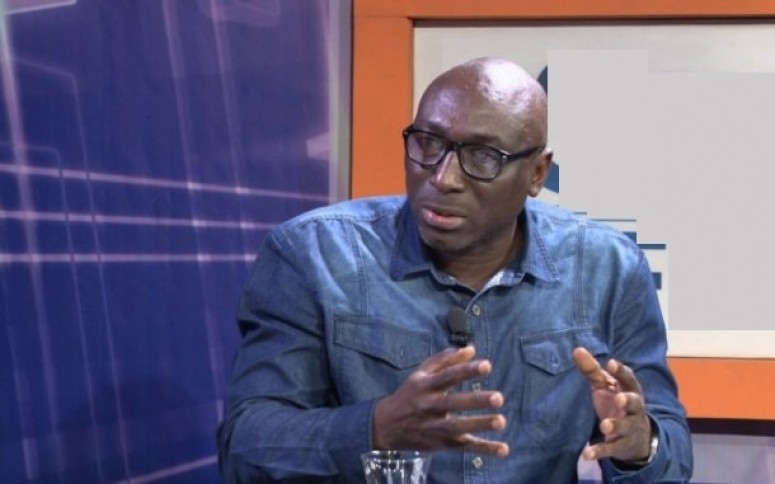
The Director-General of the NRSA, Abraham Amaliba, said the decision was intended to ensure fairness in the implementation of the digital traffic enforcement system, particularly in areas where road signs and other safety infrastructure were inadequate.
Speaking on Joy FM's Super Morning Show on Wednesday, November 4, during a discussion on Ghana's road safety blueprint, Mr Amaliba said it would be unfair to use modern technology to enforce traffic regulations on roads that lacked basic infrastructure.
"So we cannot use 21st-century digital policing to apply to 19th-century broken-down infrastructure. You know what that means. Our infrastructure is broken," he said.
He explained that although the country needed to embrace digital traffic enforcement, the cameras would initially be restricted to roads with clearly displayed speed limits.
"But we need to implement the digital Traffictech. So what we have agreed is that we'll deploy the cameras to only the routes or streets that have the road signs and speed limits because it's unfair to, as it were, punish a driver when you have not provided infrastructure," he stated.
According to him, the system would only be activated in areas where motorists had been properly informed of the applicable speed limits through road signs.
Mr Amaliba cited Boundary Road towards Mahama Road in Accra as an example of an area where the cameras would be used because speed limit signs were already in place.
"So, for instance, if you're on the Boundary Road, going up to the Mahama Road, you will see that there are traffic indicators, that there are speed limits there, 50 kilometres per hour. There, the cameras will catch you," he said.
He added that roads without the necessary speed limit signs would be excluded from the initial enforcement exercise until the required infrastructure was provided.
"But where we don't have the road infrastructure, I mean the signs, the cameras will not be used in those places," he explained.
"Our cameras are only on streets that have the speed limits," he added.
The NRSA Director-General stressed that motorists should not be punished for shortcomings on the part of the authorities responsible for providing road infrastructure.
"So it is only fair that we do not punish people for our own inadequacies."
Mr Amaliba also disclosed that the decision to restrict the cameras to roads with speed limit signs was discussed at a meeting involving key government officials, the police and operators within the transport sector.
He said the meeting, held on Tuesday, November 3, brought together the Minister for the Interior, the Minister for Local Government, the Minister for Transport, the Police Motor Traffic and Transport Department (MTTD), the NRSA and transport operators.
Clarifying who was involved in the agreement, he said the meeting was intended to ensure a common understanding of how the Traffictech system would be deployed.
"So there was a meeting yesterday [Tuesday]. That meeting brought together the Interior Minister, the Local Government Minister, the Transport Minister, the Police MTTD, myself and operators of our transport system," he said.
Mr Amaliba added that the restriction was not a new operational arrangement, explaining that the cameras had already been deployed in areas where speed limits were clearly indicated.
However, he admitted that the arrangement had not been adequately communicated to the public, leading to questions about how the system would operate.
"At that meeting, it was made clear, and if you ask ACP Obeng, that has been the modus operandi. It was not explained for people to know that the cameras are only deployed in areas where the speed limits exist," he said.
On whether the authorities had held earlier consultations to prepare for the implementation of the digital traffic enforcement system, Mr Amaliba said a dedicated Traffictech committee had been meeting regularly ahead of the rollout.
He explained that the committee had been responsible for the preparatory work leading to the implementation of the system.
"There's a Traffictech committee that meets, and before the rollout, this committee met regularly. And that committee is what did its work till this day, so we have the rollout," he said.
- speed
- limit
- road
- system
- nrsa
- infrastructure
- camera
- traffictech