Zelenskyy says 40 now confirmed dead after ‘insane’ Russian attack on school – Europe live
School in Komyshuvakha in the Zaporizhzhia region was struck on Monday Meanwhile, the Kremlin said that it hopes that the results of the US midterm elections will not impact what it said were president Donald Trump’s “peacemaking efforts" on Ukraine, Reuters said. In comments broadcast by Russian state media, Kremlin spokesperson Dmitry Peskov said: “We are sincerely counting on [Trump] continuing his peacemaking efforts.“
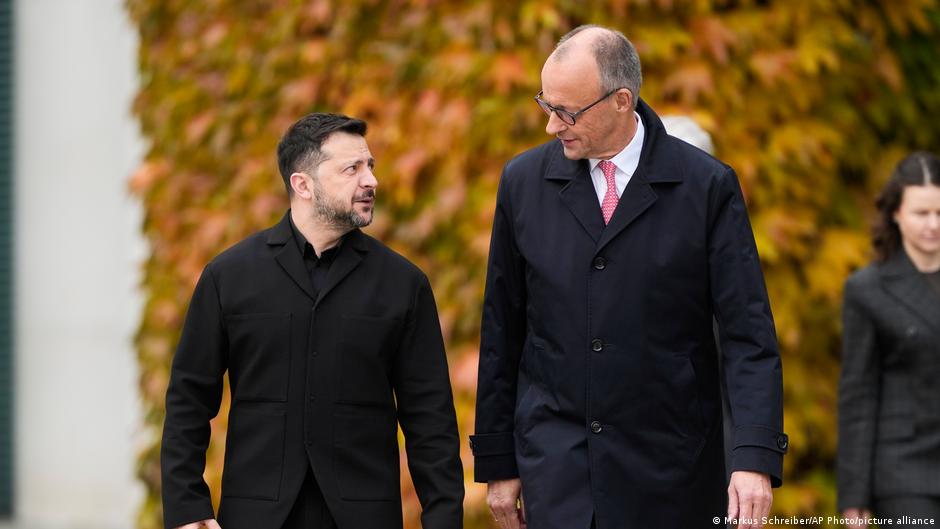
Meanwhile, Ukraine’s president Volodymyr Zelenskyy – fresh back from his meetings in Germany yesterday and today – has offered an update on the search and rescue operations after the Russian strike on a school in Komyshuvakha in the Zaporizhzhia region on Monday.
40 people have been confirmed dead, with fears that more than 30 may still be under the rubble, Zelenskyy said.
“Unfortunately, there has been very little reaction from the world to this insane attack. But it, like thousands upon thousands of other war crimes Russia has committed against Ukraine and Ukrainians, demands a strong response. Evil always goes further if it is left unanswered.”
Here is some more on how Italy’s far-right prime minister Giorgia Meloni, who once had good relations with Donald Trump, dismissed questions about the midterm election results, telling journalists “let’s talk about America another time”.
Meloni, wearing a red suit, had been door-stepped while attending a ceremony in central Rome on Wednesday to mark Italy’s national unity and armed forces day and didn’t welcome the journalistic focus on the US midterms.
“I see you’re very interested in the celebration of the republic and the Armed Forces,” she said sarcastically.
Meloni had positioned herself as a key European ally to Trump until April, when the pair fell out, firstly over Italy’s refusal to support the US-Israeli war in Italy and then because of Trump’s extraordinary broadside against Pope Leo in reaction to the pontiff’s condemnation of the war.
They had appeared to be getting relations back on track at the G7 summit in June before Trump claimed Meloni had begged him to take a photo with him - a story Meloni said was a “a total invention”.
Italy’s foreign minister Antonio Tajani did instead comment on the midterms, saying Italy’s relationship with the US “remains unchanged regardless of who is in government or the parliamentary situation”.
In an interview with the Rome-based newspaper, Il Messaggero, Tajani said “we have never been Trumpians” and “Meloni isn’t a Maga supporter either – heaven forbid!”
The League, which is led by joint deputy prime minister Matteo Salvini, who until fairly recently continuously praised Trump, said in a statement:
“When a population votes, their vote must always be respected and understood.”
The party also expressed hope that the outcome would speed-up efforts to end wars and restore peace.
European Union foreign policy chief Kaja Kallas said on Wednesday that “US voters have made their choice clear”, commenting on the country’s midterms election results.
She said she hoped Congress would continue to support Ukraine and put more pressure on Russia.
“I hope that the new Congress... will continue supporting Ukraine and also putting more pressure on Russia,” Kallas said, adding that Europe and the United States “are much stronger together” in pushing Moscow to end its war.
The European Union has offered fresh hope for Serbia’s membership talks if the election-winning student movement there forms a government willing to strengthen democracy.
The election of a diverse student-led opposition movement could provide an opening for a reset with the most influential of the western Balkan countries in line at Europe’s door, AP reported.
“Now Serbia has the chance for a fresh start,” enlargement commissioner Marta Kos told EU lawmakers as she debriefed them on the report.
“The new Serbian government has an opportunity to turn the page, strengthen democratic institutions and fundamental rights and take the necessary steps to advance on Serbia’s accession path,” she added.
Serbia could progress rapidly under a government with strong political will but membership currently looks years away.
It comes as the the European Commission said in its enlargement report that Montenegro is on track to become the EU’s 28th member in 2028 (see post 12.33) - and that Albania and Moldova could join the following year.
However, Ukraine is unlikely to meet the conditions for joining before the end of the decade.
German foreign minister Johann Wadephul has said the results of the US midterm elections will mean some “continuity” in Germany’s relations with the Trump administration, but also a “change” in ties with the US Democrats as he hoped to see some breakthrough on Ukraine.
Berlin will “continue to seek common ground” with the Trump administration, “striving for compromise” on key issues in the face of global challenges.
But these elections “also signal change” as the Democratic Party’s success – which he noted was “of a magnitude rare in American history” – will “likely seek to shift the political discourse in the US.”
He said he did not “any complications” arising from this result, and noted that the political engagement will now need to be “broader” and “perhaps even more interesting in certain aspects.”
He said many foreign policy issues featured prominently in the US elections, including tariffs and the war in Iran.
Wadephul added that he hoped for “more dialogue in Congress, across party lines, about what can be done collectively to support Ukraine.
“I think they’ve been holding back on that issue for quite some time now during the election campaign,” he said.
“I also know that in both chambers – and within both parties – there are staunch supporters of Ukraine who clearly recognise that this Russian war of aggression threatens not only security and freedom in Europe but also in the United States.”
The European Union could conclude accession negotiations with Montenegro by the end of this year and could sign an accession treaty with the country as soon as June 2027, the European Commission said, as reported by Reuters.
“For the first time since 2011, when the EU closed accession negotiations with Croatia, the EU is in a position to soon close accession negotiations with another candidate country, Montenegro,” the EU’s executive said in its annual enlargement policy report.
“This is testament to Montenegro’s sustained efforts to advance on the European path and implement the reforms needed to turn EU membership into reality,” it said, adding that “it considers that accession negotiations could realistically be closed by the end of 2026”.
If the accession treaty gets signed in mid-2027, Montenegro could join the bloc as early as 2028, German news agency dpa says.
Joining the bloc requires all current 27 member countries to ratify an accession treaty.
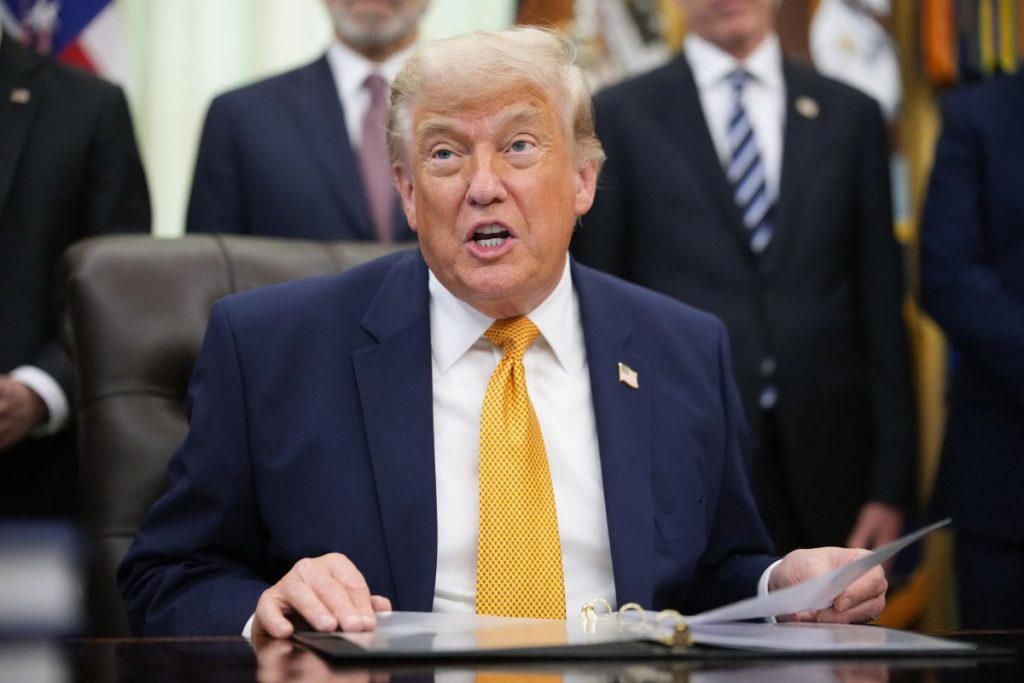
Meanwhile, the Kremlin said that it hopes that the results of the US midterm elections will not impact what it said were president Donald Trump’s “peacemaking efforts" on Ukraine, Reuters said.
In comments broadcast by Russian state media, Kremlin spokesperson Dmitry Peskov said:
“We are sincerely counting on [Trump] continuing his peacemaking efforts.“
Belgian defence minister Theo Francken has warned that “governing in the US will be almost impossible in the coming years,” but said that Europe’s priorities should be on trade, Ukraine and Nato.
Writing on X, he said in a post translated by Reuters:
“Governing in the United States will be almost impossible in the coming years given the level of internal division and polarisation. As a European politician I will mainly look of course to trade policies, support to Ukraine and Nato.”
Czech prime minister Andrej Babiš is in Warsaw today, meeting with Poland’s Donald Tusk, and unsurprisingly both leaders were asked for their thoughts on the US elections.
Babiš briefly chuckled in response to the question, before saying the results were “as expected,” but stressed the significance of the Republican party losing in places like Texas, where they “ruled for decades.”
He said that Trump will still have “major competence,” and he hoped that the US president would use them to focus on the issues that he promised he’d resolve: ending the Russian invasion on Ukraine and the crisis in the Hormuz strait.
“I am not expecting some sort of major change … but let’s see what he comes up with. What we need … is to end these two wars,” he said, stressing their costs for Europe.
Poland’s Tusk declares: “Today, democracy won in America.”
“Democracy is amazing; I love democracy, it’s a beautiful thing,” he said, absolutely beaming.
“I hope that the result will stabilise the situation also in our region, but then Trump is still the president. … My advice would be not to overuse the veto … as a sort of method of governing,” an apparent domestic swipe at Poland’s opposition president and Trump ally, Karol Nawrocki, with whom he is locked in a bitter dispute over the country’s constitutional court.
French finance minister Roland Lescure also responded to the result in the US, discussing what the next steps of the US president, Donald Trump, could be.
“Either he decides to rise above the fray – acknowledging that changes are necessary, particularly regarding gasoline prices, which directly affect people – and, I might add, he tones down his international involvement; or he does not.“
Frankly, this is something we will need to keep an eye on in the coming days.“
German defence minister Boris Pistorius has congratulated the US Democeats “from the bottom of his heart” on their win last night, Dlf reported.
Deutsche Welle’s chief political correspondent Nina-Haase-Trobridge posted a longer clip of his comments at the Berlin Security Conference, with Pistorius acknowledging a “historic victory” for the Democrats.
“So for us this means we will continue our relationship based on trust and cooperation with the administration. … And, like in the past, we will have a close working relationship with the Democrats,” he said, quoted by the journalist.
“As for what we can expect now, that remains to be seen. It depends, to some extent, on what the American president intends to do following these elections,” he said in response to a question from Politico’s Rixa Fürsen.
Meanwhile, Norwegian PM Jonas Gahr Støre told Reuters:
“This is a powerful political signal about a change of course among American voters.
Voices are now emerging in American politics that are closer to us than the president and the administration have stood for, for example on climate and environment, and in foreign policy and development aid policy.“
Italy’s Giorgia Meloni, who also clashed with Trump in recent months, wasn’t in the mood to offer any reaction to the US elections this morning, as she told reporters, via Corriere:
“We’ll talk about America some other time. Right now, it’s Armed Forces Day, 4 November.”
But opposition politicians celebrated the result, with former prime minister Matteo Renzi calling it “wonderful” and a response to Trump’s “abuse” of his position.
“Trump has another two years to go, but the Maga movement has been severely weakened, if not defeated.”
MEP Sandro Gozi said the electorate’s verdict “offers renewed hope that the next two years will mark the beginning of the end of the Trump era.”
Meanwhile, Poland’s foreign minister Radosław Sikorski ridiculed the Polish right, which has been supportive of Trump since his return to the office.
Paraphrasing Jesus’s words from the Bible (sic!), he said:
“Truly I tell you, before the rooster crows, they will disown him three times”
He also took swipe at US billionaire Elon Musk who donated hundreds of millions of dollars into Republican campaigns, reposting his comment from one of their previous clashes, saying:
“See, big man, politics is harder than you thought.”
For what it’s worth, Musk also appeared to see a funny side in his involvement in the campaign, saying:
“Guess my election-interfering space lasers didn’t work this time.”
Spain’s socialist prime minister, Pedro Sánchez – who has been Donald Trump’s most vociferous European critic – is celebrating last night’s results in the US, hailing them as proof of a progressive fightback and of the “crumbling” of what he called the “ultra wave”.
“Yesterday, American society voted against the policies that only impoverish,” he posted on X. “Against hate. Against sexism. Against climate denialism and against the privileges of the elites.”
Sánchez, who faces an uphill battle to secure another term in office in Spain’s general election at the end of the month, added:
“It happened in Brazil. It just happened in the US. And it will happen soon in Spain.”
With most eyes still on the US this morning, Brussels is quietly getting on with the task of leading on discussions about the next round of support for Ukraine.
The European Commission will hold talks with the US, France, Germany, Britain, Nato, and the World Bank, looking what can be done to help Kyiv throughout the winter and how to support the US-led peace process with the upcoming negotiations in Abu Dhabi.
Trump’s special envoy Steve Witkoff said US negotiators would meet with their European partners in Brussels.
Their talks come after another night of heavy attacks on Ukraine, hitting power stations in Kyiv and Zhytomyr and a cargo vessel at sea near Odesa.
I will also bring you any European reactions to the midterms in the US, although many politicians (while quietly amused or relieved) may choose to stay silent to not risk Donald Trump’s wrath.
It’s Wednesday, 4 November 2026, it’s Jakub Krupa here, and this is Europe Live.
- school
- zelenskyy
- attack
- europe
- kremlin
- trump
- ukraine
- komyshuvakha