Five European leaders call for closer EU-UK ties ahead of Brussels summit
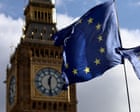
Germany, Belgium, Netherlands, Luxembourg and Denmark say cooperation on clean energy will benefit both sides Five European leaders have called for closer ties with Britain ahead of a keenly anticipated EU-UK summit. The leaders of Germany, Belgium, the Netherlands, Luxembourg and Denmark, said deeper cooperation on clean energy would benefit both sides in a letter to Ursula von der Leyen and António Costa.
Germany, Belgium, Netherlands, Luxembourg and Denmark say cooperation on clean energy will benefit both sides
Five European leaders have called for closer ties with Britain ahead of a keenly anticipated EU-UK summit.
The leaders of Germany, Belgium, the Netherlands, Luxembourg and Denmark, said deeper cooperation on clean energy would benefit both sides in a letter to Ursula von der Leyen and António Costa.
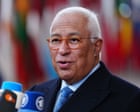
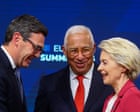
Von der Leyen, the president of the European Commission, and Costa, who leads the European Council, will meet Andy Burnham on 20 November in Brussels, where they hope to sign deals on food and drink, carbon emissions and youth exchange.
The five countries also want the two sides to speed up work on another strand of negotiations: Britain’s return to the EU’s internal electricity market. “We call on you and the UK to agree during the summit on a path towards the conclusion of these negotiations,” states the letter seen by the Guardian from the German chancellor, Friedrich Merz; the Dutch prime minister, Rob Jetten; Belgium’s prime minister, Bart De Wever; Luc Frieden, the prime minister of Luxembourg; and Denmark’s prime minister, Mette Frederiksen.
Describing the UK as a “close partner in the energy transition”, the leaders said Britain’s integration into the EU’s internal electricity market was “necessary to unlock the full potential of the North Sea area and transform it into the largest clean energy hub in the world”.
The UK and nine other European countries signed a pact earlier this year to accelerate the rollout of offshore windfarms in the 2030s and build a power grid in the North Sea. Britain’s exit from the EU’s internal electricity market is seen as cramping the development of North Sea energy and adding to costs.
Bringing Britain into the internal electricity market could be controversial, however, because the UK would be required to make a contribution to the EU budget, specifically to cohesion funds that promote economic development in poorer regions. British officials are wary of a deal in which taxpayers’ money could be used to fund infrastructure projects in central and eastern Europe.
Last year negotiations on Britain’s entry into a €150bn (£125bn) EU defence fund collapsed over a dispute about the size of the UK’s contribution.
In an attempt to head off another row over money, North Sea member states are stressing the potential for the deal to bring about lower and more stable energy prices for British billpayers. “The UK would not simply be paying into EU cohesion funds,” a EU diplomat said. “The UK would be investing in access to a more integrated, secure and competitive European energy market.
“This will lead to more efficient electricity trading, resulting in lower costs for UK consumers.”
According to figures from the industry body Energy UK, published in 2024, if the current energy relationship remains unchanged, Britain could pay extra costs of £10bn from 2024-29, through higher energy bills and lower Treasury revenues.
The industry group argues that Brexit barriers will become more significant over time, frustrating the UK’s potential to realise the full benefits of growth in offshore wind power.
Since he became prime minister, Burnham has said the government would examine the options in the UK’s relationship with the EU, including a customs union, return to the single market or to “go all the way” with full membership.
Labour MPs have supported calls for greater ties. Stella Creasy, the chair of the Labour Movement for Europe, who is campaigning for a de-facto second referendum to be included in the party’s next manifesto said there were “plenty of sensible changes” that could be done in the meantime.
Speaking to the BBC Today’s programme on Saturday, Creasy said: “Our exports are down because we know that it had hit our economy substantially to have left the European Union because you can fight many things in life, but geography really isn’t one of them.
“The biggest trading bloc in the world is on our doorstep, and we walked out of it, which means that we now face a huge amount of friction to trade with them.”
She called recent comments by Burnham, who expressed a desire to form a closer relationship with the EU, as “telling the truth”.
- summit
- leader
- tie
- brussels
- germany
- belgium
- netherlands
- luxembourg