Inuwa seeks common Northern policy framework to tackle out-of-school children
Advocates unified regional agenda, investment in agriculture, agro-allied industries to combat poverty, insecurity Sultan applauds Gombe governor’s Almajiri education reforms By Ben Ngwakwe, Gombe Gombe State Governor and Chairman of the Northern States Governors’ Forum, Muhammadu Inuwa Yahaya, has called for a common policy framework and unified regional agenda to sustain education reforms, tackle the growing number of out-of-school children and accelerate human capital development across Northern Nigeria. Yahaya made the call at the 2026 Biennial Lecture and Awards Ceremony of the Barewa…
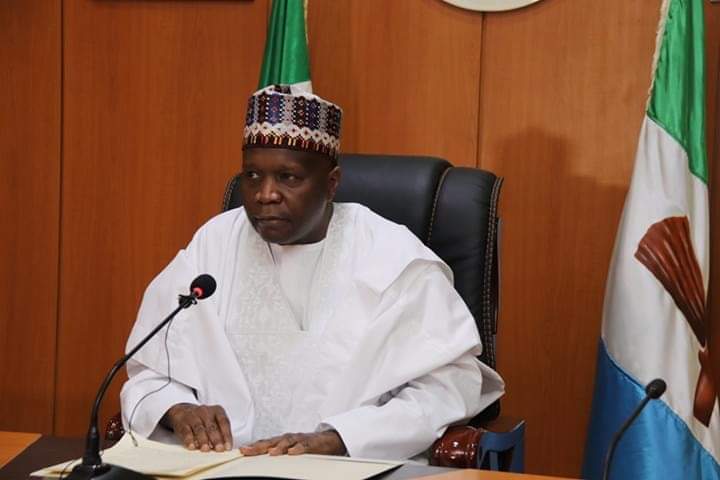
Advocates unified regional agenda, investment in agriculture, agro-allied industries to combat poverty, insecurity Sultan applauds Gombe governor’s Almajiri education reforms By Ben Ngwakwe, Gombe Gombe State Governor and Chairman of the Northern States Governors’ Forum, Muhammadu Inuwa Yahaya, has called for a common policy framework and unified regional agenda to sustain education reforms, tackle the growing number of out-of-school children and accelerate human capital development across Northern Nigeria.
The governor said addressing the region’s educational challenges required a coordinated approach that went beyond school enrolment to include poverty reduction, improved security, economic empowerment and the creation of sustainable livelihood opportunities for the growing population. Yahaya made the call at the 2026 Biennial Lecture and Awards Ceremony of the Barewa Old Boys Association (BOBA), held in Gombe, with the theme, “The Scourge of Out-of-School Children and the Implications for National Security.” Describing the theme as timely and critical to the future of Northern Nigeria, the governor warned that the increasing number of children outside the formal education system posed serious threats to social stability, economic productivity and national security.
He observed that educational exclusion perpetuated poverty, widened inequality and exposed vulnerable children and young people to criminal exploitation, radicalisation and other antisocial tendencies. Yahaya recalled that when his administration assumed office in 2019, Gombe State had more than 500,000 out-of-school children, explaining that sustained interventions by his government had brought approximately 350,000 of them back into the classroom.
He attributed the achievement to the declaration of a state of emergency in the education sector, construction of mega schools with expanded learning capacities, recruitment of more than 1,000 qualified teachers and establishment of Almajiri Integrated Learning Centres, among other initiatives. Drawing from the state’s experience, the governor urged Northern states to move away from fragmented interventions and embrace a common regional framework that would identify successful educational models, encourage their adoption across state boundaries and guarantee continuity.
He proposed that the Northern States Governors’ Forum should provide the institutional platform for harmonising educational policies, coordinating priorities and strengthening collaboration among the 19 Northern states. According to him, a unified Northern Agenda would ensure that successful programmes initiated by successive administrations were sustained, while promoting the sharing of resources, expertise and best practices for regional development.
He maintained that the magnitude of the challenges confronting Northern Nigeria required collective responsibility, stressing that no single state could effectively address the problem of out-of-school children in isolation. The governor also advocated the expansion and institutionalisation of student exchange programmes among Northern states to promote educational integration, cultural understanding and regional cohesion.
He cited Gombe State’s experience of accommodating more than 800 students from outside the state as a model that could be replicated across the region through the establishment of special schools with expanded facilities. “If Gombe has the capacity to host more than 800 exchange students, I think it will be even better if we can have expanded schools in each of the 19 Northern states where we can accommodate a larger number.
If Barewa can make this lot of impact, I would support having several Barewas across the North,” he said. Beyond education, Yahaya called for greater investment in agriculture, agro-allied industries, industrialisation and agricultural value chains, describing them as critical instruments for addressing poverty, unemployment and insecurity. He noted that Northern Nigeria possessed enormous agricultural potential which, if properly harnessed through modern farming techniques, processing facilities and value-chain development, could stimulate economic growth, create employment opportunities and improve household incomes.
The governor explained that improving the economic circumstances of families would complement investments in education by enabling parents to support their children’s schooling and reducing the socioeconomic pressures that push vulnerable children into street activities and exploitation. He said his administration had continued to pursue an integrated development strategy in Gombe State, combining investments in education with infrastructure, agriculture and industrial development.
Yahaya consequently challenged BOBA and other participants at the lecture to produce practical and implementable recommendations that would assist governments and stakeholders in addressing the out-of-school children crisis and the broader socioeconomic
- state
- northern
- school
- policy
- framework
- child
- governor
- gombe