A Journey in Service: A Reflection
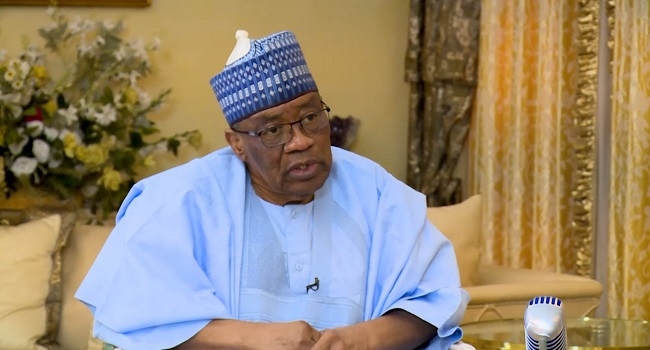
By Monica Oguta Dear General Ibrahim Badamasi Babangida, I recently had the privilege to pick up and read your autobiography: A Journey in Service. I was fascinated by the philosophy behind the Technical Aid Corps—the idea that Nigeria could deploy its human capital to assist other African, Caribbean and Pacific nations while simultaneously building goodwill and projecting Nigerian influence.
By Monica Oguta Dear General Ibrahim Badamasi Babangida, I recently had the privilege to pick up and read your autobiography: A Journey in Service. As a young Nigerian who grew up during your reign as Commander-in-Chief of the Armed Forces of our beloved country, and now an adult, having gone through your historical records as a former leader of our great country, I felt compelled to offer my reflection on both the oral and written records of your administration as enunciated in your book.
I approached the book documenting your service years with the mindset that I already had a good understanding of your stewardship and reasonable knowledge of what transpired in Nigeria under your leadership. But I dare say as I progressed through it, I realised how incomplete my understanding and orientation had been. What perplexed me the most was my discovery of the breadth of institution-building, reforms and strategic thinking that characterised your administration.
Beyond the major political events by which that period is often remembered, I encountered a much broader history of a government willing to create institutions, experiment with ideas and reposition Nigeria both domestically and internationally for the greater benefit of both the generation of the time they unfold and those yet unborn. A particular aspect of the record I had to reflect on enthusiastically was the restructuring of our national security and intelligence architecture which I consider particularly significant to me as a security professional.
The establishment of separate institutions for domestic security, external intelligence and defence intelligence demonstrated an understanding that national security required specialised institutions with clearly defined responsibilities. That architecture has endured for four decades. I was equally struck by the range of institutions and initiatives associated with your administration—the Federal Road Safety Corps, Nigeria Deposit Insurance Corporation, Technical Aid Corps, National Drug Law Enforcement Agency and National Broadcasting Commission, among others.
Dear Mr. President, Your book also brought into perspective initiatives such as MAMSER, DFRRI, the People’s Bank and Community Banks. Many of these institutions and ideas have become so embedded in Nigeria that younger generations may scarcely stop to ask when, why or under whose leadership they came into existence. Also, the chapter on foreign policy was intriguing and left a particularly strong impression on me.
I was fascinated by the philosophy behind the Technical Aid Corps—the idea that Nigeria could deploy its human capital to assist other African, Caribbean and Pacific nations while simultaneously building goodwill and projecting Nigerian influence. It has helped me understand that foreign policy is not mere diplomacy between governments, but as an instrument through which a nation can deliberately exercise leadership and soft power.
I also came away with a deeper appreciation of your administration’s ambition for Nigeria to assume a leadership role beyond its borders. The Nigeria presented in those pages saw itself not simply as another country in West Africa, but as a nation with responsibilities to Africa and with the capacity to influence events beyond its shores. And, of course, there is no period of national leadership without difficult decisions, controversies or consequences, your administration had its own share also.
However , I appreciate that A Journey in Service does not entirely avoid these subjects. The continuing debate surrounding June 12, the Structural Adjustment Programme and other decisions of the period forms an important part of the historical record. Also Sir, Your account of June 12, including your acknowledgement of Chief M.K.O. Abiola’s electoral victory and your reflections on the annulment, will inevitably continue to be examined alongside other accounts of that period.
But perhaps that is precisely why I found the book so valuable. It reminded me that history should be studied in its fullness. A leader’s legacy cannot adequately be understood through a single event, just as achievements should not erase mistakes. We owe ourselves the intellectual honesty to examine both. As someone who has spent many years working within security and institutional environments, I repeatedly had to stop at regular intervals while enjoying my reading and think about something that matters deeply to me: it is that institutions outlive individuals.
Policies may change. Governments come and go. Public opinion changes with generations. But when a leader establishes an institution that continues to serve a nation decades after exiting office later, it shows that part of that leader’s legacy remains embedded in the psyche and machinery of the state. That, for me, has been one of the most profound lessons I take away and will continue to reflect on as I conclude my reading of the closing chapters of A Journey in Service.
Your autobiogra
- service
- nigeria
- journey
- reflection
- institution
- administration
- leadership
- record