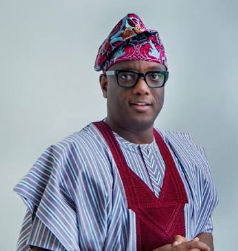
DR Hesbon Owilla: When Polls Raise More Questions Than Answers
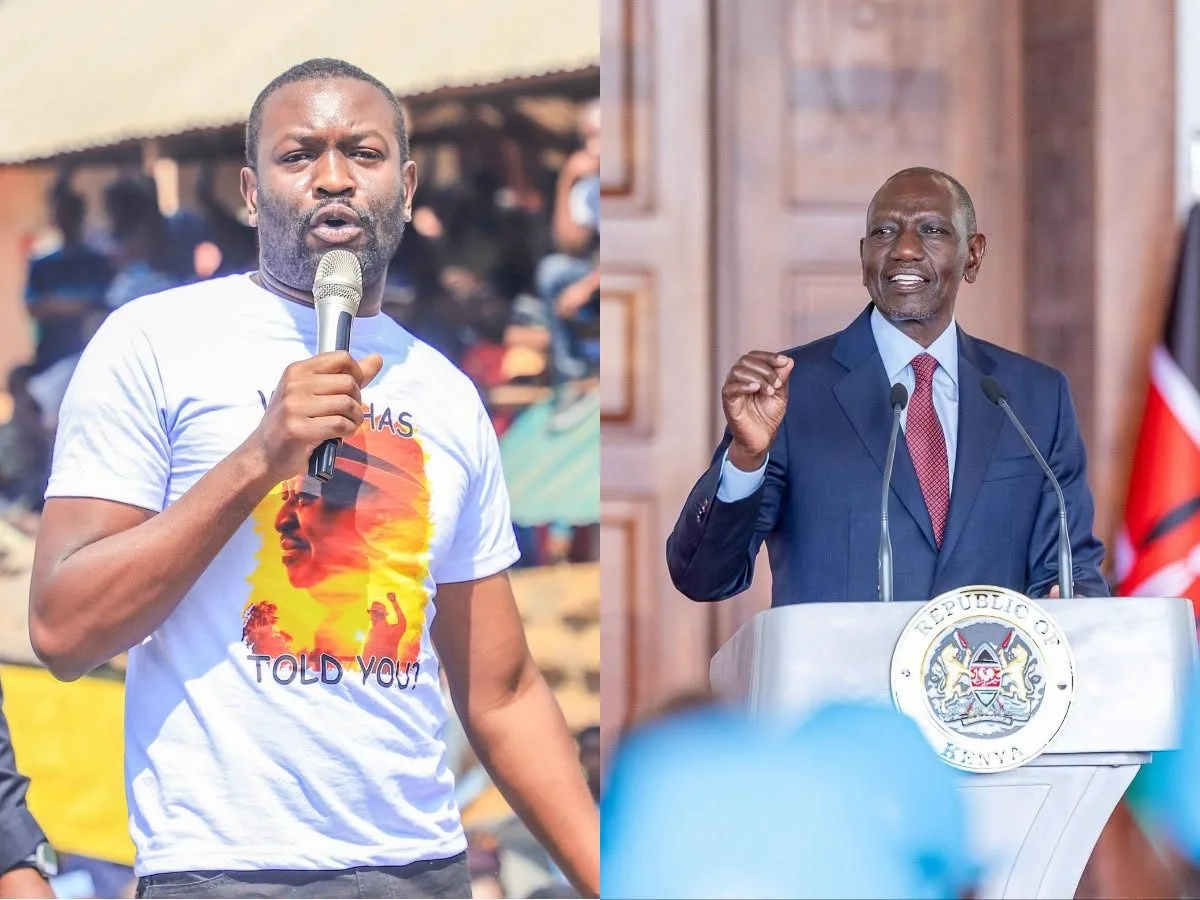
Without transparent regional breakdowns and sampling details, conclusions that Edwin Sifuna is eclipsing National Assembly Speaker Moses Wetangula in Western Kenya require considerable caution. Ruto commands 62 per cent support in Nyanza, ODM’s traditional heartland, despite opposition to the broad-based arrangement.
George Gallup, the pioneer of scientific opinion polling, argued that polls give ordinary citizens a voice, enabling leaders to understand public concerns rather than rely solely on lobbyists, political intermediaries or personal impressions. But sociologist Pierre Bourdieu offered a critical counterargument: polls can manufacture an appearance of consensus by asking questions that assume everyone has an opinion or that all opinions carry equal weight.
TIFA’s latest political survey deserves precisely this kind of scrutiny. While TIFA is among Kenya’s established pollsters, its findings raise questions about the methodology, framing of questions and conclusions drawn from the results.
The first concern is sampling. With a national sample of 2,036 respondents, how reliable are conclusions drawn across eight regions? The answer depends on the number of respondents interviewed in each region, the sampling frame, selection procedures and the margin of error attached to regional estimates.
For instance, how many respondents were interviewed in Western Kenya? Was the sample sufficiently representative to support claims about political preferences across the region? Without transparent regional breakdowns and sampling details, conclusions that Edwin Sifuna is eclipsing National Assembly Speaker Moses Wetangula in Western Kenya require considerable caution.
Describing a sample as random is not enough. Probability sampling requires a clearly defined sampling frame and transparent respondent-selection procedures. Without these, it is difficult to establish whether the survey genuinely reflects the population or risks the biases associated with convenience sampling.
The second problem concerns the framing of questions.
TIFA asks Kenyans whether they support or oppose the broad-based government arrangement between UDA and ODM. In November, 43 per cent reportedly opposed it, 32 per cent supported it, while 25 per cent had no opinion or were unaware. Opposition had stood at 52 per cent in June.
On paper, opposition is declining. But what exactly are respondents opposing?
The broad-based arrangement as understood after the July 2024 protests is not necessarily the same political proposition being discussed today. Is a voter in Kisumu responding to the original political understanding or Oburu Oginga’s current negotiations? Is a voter in Mt Kenya opposing political cooperation in principle or reacting to Rigathi Gachagua’s criticism?
By forcing respondents into a binary choice, the question risks collapsing three different judgments: support for political cooperation, approval of Ruto’s government and confidence in ODM’s negotiating leadership.
Indeed, the survey presents an apparent paradox. Ruto commands 62 per cent support in Nyanza, ODM’s traditional heartland, despite opposition to the broad-based arrangement. Voters may be separating their assessment of the President from their views on the political deal. The question does not adequately capture that distinction.
Another questionable framing concerns responsibility for opposition disunity. TIFA finds that 43 per cent blame Gachagua, 15 per cent Ruto and UDA, seven per cent Sifuna and six per cent Kalonzo Musyoka.
These figures make attractive headlines but offer limited insight. It is also unclear whether the question was directed specifically at opposition supporters or the entire sample. More importantly, it offers personalities rather than causes, reducing a structural political crisis to individual blame.
Kenya’s opposition has yet to resolve its central strategic question: should it cooperate with Ruto or organise to remove him from power? ODM has moved in one direction, DCP in another, while Wiper appears undecided. Sifuna’s Linda Mwananchi movement introduces another dimension. Until these competing strategies are reconciled, blaming individuals is political theatre.
This brings us to the apparent political tie between Ruto and Sifuna.
In November 2025, Kalonzo reportedly had 25 per cent, Fred Matiang’i 19 per cent, Gachagua nine per cent and other candidates 14 per cent. Ruto stood at 19 per cent. In the latest survey, Kalonzo has fallen to nine per cent, Matiang’i to five per cent, Gachagua to four per cent and other candidates to one per cent. Ruto, meanwhile, has risen to 31 per cent.
Sifuna has moved from zero to 31 per cent.
The figures suggest that Sifuna’s support has largely come from within the opposition rather than Ruto’s political base. The combined opposition support, including the candidates listed above, was approximately 67 per cent in November 2025. It now stands at about 50 per cent, including Sifuna.
This suggests redistribution rather than expansion. Ruto, by contrast, has gained 12 percentage points. Even allowing for the survey’s methodological limitations, Sifuna appears to be drawing support from established opposition figures without substantially penetrating the President’s political base.
TIFA itself cautions that support for other opposition candidates cannot automatically be transferred to Sifuna to produce the 50 per cent plus one needed to win an election. That qualification deserves greater prominence.
The narrative of a political tie serves several interests. It allows Ruto to portray himself as a resilient incumbent, gives Sifuna a claim to opposition leadership and offers the media an appealing political horse race.
But what about the voter who says life is worse than it was in 2022 yet still supports Ruto? Is that support an endorsement of his performance, particularly after the 2024 Cabinet reconstitution, or a rejection of an opposition perceived as too divided to govern?
These are the questions pollsters should be asking. Instead of simply asking whether Kenyans oppose the broad-based arrangement, they should establish what would make political cooperation acceptable. Rather than asking who is responsible for opposition disunity, they should establish whether voters would support a joint candidate from a different community or political party.
Ruto’s resilience should not be confused with overwhelming public satisfaction with the economy. It may equally reflect an opposition fighting over the same pool of voters while the President consolidates support through political networks and influential allies such as Farouk Kibet and Moses Wetangula.
Sifuna’s rise is real and significant. But whether it represents a national political realignment or merely the redistribution of opposition support remains an open question.
Gallup believed polling could give citizens a voice. Bourdieu warned that the questions could shape what that voice appeared to say. Kenya needs polling that does more than identify a frontrunner or manufacture a political tie. It must explain voter behaviour, interrogate political loyalties and illuminate the issues shaping electoral choices.
Dr Hesbon Hansen Owilla is a Media and Political Communications Expert based in Nairobi, Kenya.
- question
- cent
- respondent
- opposition
- kenya
- opinion
- sample
- odm