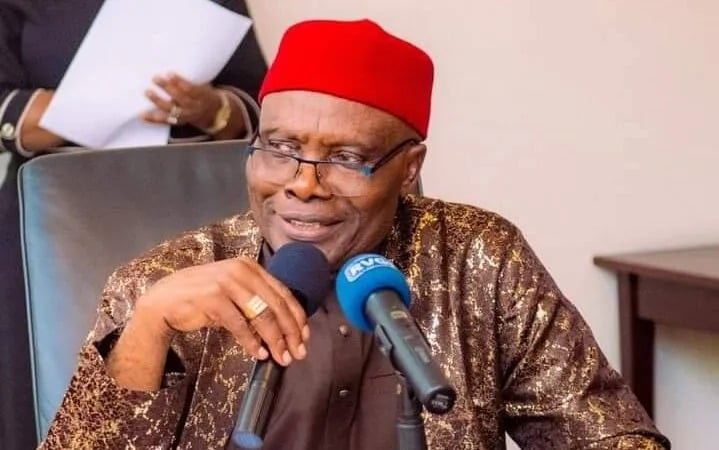
Why we are building Nigeria’s healthcare economy, By Bola Ahmed Tinubu

Nigeria’s healthcare needs should support a growing source of national prosperity. Nigerians should expect these investments to deliver
Nigeria’s healthcare needs should support a growing source of national prosperity. We can build businesses that serve our people, develop expertise that stays within our country and create products that compete beyond our borders. The progress already made gives us a basis to pursue that ambition with confidence. Nigerians should expect these investments to deliver dependable care, more affordable treatment and opportunities to earn a decent living.
Nigeria should be producing far more of the medicines and medical equipment our people need. We have an established pharmaceutical industry base, highly skilled health professionals and a substantial domestic market. Yet our dependence on imported health products remains unacceptably high, while many Nigerians continue to travel abroad for treatment. A country with our demographic strength should be securing a greater share of the production, employment and specialist services supported by what our people spend on their health.
This dependence has broad consequences for families and for the economy. Changes in the exchange rate can put essential medicines beyond a household’s reach. Disruptions far from our shores can affect supplies in our hospitals. Money spent on treatment abroad sustains expertise and facilities elsewhere that we must also develop within Nigeria.
I established the Presidential Initiative for Unlocking the Healthcare Value Chain in October 2023 to address these problems. Through PVAC, we are bringing Nigerian and international investment into domestic manufacturing and healthcare services. Our objectives are to produce more essential health products, improve the care available within our country and create quality employment across the sector.
This work forms part of the Nigeria Health Sector Renewal Investment Initiative (NHSRII), which I launched in December 2023 to give effect to the health commitments of the Renewed Hope Agenda. Its purpose is to save lives and reduce the physical and financial hardship caused by illness. We are pursuing this through stronger governance, better health services, domestic production, and greater preparedness for health emergencies. Through the accompanying compact, the Federal Government, states and development partners committed to a common programme of reform. Under this framework, investment in industry must serve the same national purpose as investment in clinics and hospitals.
Nigeria needs more enterprises that produce, employ and compete. Healthcare offers an opportunity to build such enterprises around a demand that is substantial and enduring. As we expand access to treatment, more of the expenditure involved should support businesses and skilled work within our economy.
Good health is fundamental to the prosperity we seek. It is both a cause and consequence of human capital accumulation. When illness keeps a worker at home, a child out of school or a small business owner away from work, the cost extends beyond the clinic. A serious illness can consume years of a family’s savings. Protecting Nigerians from those losses is part of building a more productive economy.
The government has a direct role in making that possible. Productivity is undermined by ill-health. Economies can be disrupted by outbreaks. A presidential initiative enables us to bring decisions on health, finance, industry and investment into a common programme. Manufacturers should be able to plan with confidence in the rules under which they operate. Investors should find government institutions working towards the same objectives. That coordination is essential when a project requires substantial capital and several years to reach commercial scale.
International cooperation is central to this effort. Nigeria welcomes investors who bring capital, expertise and a long-term commitment to production here. Our market offers commercial opportunity with strong and youthful demography, and successful partnerships should leave the country with stronger businesses and deeper technical competence. That is how investment can contribute to economic diversification and, over time, greater export earnings.
We have acted on the costs of production. The Executive Order I signed in June 2024 provided tax and tariff relief for specified machinery, equipment and inputs used in local healthcare manufacturing. Between January 2025 and June 2026, more than ₦24 billion in waivers was approved for 75 manufacturers. The purpose is to make investment and expansion more viable, with the benefits carried through to the availability and cost of essential products.
The manufacturing base is expanding. Ten factories producing priority health products are being established, including six so far in 2026. These investments cover products as varied as medicines, diagnostic tests, medical oxygen and mosquito nets. They represent productive assets around which further skills, suppliers and investment can develop.
The mosquito-net industry provides a clear example. Following its 2024 agreement with PVAC, Vestergaard announced the start of operations at Health Textiles Nigeria in September 2026. Similarly, Harvestfield, an indigenous firm is producing dual-ingredient nets. Production of advanced insecticide-treated nets is now taking place, with Nigerian employees receiving further technical training. The companies at full scale will produce more than ten million nets annually and employ more than 600 people.
For a country carrying a heavy malaria burden, the significance is immediate. The benefit must reach families through wider access to effective protection against malaria. Resources devoted to preventing disease can also support manufacturing employment within Nigeria. As production expands, the opportunity extends to suppliers and service businesses, while the knowledge acquired by Nigerian workers becomes an asset for the country. We should be capable of meeting more of our own requirements and supplying markets elsewhere in Africa.
The same ambition applies to diagnostics. Codix Bio’s agreement with the Medicines Patent Pool, supported by the World Health Organization, provides for the transfer of technology from SD Biosensor to manufacture rapid diagnostic tests in Nigeria. Partnerships of this kind bring technical knowledge into Nigerian enterprises and strengthen their ability to produce to international standards.
International cooperation is central to this effort. Nigeria welcomes investors who bring capital, expertise and a long-term commitment to production here. Our market offers commercial opportunity with strong and youthful demography, and successful partnerships should leave the country with stronger businesses and deeper technical competence. That is how investment can contribute to economic diversification and, over time, greater export earnings. NASENI-Troment is another manufacturer using world-class technology to produce diagnostic kits locally.
From the outset, our ambition has also been to improve the care available within Nigeria. We must develop services that give Nigerians greater confidence in seeking treatment at home. Investments in advanced diagnostics, cancer care and other specialist services can retain more healthcare expenditure within the country while creating opportunities for our clinicians and researchers.
From the outset, our ambition has also been to improve the care available within Nigeria. We must develop services that give Nigerians greater confidence in seeking treatment at home. Investments in advanced diagnostics, cancer care and other specialist services can retain more healthcare expenditure within the country while creating opportunities for our clinicians and researchers. For a family facing cancer, access to treatment within Nigeria can spare them the added cost of travel abroad and long separation from loved ones.
I recognise that Nigerians will judge these reforms by the care they can obtain and afford today. New capacity takes time to reach its full effect. Domestic manufacturers still face costs that must be addressed, and local production must meet demanding standards of quality and competitiveness. Government support must result in better products and affordable services for Nigerians.
Our national health reform framework, pursued through a sector-wide approach, connects this industrial investment to the expansion of healthcare. As we strengthen primary care through the Basic Health Care Provision Fund and expand health insurance, we must ensure that facilities can obtain the medicines and diagnostic tests that patients need. Better purchasing arrangements can turn this growing demand into predictable orders for manufacturers, supporting investment while helping public funds go further. The benefit must reach Nigerians through reliable supplies and affordable treatment, including in rural communities. Medipool, Nigeria’s first nationally approved group purchasing organisation, was established to pool demand for quality medicines and other health commodities, negotiate better prices and provide a more dependable market for local manufacturers.
The next stage requires sustained attention to financing, reliable demand, and the practical conditions under which enterprises operate. Announced investments must progress into production, which must reach the facilities where Nigerians receive care. I expect the Coordinating Minister of Health and Social Welfare to sustain this work with the relevant institutions and private partners.
Bola Ahmed Tinubu is President of the Federal Republic of Nigeria.
- nigeria
- healthcare
- economy
- bola
- ahmed
- tinubu
- need
- source