2027: Speaker cautions against intimidation as thuggery increases

Speaker cautions against intimidation as thuggery increases. The Speaker said Nigeria's democracy provides constitutional space for disagreement, representation, and peaceful political competition, urging political actors to avoid actions that could undermine the democratic process.
Speaker of the HOR, Tajudeen Abbas [
The Speaker of the House of Representatives, Abbas Tajudeen, has warned political parties and their supporters against intimidation and attacks on opponents as Nigeria approaches the 2027 general elections.
Mr Tajudeen urged political actors to engage one another constructively through ideas, policies, and evidence rather than resorting to insults, intimidation, and violence while campaigning for votes.
He made the call in his keynote address as a special guest of honour at the formal opening of the World Public Relations Forum in Abuja on Monday. The speaker, who was represented by the House Leader, Julius Ihonvbere, spoke on the topic, “Responsible Communication and Parliamentary Democracy in the Digital Age.”
Mr Tajudeen said Nigeria’s democracy provides constitutional space for disagreement, representation, and peaceful political competition, urging political actors to avoid actions that could undermine the democratic process.
“Democracy remains a work in progress, facing challenges of institutional capacity, electoral confidence, public accountability, and political intolerance. Yet, its resilience lies in the constitutional space it provides for disagreement, representation, persuasion, and peaceful political competition.
“Democracy cannot thrive on institutions alone. It also depends on the quality of public discourse. Citizens need reliable information to make informed choices. Political actors must engage one another through ideas, policies, and evidence rather than insults, intimidation, and deliberate falsehoods,” he said.
The speaker also called for press freedom, urging that the media be allowed to scrutinise public officials without fear, saying this would promote transparency and strengthen Nigeria’s democracy.
“The media must be free to scrutinise those in authority while upholding professional standards. Public institutions, in turn, must recognise that transparency and accountability are obligations inherent in democratic governance,” he stated.
The Independent National Electoral Commission (INEC) has cleared 18 candidates for the presidential election scheduled for 16 January 2027.
The commission also cleared governorship candidates in 28 of the 36 states where governorship elections will be held on 6 February 2027. It has equally approved candidates for the National Assembly and State Houses of Assembly elections.
In line with its timetable and schedule of activities for the 2027 elections, INEC directed candidates to commence campaigns.
While presidential and National Assembly candidates began their campaigns on 19 August, governorship and State Houses of Assembly candidates commenced theirs a month later.
However, since the campaigns began, the country has witnessed a growing number of violent attacks on campaign rallies, town hall meetings and other political gatherings organised by parties seeking the mandate of voters.
Political activities across the country have increasingly been accompanied by reports of violence, intimidation and threats as the elections approach.
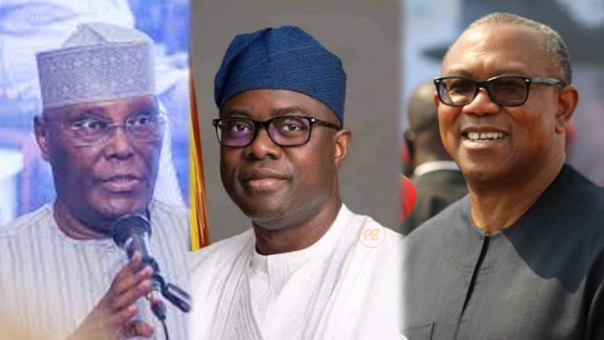
Campaign activities involving presidential candidates and opposition parties have faced security challenges in different parts of the country, including attacks on convoys, disruptions of political gatherings and confrontations involving party supporters.
In some instances, presidential candidates have alleged that their lives or those of their supporters were endangered. In others, political gatherings have been disrupted, vehicles damaged and participants injured or killed.
PREMIUM TIMES has documented a series of reported incidents of political violence, particularly those involving presidential candidates and opposition parties, since campaigns officially began in August, as well as their implications for the 2027 general elections.
The National Peace Committee, chaired by former Head of State Abdulsalami Abubakar, recently reported 109 breaches of the National Peace Accord across 26 states and the Federal Capital Territory during a monitoring period from 19 August to 27 October 2026.
The report identified political violence and thuggery as the largest category of violations, accounting for 33 incidents.
Separately, the Armed Conflict Location and Event Data (ACLED) project, an organisation that monitors political violence and conflict, reported more than 30 attacks targeting political campaigns, candidates, supporters, convoys and gatherings since the presidential and National Assembly campaigns began on 19 August.
According to ACLED, the incidents resulted in more than 10 deaths and several injuries.
Meanwhile, Osita Izunaso (APC, Imo West) has called for regulating artificial intelligence (AI) to prevent the spread of misinformation.
Mr Izunaso, who chaired the occasion, said he supported AI innovation but argued that the technology needed to be regulated to prevent its potential misuse.
“AI is a major issue right now, and globally, AI is not regulated in most climes, just like when new media started. Most jurisdictions did not find it necessary to regulate new media until now, when we say we cannot allow our children access to all manner of social media platforms. But we started late.
“As a parliamentarian, I’m also of the opinion that AI must be regulated before AI destroys the world. Now, when you see AI images, they look so real that sometimes you might not be able to discover which is AI and which is real.
“Don’t get me wrong, AI is good, but it has to be regulated before the goodness of AI becomes the calamity of the world,” he said.
- speaker
- intimidation
- thuggery
- increase
- nigeria
- democracy
- space
- disagreement