‘Everything he said sounded like a song title!’ The rackety, romantic life of Bobby Charles, alligator-befriending bard of the bayou
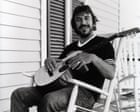
The rackety, romantic life of Bobby Charles, alligator-befriending bard of the bayou. As a career-spanning box set is released, those who knew him remember an American original ‘I was listening to Bob Dylan’s Theme Time radio show,” says Korey Richey, multi-instrumentalist with LCD Soundsystem, “and he said, ‘Bobby Charles is best known as a songwriter, but he has one of the most melodious voices ever transmuted into a piece of vinyl.’
He was nearly an early rock’n’roll star but took a different path, from Fats Domino to the Band and pro-environment songwriting. As a career-spanning box set is released, those who knew him remember an American original
‘I was listening to Bob Dylan’s Theme Time radio show,” says Korey Richey, multi-instrumentalist with LCD Soundsystem, “and he said, ‘Bobby Charles is best known as a songwriter, but he has one of the most melodious voices ever transmuted into a piece of vinyl.’ I thought about it, and I agree: Bobby Charles was something else.”
Something else, indeed. Charles (1938–2010) was unable to play an instrument yet wrote songs sung by everyone from Fats Domino to Etta James to Kris Kristofferson. Signed to Chess Records in 1955 aged 17, he was on the verge of becoming a star at the dawn of rock’n’roll, but a preference for living reclusively – with a pet alligator – ensured he vanished from sight, and his music has long been unavailable. “He was a very strange guy, a loner,” says one of his Louisiana contemporaries, 88-year-old Johnnie Allan. “He knew what he had and wouldn’t compromise.” Now a box set, The Bobby Charles Story, containing almost every recording Charles released, aims to establish the Cajun magus as one of the greats.
“Bobby’s songs sound like him talking to you,” says Beth McKee, a New Orleans-based singer-songwriter whose 2009 album I’m That Way celebrates Charles’s songs. She explains his particular gift: “They’re conversational, but never ordinary. He had a way of getting right to the heart of something without dressing it up.”
Robert Charles Guidry was born to French-speaking parents in Abbeville, Louisiana. Aged 14, he heard Hank Williams and Fats Domino on the radio, and despite not playing any instruments, began composing songs in his head to sing in high school bands. At a concert in Crowley, Louisiana, the owner of a record shop noted how the crowd went crazy for a Guidry original called See You Later, Alligator. He called Leonard Chess, the boss of Chess Records in Chicago, and instructed young Robert to sing the song down the phone. Chess signed him on the spot and arranged for a recording session in New Orleans – Robert Guidry became the anglicised Bobby Charles.
Later Alligator (Chess abbreviated the title) scored on the R&B charts and Charles was flown to Chicago to meet Chess, who reportedly said: “Motherfucker! You’re not Black?” To which Charles replied: “No, but I’m Cajun – is that close enough?”
Sent on the road as part of a Chess package tour – with Chuck Berry as headliner – Charles was the only white artist. “I had to eat in the kitchens and back rooms and sleep in the Black hotels with all of ’em,” Charles said in 1995. “Brother to brother, you know. I toured quite a bit until it got weird. A couple of white guys tried to shoot me, ’cos they didn’t want to see me hanging out with the Black guys.”
This, alongside Bill Haley scoring a huge hit with See You Later, Alligator, determined Charles would almost never perform again, and instead he became a songwriter for other artists. Swamp pop was the tag given to the blend of Cajun, country and R&B Charles helped pioneer; swamp pop veteran Allan recalls him influencing the local scene. “Bobby gave me a song called Your Picture, one of my best local hits,” he says, “so he really helped my career. He didn’t take credit for swamp pop – I never heard him use that term – but he showed us Cajuns how we could write our own songs, get this new sound”.
Charles’s relationship with Chess ended acrimoniously, but not long after, an encounter with Fats Domino led to Domino recording two remarkable Charles originals, Before I Grow Too Old and Walking to New Orleans. Both were hits, and in 1961 the New Orleans R&B singer Clarence “Frogman” Henry had another with But I Do.
Charles briefly attempted to run his own label, before settling in Nashville. Busted for drugs, he fled while on bail, eventually drifting into Woodstock, New York. Befriended by the local music community, Charles was introduced to music mogul Albert Grossman – manager of the Band and Bob Dylan – who signed Bobby to his Bearsville label and ensured the Nashville arrest warrant got dismissed. Backed by the Band (except Robbie Robertson), guitarist Amos Garrett and pianist and old Louisiana pal Dr John, Charles’s eponymous 1972 debut album is an outlier: bruised, weary, stoned and very soulful, it’s easily among the finest of that discombobulated era.
Although British broadcaster and writer Charlie Gillett called Bobby Charles “album of the year”, not many got to hear it as Charles’s relationship with Grossman quickly soured. He then joined Paul Butterfield’s Better Days, a band led by blues harmonica player Butterfield, who released two albums in 1973, also overlooked gems. Geoff Muldaur, the band’s lead vocalist, recalls Charles affectionately.
“Bobby had the most beautiful speaking voice,” he says. “French was his first language and he spoke English in a unique way. Actually, everything he said sounded like a song title. I’d be driving us across the US and he’d be speaking and I’d think ‘Write that down, it could be a song!’ He couldn’t play an instrument, so he’d sing us his songs and, at the same time, use his arms to demonstrate the rhythms and changes for when he wasn’t singing. He was very talented.”
When Better Days imploded Charles headed back to Louisiana, settling in a house by the bayou (the area’s swamps) with a pet alligator. Muldaur visited him in 1975 and got a taste of Cajun culture.
“One night Bobby suggested we go hear some music at Jay’s Lounge. On arrival, we headed around the back where I found the locals excited about cock fighting. Bobby introduced me to his friends, saying: ‘We all coon-asses!’” – a broad, rustic term for Cajuns. “Pretty quickly I had enough cock fighting so we went into the lounge: it had a sign outside saying ‘Blues Tonight’. I found Lightnin’ Hopkins and Jimmy Reed performing.”
Charles sang backing vocals on the Band’s live Rock of Ages album, and appeared at their 1976 farewell concert, The Last Waltz. Charles features on the soundtrack album singing a rousing Down South in New Orleans. Inexplicably (but for a recluse, suitably), he doesn’t appear in Martin Scorsese’s concert film.
Charles didn’t issue any new music until self-released 1987 album Clean Water. Here he sang of environmental concerns, focusing on his beloved bayous being polluted. From then on he would occasionally release a new album on his Rice ‘N’ Gravy label, never performing and rarely giving interviews. In 2004 Malcolm Mills of the UK’s Proper Records sought out Charles, so to license his albums for European release.
“I went down to meet Bobby face-to-face in Lake Charles, Louisiana,” says Mills. “He wanted to get to see who he was likely to be dealing with, because he certainly knew how to smell a rat. I passed the test.” A friendship developed, and Mills decided Charles deserved a box set covering his entire career. “I wanted to honour his life and career.”
Everyone I speak to emphasises what a remarkable songwriter Charles was. “His songs are a masterclass in simplicity, not overthinking,” says Richey. “He expressed deep feelings eloquently,” adds Muldaur. For a good example, reach for The Jealous Kind, one of Charles’s most covered songs, in which a brooding suitor is unable to accept his ex-partner has moved on. There are many fine versions – Etta James, Joe Cocker, Delbert McClinton – but none matches Ray Charles’s chilling 1977 effort.
After losing his bayou house to fire, Charles resettled in the remote coastal enclave of Holly Beach. Then, in 2005, Hurricane Rita left him homeless and Charles spent his last years living in a trailer, raging against the music and oil industries.
“Bobby would get angry at the corporations and people who dump shit in the Mississippi river,” says Richey, who befriended Charles when working at the nearby Dockside Studio. “Louisiana’s losing its coastline and, as the oil companies employ so many, people are scared to speak up. Not Bobby: he was furious at those who kill our habitat.” McKee, who Charles invited to sing on his final album, 2010’s Timeless, recalls: “Bobby was wounded. He’d been hurt by the music industry and things like Hurricane Rita.”
Richey notes how Charles “had a dual personality – warm and generous or paranoid and angry, especially when drinking vodka and smoking spliff. He got bitter about all the ripoffs he endured in the industry.” But Richey adds that Charles would still sometimes get back together with Dr John. “I engineered a session they did called Solution for Pollution – sadly it’s not been released – and I recall how happy everyone was in the studio. They’d make music, and he was filled with joy again.”
- charles
- bobby
- title
- rackety
- life
- alligator
- bard
- bayou