Andy Burnham is in danger of over-selling his big Brussels summit. What happens if he under-delivers?
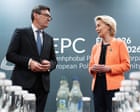
Andy Burnham is in danger of over-selling his big Brussels summit. Joël Reland is senior researcher at the UK in a Changing Europe thinktank Continue reading...
In laying a trap for himself, the PM could derail his longer-term ambition of revisiting Brexit
This week’s UK-EU summit may, one day, be seen as the start of the UK’s long march back towards the EU. Andy Burnham’s much-anticipated first meeting with EU chiefs in Brussels on Friday will be used to unveil a suite of detailed agreements to improve trade and economic cooperation, before the Prime Minister kickstarts his longer term “national conversation” about a much closer form of political and economic relationship with the EU. This, as Burnham signalled in a speech on Monday night, could well culminate in Labour’s next election manifesto abandoning the party’s famous red lines, and proposing an application for EU membership.
For pro-Europeans, this must read like a fever dream. Just four months ago, when Burnham took office, such a bold offer on Europe from the Labour party seemed implausible. But while Burnham has certainly reinvigorated the Brexit debate, he will have to move carefully to avoid storing up trouble for himself down the road. There is a risk that Burnham will come to be seen as someone who over-promises and under-delivers on Europe – and, in doing so, halts the growing momentum around revisiting the troublesome Brexit question.
After all, the summit’s key results are already being briefed to the media by the prime minister’s team: deals to reduce friction on trade in food and carbon-heavy goods, or in the technical language, sanitary and phytosanitary (SPS) and emissions trading systems (ETS), are apparently “done”, which will add “billions of pounds” to the UK economy, which Burnham says you “cannot ignore”.
But the reality is that while the draft agreements may have been finalised, the deals are still far from done in a practical sense. First, because they are contingent upon London and Brussels resolving the thorny question of what fees students from EU countries should pay at universities in Britain. And, second, because legislation has to be passed and systems put into place before the food and carbon deals can go live – most likely in 2028. Not to mention the fact that the effects of the global energy shock will dwarf any positive effects for consumers from lower food or energy costs.
And that might leave British voters questioning how much they can trust Burnham’s promises on Europe. Support for rejoining the EU is increasingly broad (62% in favour at the latest count), but it is also shallow – fluctuating significantly once you dive into the policy detail. If voters don’t trust the man leading the pro-EU campaign, that poll lead could quickly crumble.
Burham’s opponents, meanwhile, will be keen to jump on any difficulties in the immediate negotiations as evidence of how tough an eventual “rejoin” process would be. Here, too, the prime minister risks laying traps for himself.
One of the UK’s key negotiating asks is that it is included in the EU’s Made in Europe programme, which grants preferential treatment (in terms of tax breaks and priority in procurement processes) to “European” manufacturers. At present, British carmakers would not count as European, and the PM has made it a priority to get this matter resolved.
While a leaked draft of the post-summit communique included language about a “trusted partnership” on economic security – implying potential UK inclusion in Made in Europe – Burnham will not be able to present any cast-iron promises from the EU, for the simple reason that the relevant legislation is still in development and unlikely to be finalised before the spring.
Moreover, the EU is set to make any UK inclusion in Made in Europe conditional on the UK’s alignment with certain trade policies, in particular restrictions on Chinese goods. That is likely to mean hiking UK tariffs and/or import controls on Chinese electric vehicles – increasing costs for consumers at home and inviting trade retaliation from China, which would hurt British exporters.
Negotiations on this topic have a long way to run, and could easily get quite acrimonious in the early months of next year. To which Labour’s opponents will point and say: if this is how hard the EU is playing over EVs (and tuition fees), what’s going to happen in a future accession negotiation where we have to discuss free movement, UK payments into the EU budget and fish? And if the UK drags its feet on China, the EU might ask itself whether it wants to re-admit a country on the “wrong” side of perhaps the biggest debate in Brussels right now.
The overriding point is this: if Burnham is serious about reapplying for EU membership, he needs to understand that it is (starting now) roughly a five-year project: from a “national conversation” and a general election, through accession negotiations and a referendum on whatever is agreed.
At every stage, the EU will be watching what the Burnham government is saying to its voters (overzealous promises on opt-outs from free movement or the euro, for example), for evidence of whether the UK is even suited to membership. And UK voters, too, will start paying more attention to EU matters. Acrimonious bilateral debates may give them second thoughts about whether they are happy to let the question of “rejoin” dominate the next parliament.
All this means Burnham should be thinking several steps ahead. Rather than indulging in a post-summit sugar rush celebrating billions being added to the UK economy, he might be well advised to adopt a more sombre tone, and say something like: “These gains are welcome and hard-fought, but they prove the limitation of our current approach – expending a lot of effort for minimal economic gain.” And he must also ensure that any future vision of the UK’s EU membership is tested in advance with European interlocutors, to avoiding antagonising them or creating unwanted obstacles for future negotiations.
Burnham is certainly different from Keir Starmer in his willingness to criticise Brexit and argue for an alternative. But Starmer’s greatest weakness on the EU was his failure to anticipate the future: drawing up red lines for an election campaign which then significantly constrained his room for manoeuvre in office. If Burnham is to successfully deliver on his own vision for the UK’s future relationship with Europe, this is the point where he most needs to distinguish himself from his predecessor.
Joël Reland is senior researcher at the UK in a Changing Europe thinktank
- burnham
- andy
- brussels
- summit
- brexit
- europe
- danger
- deliver