24-hour economy gradually creating jobs, but more work needed – Austin Gamey
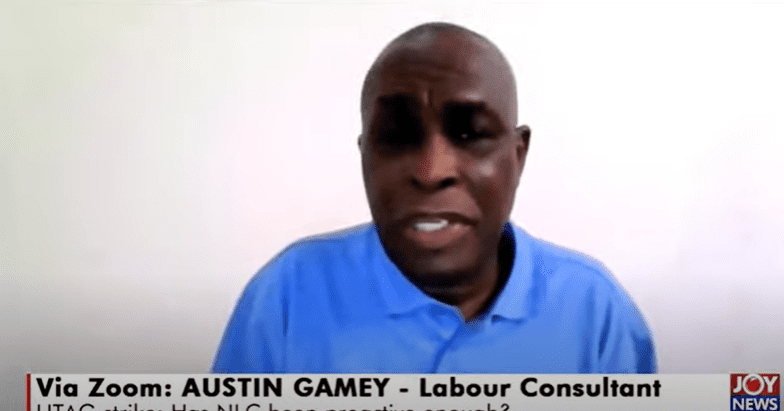
Labour expert Austin Gamey says Ghana’s 24-hour economy initiative is gradually creating employment opportunities, although its impact may not yet be as significant as many Ghanaians expect. Mr Gamey said these projects, if implemented as planned, could generate substantial employment for Ghanaians.
Labour expert Austin Gamey says Ghana's 24-hour economy initiative is gradually creating employment opportunities, although its impact may not yet be as significant as many Ghanaians expect.
His comments come amid growing debate over the government's claims that the 24-hour economy initiative is generating employment opportunities for young Ghanaians, with questions being raised about the number and nature of jobs created so far.
e says the initiative should be viewed as a long-term programme rather than an event, arguing that its implementation will take time to translate into substantial job creation.
Speaking in an interview on JoyNews' The Pulse on Thursday, November 19, Mr Gamey said some private and public organisations operating within the Tema Free Zones enclave and the harbour area are already running round-the-clock operations.
According to him, the expansion of 24-hour activities at the Tema Port, particularly efforts to facilitate the clearance of goods throughout the day, is creating employment opportunities.
"Clearly, what it is is that some level of employment is being done within the space of the 24-hour economy. It may not be as plenty as people would wish, but they are working," he said.
Mr Gamey, who is also a consultant to some companies seeking to establish operations in Ghana, disclosed that major investments in renewable energy and agriculture are being pursued and could create significant employment opportunities when fully operational.
He cited plans for a 500-megawatt solar energy project in the northern part of the country, which he described as potentially the largest of its kind in Africa.
He also disclosed plans for a large-scale biogas plantation and a proposed palm plantation project in the Oti Region, where investors are seeking to secure about 40,000 hectares of land.
Mr Gamey said these projects, if implemented as planned, could generate substantial employment for Ghanaians.
He added that one of the companies involved was expected to conduct recruitment interviews on Friday, November 20, although he did not provide further details about the recruitment exercise.
The labour expert, however, cautioned the government against making excessive claims about the 24-hour economy before the programme is fully operational.
He said public expectations must be managed while the various projects and investments are being developed.
Mr Gamey also called for a broader understanding of employment in Ghana, arguing that public discussions often focus too narrowly on permanent jobs.
He explained that under International Labour Organisation (ILO) definitions, a person who works for at least one hour during the reference period is classified as employed.
He said employment also includes casual, temporary and contract work, which are common in sectors such as tourism, construction and other industries.
"Then you have casuals, and these all are found in our labour law. There are casual jobs. That is in America, that is in Britain, that is everywhere. It's in Ghana too," he said.
He added that temporary and contract workers should also be recognised as employed, even where their engagements are not permanent.
Mr Gamey maintained that understanding the different forms of employment is important in assessing the impact of the 24-hour economy and the country's broader labour market.
- hour
- gamey
- economy
- employment
- job
- labour
- work
- austin