Germany news: Merz to join German-Ukrainian business forum
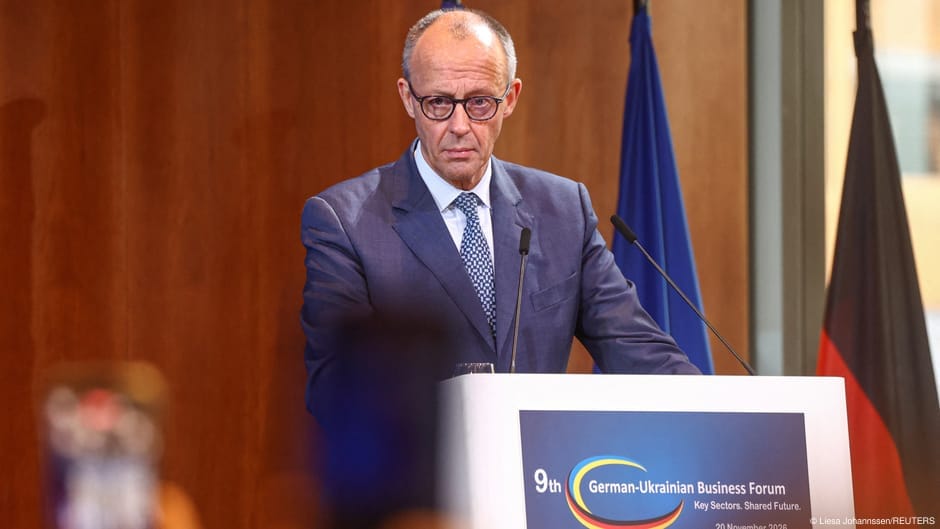
Merz to join German-Ukrainian business forum. Chancellor Merz is taking part in a forum to boost business ties with Ukraine.
Here's a roundup of the biggest headlines in Germany on Friday, November 20:
Germany's finance ministry officials said the agency is launching a dialogue process, dubbed "Germany 2035," to develop proposals for the future of the country's economy.
Officials want to study how Germany can secure growth and prosperity and what that could look like in terms of fiscal-policy.
Finance Minister Lars Klingbeil will begin the dialogue process on December 2, when he welcomes economists from around the world to Berlin.
Aditionally, think tanks, research organisations, universities and civil society groups have been asked to host workshops, which would take place in the first half of 2027.
Among 12 economic topics that the ministry seeks to explore are tax and fiscal policy, investment and domestic demand, industrial policy, energy and climate transition, foreign trade and sovereignty, and housing and local infrastructure.
The dialogue will culminate with a white paper, to be published in 2028, that can provide recommendations for Germany's economic future up to 2035.
A group called "Gen Z Takes Charge" (Gen Z regelt) has called for thousands of young people to demonstrate in many German cities.
The gathering comes almost three weeks after the first major youth protests hit Germany, inspired by the protests that took place in France in the last weeks.
Those protests, which took place on October 31, saw tens of thousands take to the streets across Germany, with crowds remaining largely peaceful, although rioting broke out in several cities, including Frankfurt, later in the evening.
Among the demands of the "Gen Z Takes Charge" group are increased funding for schools, addiction support and psychotherapy, affordable living, opposition to conscription and consistent action on climate change.
Another group, the Federal Pupils' Conference, has also organized its own demonstration at the Brandenburg Gate in Berlin, with police saying that some 5,000 people have already signed up.
The pupils' conference advocates for improvements in education policy in Germany, including school renovation, school social work, relief for teachers and the inclusion of climate action in curricula.
The demonstrations are set to begin in the morning and run until late afternoon.
President Frank-Walter Steinmeier will welcome him the Emir of Qatar Tamim bin Hamad Al Thani in Berlin with military honors.
Steinmeier will also hosting a state banquet for the emir and his delegation in the evening. Al Thani is also expected to meet with Chancellor Friedrich Merz during the day.
The visit comes in the midst of tensions in the Middle East, with the war in Iran likely to be a critical topic in the talks between the two governments. Qatar is currently one of the mediators in the deadlocked conflict between the US and Iran.
Economic and bilateral relations are also expected to take center stage.
On Saturday, the emir will visit Germany's most populous state of North Rhine-Westphalia, where he will be greeted by its state premier Hendrik Wüst at the military section of Cologne/Bonn Konrad Adenauer Airport.
During the visit, Al Thani and North Rhine-Wesphalia leaders will hold an economic conference in the small city of Königswinter, near Bonn, where the Emir will also visit Drachenburg Castle.
Following a political summit on Ukraine in Berlin yesterday, the German Chamber of Industry and Commerce (DIHK) said it would host a German-Ukrainian business forum.
Chancellor Friedrich Merz and German Economy Minister Katherina Reiche are expected to be in attendance, along with Ukrainian Prime Minister Sergii Koretskyi, among others.
Christian Bruch, deputy chair of the Eastern Committee of the German Economy and chief executive of Siemens Energy, said German companies are committed to invest in Ukraine, despite Russia's ongoing war and were open to expand their business partnerships.
Bruch said bilateral trade was expected to rise to around €13 billion ($14.1 billion) in 2026.
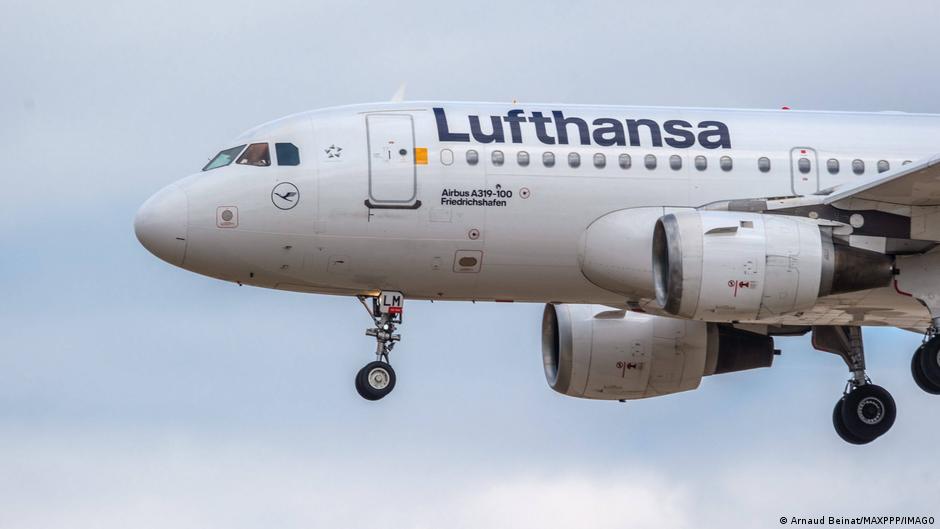
German flagship airline Lufthansa plans to cut 1,000 jobs at its airport hubs in Frankfurt and Munich, according to a company letter seen by German news agency DPA and news outlets.
The letter was reportedly signed by Lufthansa Airlines CEO Jens Ritter and four other managers.
The timeframe of the cuts is unclear. It's also unknown whether the cuts were apart of a previously announced downsizing.
In September 2025, Lufthansa said it would slash 4000 administrative positions due to the implementation of AI and digitalization.
Lufthansa's parent company Lufthansa Group had 67,100 employees in Germany by the end of last year. In the letter seen by news agencies, Lufthansa said financial struggles were the reason behind the planned cuts.
"Lufthansa is currently not competitive in terms of its cost structure, efficiency and productivity," the letter said, while pointing out that the company operated at a €180 million ($197 million) loss in the first nine months of this year.
In addition, Lufthansa Airlines is now in its third straight year of being unprofitable.
In regards to this year, Lufthansa has faced rising fuel costs spurred by the US-Israeli war with Iran, further complicating its financial outlook.
Leaked documents raise new questions about Deutsche Bank's dealings in Russia up to Moscow's invasion of Ukraine, adding to scrutiny over the bank's risk controls and past controversies.
Guten Tag and welcome to DW's daily coverage of Germany-related news on Friday.
Lufthansa is reportedly planning on cutting jobs as the German flag carrier faces financial difficulties.
Meanwhile, youth-protests are expected across Germany and Qatari's emir is visiting Berlin, where he is expected to meet with German Chancellor Friedrich Merz.
Stay tuned for the latest on all this and more throughout the day from the heart of Europe.
- merz
- business
- forum
- germany
- news
- chancellor
- tie
- ukraine