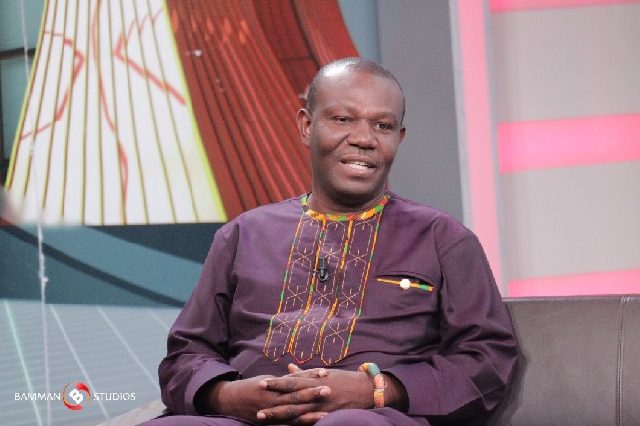
Haruna Iddrisu and NDC’s leadership future: Experience, political maturity and the national question

As Ghana’s political landscape evolves and the National Democratic Congress (NDC) looks towards its next phase of leadership, the political journey of Honourable Haruna Iddrisu, Minister for Education and Member of Parliament for Tamale South, offers an important subject for national reflection. Haruna’s political development began with student leadership, particularly his presidency of the National Union of Ghana Students (NUGS) in 1996–1997.
Political leadership is rarely the product of a single achievement, appointment or moment of public recognition. More often, it emerges through years of institutional engagement, exposure to complex national challenges, difficult political decisions and the gradual development of the judgement required to manage competing interests. In a democratic society, these experiences provide an important basis for evaluating individuals who may aspire to the highest levels of public office.
As Ghana's political landscape evolves and the National Democratic Congress (NDC) looks towards its next phase of leadership, the political journey of Honourable Haruna Iddrisu, Minister for Education and Member of Parliament for Tamale South, offers an important subject for national reflection. Interestingly, he has been seen to avoid that discourse and interest, leaving his admirers and many other observers wondering.
For nearly three decades, Haruna has occupied positions that have exposed him to the workings of political parties, Parliament and the executive arm of government. His progression from student leadership to national party organisation, parliamentary representation, ministerial appointments and opposition leadership provides a distinctive combination of political and administrative experience. The significance of this journey lies not merely in the number of positions he has occupied, but in the breadth of responsibilities, institutions and national development challenges he has encountered. This accumulated experience makes his political career relevant to the broader conversation about leadership renewal, institutional competence, and the future direction of the NDC.
Haruna's political development began with student leadership, particularly his presidency of the National Union of Ghana Students (NUGS) in 1996–1997. That experience provided an early foundation in advocacy, negotiation, political mobilization, and managing competing interests. His subsequent service as National Youth Organiser of the NDC between 2002 and 2010 placed him within the party's organisational structures during an important period of political rebuilding and electoral competition.
His election to Parliament in 2004 marked another stage in his development, introducing him to legislative responsibilities, national policy debates and the practical demands of democratic representation. Over the years, his parliamentary career has evolved from ordinary legislative participation to managing some of the most consequential responsibilities within Ghana's parliamentary democracy.
Perhaps the most distinctive aspect of Haruna's public service is the diversity of his ministerial experience. Few political figures of his generation have served across portfolios as interconnected and nationally significant as Communications, Trade and Industry, Employment and Labour Relations, and Education. As Minister for Communications between 2009 and 2013, Haruna served during a period when Ghana's telecommunications sector was undergoing substantial transformation. His tenure coincided with important regulatory and technological developments, including mobile number portability, SIM registration and data protection legislation. These initiatives helped lay the institutional foundations for Ghana's expanding digital economy.
His chairmanship of the International Telecommunication Union Council in 2009 further exposed him to international policy coordination and the complexities of global telecommunications governance. In an increasingly interconnected world, such experience has relevance beyond a single ministerial portfolio. Digital infrastructure, information governance and technological innovation now influence economic competitiveness, education, public administration and national security.
His appointment as Minister for Trade and Industry between 2013 and 2014 introduced him to the challenges of industrial development, investment, enterprise competitiveness and the relationship between government policy and economic production. Although his tenure was comparatively brief, it broadened his understanding of the structural challenges confronting Ghana's productive economy.
He subsequently served as Minister for Employment and Labour Relations from 2014 to 2017. This portfolio required engagement with organised labour, employers, public institutions and other stakeholders whose interests do not always converge. Labour administration demands negotiation, patience, institutional understanding and the ability to balance competing economic and social priorities. These experiences are particularly relevant to Ghana's development circumstances. The country's economic transformation depends not only on expanding production but also on developing appropriate skills, improving labour productivity, strengthening industrial relations and creating sustainable employment opportunities.
Haruna's appointment as Minister for Education in January 2025 brought these experiences into another critical sector. Education is central to human capital development, national productivity, social mobility and the long-term competitiveness of the economy. It is also one of the most complex areas of public administration because its outcomes depend on the interaction of financing, infrastructure, personnel, curriculum, institutional governance and household circumstances.
Together, these four ministerial portfolios reveal a significant pattern in Haruna's political development. Communications concerns the infrastructure of a modern knowledge economy. Trade and Industry addresses production and economic competitiveness. Employment and Labour Relations addresses the relationship between economic activity, workers, and livelihoods. Education provides the human capabilities on which these sectors depend.
This breadth of exposure offers a substantial foundation for understanding the interconnected nature of national development. However, experience must be distinguished from effectiveness. The ultimate value of these appointments depends on the policy outcomes achieved, the institutions strengthened and the improvements sustained beyond an individual's tenure.
Haruna's parliamentary leadership adds another important dimension to this record. His appointment as Minority Leader following the NDC's defeat in the 2016 general election placed him at the centre of national legislative politics during a period of intense political competition.
Opposition leadership requires more than the ability to criticise government. It demands knowledge of parliamentary procedure, constitutional governance, public finance and legislative negotiation. It also requires the capacity to coordinate colleagues, articulate alternative policy positions and maintain working relationships across political divisions. During his tenure as Minority Leader, Haruna became one of Parliament's most prominent voices, and his leadership led to the selection of a Speaker of Parliament who was then an opposition member. His contributions frequently demonstrated familiarity with legislative processes and the technical dimensions of national policy. His ability to engage complex issues, respond to political arguments and communicate institutional positions contributed to his visibility in Ghana's political discourse.
His replacement as Minority Leader in January 2023 represented a significant political setback. Yet leadership development is not defined exclusively by advancement. Political reversals can also test judgement, resilience, adaptability and commitment to institutional processes.
The episode is noteworthy because it demonstrates the extent to which Haruna's parliamentary experience had attracted recognition among colleagues. Equally important, his decision not to pursue the position illustrates the distinction between possessing political ambition and exercising judgement about when and how to pursue higher responsibility.
These experiences are relevant to the national leadership question because Ghana's political system requires individuals who understand both executive authority and legislative accountability. A president must work within constitutional constraints, engage Parliament, manage public institutions and negotiate competing national interests.
Beyond formal appointments, his political personality has been shaped by communication, public engagement and an ability to operate across different political settings. Over the years, he has developed a recognisable communication style characterised by confidence, procedural knowledge and an ability to combine technical arguments with accessible political language.
Effective political communication is not simply about eloquence. It involves explaining complex public decisions, establishing credibility, responding to criticism and building relationships across diverse constituencies. Haruna's experience in student leadership, party organisation, Parliament and ministerial administration has provided repeated opportunities to develop these capabilities.
His public presence often conveys confidence and familiarity with the issues under discussion. He has demonstrated an ability to engage technical audiences while communicating political positions in language accessible to the wider public. This combination contributes to the political aura and recognizability associated with his personality. Nevertheless, communication skills alone do not establish leadership competence. Charisma must be supported by sound judgement, administrative discipline, ethical conduct and measurable performance. The ability to persuade matters, but the capacity to implement policy, manage institutions, and account for results is even more consequential.
Haruna, like every public figure, has strengths and weaknesses. His political decisions and leadership style have attracted both admiration and criticism. No political career spanning several decades can reasonably be expected to remain free of disagreement, controversy or difficult judgement calls. The appropriate measure of political maturity is therefore not personal perfection but the ability to learn from experience, respond constructively to criticism, and improve over time. His achievements should not exempt him from scrutiny, just as his shortcomings should not obscure the broader substance of his public service.
Another important aspect of Haruna's career is his engagement with younger generations. Having emerged through student and youth political structures, he has repeatedly acknowledged the importance of mentorship, leadership development, and creating opportunities for young people.
He has publicly expressed a willingness to prepare younger individuals for political responsibility and has encouraged professional and alumni networks to support mentorship, internships, entrepreneurship and career development. These positions have wider national significance. Ghana's development challenges include youth unemployment, limited access to economic opportunities and the need to prepare a new generation for leadership in public institutions, business and civil society. A sustainable leadership culture requires more than the continued prominence of established political figures. It depends on experienced leaders' willingness to transfer knowledge, develop talent, and create pathways through which younger people can assume responsibility.
Haruna's involvement in sports development, including his association with football institutions such as Steadfast FC and Karela United, provides another dimension to his engagement with youth opportunity. Sports, like education and entrepreneurship, can provide platforms for talent development, social mobility and national participation.
Although his political roots remain firmly associated with Northern Ghana, the significance of his career extends well beyond regional identity. His ministerial responsibilities, parliamentary leadership and participation in national policy debates have required engagement with institutions and stakeholders across the country.
Any serious consideration of his political future must therefore be grounded in his national experience rather than regional affiliation. Ghana's leadership challenges are national in character, even where their effects vary across communities.
The writer is the Dean of the Faculty of Communication and Media Studies, University for Development Studies (UDS)
Dean, Faculty of Communication and Media Studies, University for Development Studies (UDS)
- leadership
- experience
- haruna
- ndc
- national
- development
- ghana
- iddrisu