Failure of Cop31 prompts calls for urgent reform of UN climate summits
Former US vice-president Al Gore among climate leaders demanding change to consensus rule after Antalya summit The failure at Cop31 to reach a keystone agreement has exposed the need to reform how the UN’s climate summits make decisions, say international climate diplomacy experts and scientists. The talks in Antalya, co-chaired by Turkey and Australia, were supposed to agree a sweeping pact that would have injected urgency into calls for climate action around the world and support for countries exposed to the crisis.
Former US vice-president Al Gore among climate leaders demanding change to consensus rule after Antalya summit
The failure at Cop31 to reach a keystone agreement has exposed the need to reform how the UN’s climate summits make decisions, say international climate diplomacy experts and scientists.
The talks in Antalya, co-chaired by Turkey and Australia, were supposed to agree a sweeping pact that would have injected urgency into calls for climate action around the world and support for countries exposed to the crisis.
But because decisions at summits can only be made by consensus, the “Antalya pact” was stopped in its tracks at the final plenary meeting, after countries became entrenched. Faced with the final draft of the cover decision, many were angry it did not “meet the moment” of the climate crisis, nor even mention the words “fossil fuels” – an omission seen as a sop to petrostates.
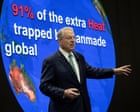
The former US vice-president and climate activist Al Gore said the failure at Cop31 was an outrage and significant reform was needed. “World leaders no longer want to settle for the lowest common denominator. They want real action to implement and finance a just transition away from fossil fuels. It has been clear for years that the Cop process is in need of significant reform,” he said.
He said most countries had come to Antalya to move forward “in good faith” and it was “time that we empower those leaders with a reinvigorated multilateral process that reflects the latest science and represents the will of the majority of the world”.
In the moments after the pact died, the Australian climate minister, Chris Bowen, co-chair of Cop31, said: “The fundamental root problem is that when Cops were created, for reasons I understand, it was made consensus only. That’s a very tough ask when you also need consensus to change consensus, which is a particular challenge.” He said there had been at attempt at Cop31 to introduce efficiency reforms.
The UN’s chief climate negotiator, Simon Stiell, defended the consensus-based approach, saying it had succeeded with the 2015 Paris agreement, helping to lower expected global heating at the end of the century from almost 5C to 2.6C. But as the talks wound up, he conceded the consensus system had fallen short in Antalya.
Stiell said he was championing a review process within the UN climate convention to seek external advice on “areas of potential reform”.
Johan Rockström, the director of the Potsdam Institute for Climate Impact Research, said Cops needed to transition from “negotiating promises and commitments that we never deliver on” to a focus on accountability for promises made and their implementation.
Tobias Holle, the co-founder of the NGO group Shifting Advocacy, said Cop31 and previous failures “show that the process is not fit for purpose any more”. He said: “Despite the political will of the many, the few blocking the progress end up winning in a process whose rules and decision-making structures repeatedly allow the lowest common denominator to dictate the level of ambition. We need a structural reform that delivers on climate justice.”
During the talks, Panama released an open letter to the Cop co-chairs on areas on which it would refuse to compromise during negotiations, including that a path be opened up to changing from consensus to simple majority voting.
Matt McDonald, a professor of international relations at the University of Queensland in Australia, who was at the talks, said: “The legacy of Cop31 might be recognition of the limits of this consensus-driven approach to climate negotiations and the development of alternative sites for climate action.”
He said it was “a different world now” than in 2015 when the Paris agreement was forged, “raising questions about the future of this type of consensus-based multilateralism going forward”.
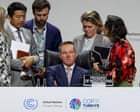
Cop31 overran its official end-time of Friday evening, ending late on Sunday, making it the longest climate summit so far. It was also, according to many estimates, the largest.
The decision by countries including those in the EU bloc, Panama, Belize, Vanuatu, the UK, the Marshall Islands and Norway to formally object to the cover decision meant the pact could not be gavelled through. Some view the outcome as a positive decision to walk away – a “sign of courage”, as the former UN climate chief Christiana Figueres has called it.
China, India and a large number of developing countries did not formally object to the text and subsequently expressed their disappointment at the failure of the pact. The Ghana delegation, which accepted the text, told the plenary: “Africa has always chosen to build multilateralism rather than walk away from it.”
- climate
- failure
- call
- reform
- summit
- antalya
- prompt
- vice