business

PAYE, VAT and corporate taxes in focus as Treasury prepares 2027 reforms
PAYE, VAT and corporate taxes in focus as Treasury prepares 2027 reforms

NAIROBI, Kenya Nov 24 – The National Treasury is seeking to broaden Kenya’s tax base and improve compliance as it prepares the second Medium-Term Revenue Strategy (MTRS) ahead of the 2027/28 financial year. The studies examine personal income tax, petroleum excise, corporate taxation, Value Added Tax (VAT), electronic invoicing through eTIMS, informal payments, cross-border trade and the Financial Inclusion Fund.

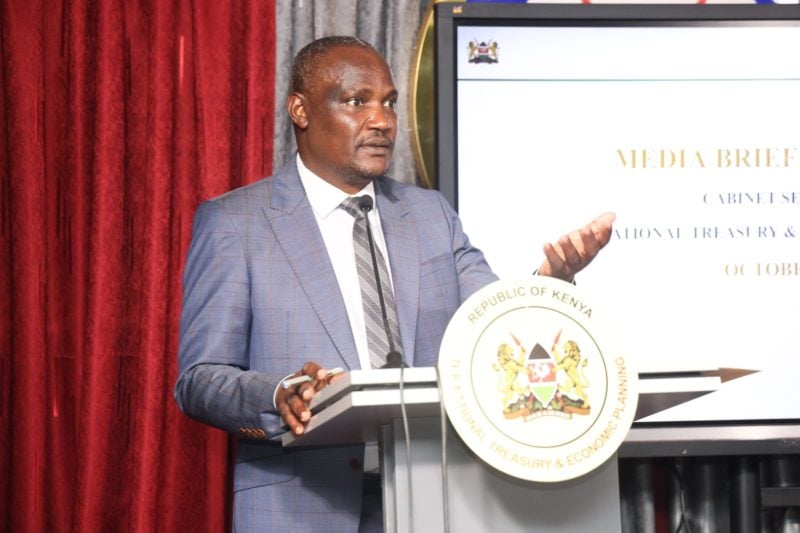
NAIROBI, Kenya Nov 24 – The National Treasury is seeking to broaden Kenya’s tax base and improve compliance as it prepares the second Medium-Term Revenue Strategy (MTRS) ahead of the 2027/28 financial year.

Treasury Cabinet Secretary John Mbadi says the strategy will build on lessons from the current revenue framework, with emphasis on bringing more taxpayers into the tax system and reducing excessive reliance on individuals and businesses already operating within the formal economy.

Mbadi said improving tax administration and addressing compliance gaps would be critical to strengthening domestic revenue mobilisation without imposing additional pressure on existing taxpayers.

Speaking during a stakeholder workshop organised by the Government of Kenya and the African Economic Research Consortium in Nairobi, he said the Government must pursue revenue measures that support economic growth and protect household purchasing power.

He argued that businesses require sufficient capital to expand operations, employ more people and invest in productive activities, while households need disposable income to support consumption and savings.

The second MTRS will be informed by 14 research papers presented during the workshop, covering different aspects of the country’s tax system.

The studies examine personal income tax, petroleum excise, corporate taxation, Value Added Tax (VAT), electronic invoicing through eTIMS, informal payments, cross-border trade and the Financial Inclusion Fund.

A key area of focus is the distribution of personal income tax across different income groups, including the impact of existing exemptions and reliefs.

The research will also examine tax incidence and income inequality to establish whether the current tax framework places obligations on taxpayers according to their actual ability to pay.

Mbadi said the Government must also address public concerns over how collected taxes are utilised, insisting that revenue mobilisation should go hand in hand with accountability in public expenditure.

“Taxpayers are entitled to ask what they receive for their contribution,” he said.

He directed technical teams to consolidate the workshop recommendations into a policy review matrix outlining the supporting evidence, additional analysis required and institutional responsibilities.

The matrix will identify proposals requiring legislative changes and those that can be implemented through improvements in tax administration.

The Treasury is expected to use the findings to shape the Finance Bill, 2027, and the second MTRS.

  • tax
  • treasury
  • revenue
  • income
  • vat
  • focus
  • taxpayer
  • kenya

Summaries and tags are generated automatically. Stay informed with VidiaNews.

Related news

Government’s key test in managing debt lies in 2027 – KPMG UNDP report
business

Government’s key test in managing debt lies in 2027 – KPMG UNDP report

The KPMG UNDP 2027 Budget Highlights says the government’s key test in managing Ghana’s public debt lies in 2027, when about GH¢53 billion of Domestic Debt Exchange Programme (DDEP) obligations and US$1.17 billion of Eurobond payments fall due. Similarly, lower Treasury bill rates kept interest payments in October 2026 at GH¢38.8 billion, 24.7% below target, it mentioned The 2026 Debt Sustainability Analysis rates Ghana’s risk of external and overall debt distress as moderate, supporting rating upgrades by Fitch (‘B’) and Moody’s (‘B3’) in 2026.

Read →
UK taxpayer funds held in offshore tax havens top £1tn, latest HMRC data shows
business

UK taxpayer funds held in offshore tax havens top £1tn, latest HMRC data shows

Figures show recent 10% rise in total held in financial centres such as Jersey and Panama raising fears over cost to public purse The amount of money UK taxpayers hold in offshore accounts in tax havens has exceeded £1tn for the first time, raising concerns about potential losses to the public purse. HM Revenue and Customs (HMRC) data, obtained by the TaxWatch thinktank through freedom of information requests, shows between 2022 and 2024 the value of balances held offshore in tax havens increased by 10%.

Read →
Nigeria can’t borrow its way out of economic crisis – Duke
business

Nigeria can’t borrow its way out of economic crisis – Duke

The presidential candidate of Peoples Redemption Party, PRP, Donald Duke, has warned that Nigeria cannot borrow its way out of its economic crisis, urging the federal government to shift from debt-driven spending to policies capable of expanding production, creating wealth and strengthening the country’s revenue base. Duke, who was former governor of Cross River State, spoke in an interview in Abuja against the backdrop of the country’s rising debt burden and persistent economic pressures on households and businesses.

Read →
NRS urges investigative reporting to curb illicit financial flows
business

NRS urges investigative reporting to curb illicit financial flows

By Emma Ujah, Abuja Bureau Chief The Nigeria Revenue Service (NRS) has urged the media to strengthen investigative reporting to expose illicit financial flows (IFFs) and revenue leakages undermining Nigeria’s economic development. The call was made at a media workshop in Abuja, where an NRS official, Idris Abdullahi, said illicit financial flows were depriving government of resources needed to fund infrastructure, healthcare, education and other development programmes.

Read →
UNICEF urges Kenya to protect children’s budgets amid foreign aid cuts
business

UNICEF urges Kenya to protect children’s budgets amid foreign aid cuts

NAIROBI, Kenya, Nov 23 – The United Nations Children’s Fund (UNICEF) has urged national and county governments to protect funding for education, healthcare, child protection and social protection amid declining international aid, warning that funding cuts could expose vulnerable children to greater risks. UNICEF Representative to Kenya Dr Shaheen Nilofer made the appeal during World Children’s Day celebrations held at the United Nations Office at Nairobi on Friday, November 20, urging governments to prioritise children in budget allocations.

Read →