From Survival to Scale: How fintech apps are rewiring Ghana’s MSME economy

With a $4.8 billion financing gap and over 90% of small businesses locked out of formal credit, a new generation of Ghanaian fintech platforms is building the digital rails that keep the economy’s backbone moving, and iSmart and Korba are showing how it’s done. Meanwhile, its Customer Engagement Solutions (CESI) platform, which includes tools like Digitalk, CPaaS, and Grow, empowers telecoms, enterprises, and SMEs to manage and engage over 4.5 million subscribers across Africa, turning one-way transactions into ongoing commercial relationships.
With a $4.8 billion financing gap and over 90% of small businesses locked out of formal credit, a new generation of Ghanaian fintech platforms is building the digital rails that keep the economy’s backbone moving, and iSmart and Korba are showing how it’s done.
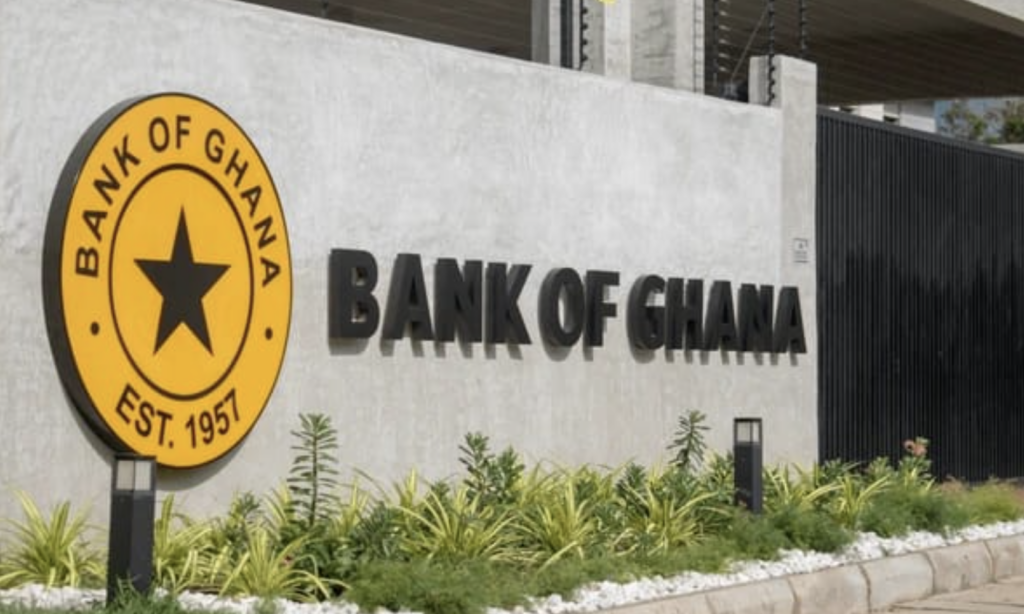
Ghana’s micro, small, and medium enterprises (MSMEs) are not just a segment of the economy; they are the economy. They constitute over 90% of all registered businesses, contribute roughly 70% of Gross Domestic Product, and provide around 80% of total employment, with an estimated 1.7 million businesses employing about 8.5 million people. Yet for decades, this formidable engine has been running on a persistent and punishing constraint: access to finance. The Bank of Ghana (BoG) identifies an annual SME financing gap of approximately $4.8 billion, a chasm that has widened even as the country’s digital payment infrastructure has exploded.
The paradox is striking. In June 2026 alone, mobile money platforms processed 954 million transactions valued at approximately GH¢493 billion, up more than 50% from the GH¢323 billion recorded a year earlier. Some 82% of all financial transactions in Ghana now happen digitally, supported by over 26 million active mobile money accounts. Ghana has built “extraordinary payment rails,” as BoG Second Deputy Governor Matilda Asante-Asiedu put it, but has “not yet built equally extraordinary credit rails”. Over 90% of SMEs still have zero access to formal credit.
It is within this gap between the ubiquity of digital payments and the scarcity of digital credit that a quiet revolution is taking place. Ghanaian fintech companies are no longer simply moving money; they are building the operational, transactional, and trust infrastructure that allows MSMEs to professionalise, scale, and, eventually, become bankable. Two platforms in particular, iSmart and Korba, illustrate how solving unglamorous, ground-level problems is creating the conditions for broader economic participation.
iSmart: Building the Full-Stack Digital Utility for the Small Enterprise
Founded in Accra in 2015, iSmart International Ghana has evolved from a value-added services (VAS) provider into an ISO- and PCI-DSS-certified digital infrastructure company serving over 10,000 clients, from major banks and telecoms to small enterprises. Its proposition is not a single app but a suite of tools that meet MSMEs where they are: often on basic feature phones, often in rural areas, often without the luxury of time to learn complex software.
At the heart of its MSME offering is iSmart Pay, a payment platform developed just over a year ago to help businesses receive and manage payments through three channels: mobile money, direct bank transfers, and the iSmart Pay wallet. For a market trader or a small retail shop, this eliminates the friction of maintaining separate merchant accounts for each network. For a growing enterprise, iSmart’s payment APIs and gateways provide the flexibility to integrate collections directly into their own operations.
But iSmart’s deeper contribution lies in the unglamorous plumbing that keeps small businesses connected. Its USSD connectivity allows any MSME or its customers to check balances, pay bills, or access services by dialling a short code, no internet required. This “no internet, no problem” approach brings essential digital functions to millions who remain outside the smartphone economy. Meanwhile, its Customer Engagement Solutions (CESI) platform, which includes tools like Digitalk, CPaaS, and Grow, empowers telecoms, enterprises, and SMEs to manage and engage over 4.5 million subscribers across Africa, turning one-way transactions into ongoing commercial relationships.
The strategic logic is clear. As research on fintech adoption among Ghanaian MSMEs has found, the perceived ease of use is the strongest driver of adoption, and the real competitive advantage emerges only when digital tools are deeply integrated into core business processes, yielding gains in cost efficiency, operational agility, and service differentiation. iSmart’s stack is designed for exactly that integration: a small business can start with bulk SMS for marketing, graduate to USSD for customer self-service, and layer on iSmart Pay for collections, all within a single, certified ecosystem.
Korba: Restoring Trust and Turning Agents into Micro-Hubs
If iSmart builds the broad infrastructure, Korba (operated by Halges) attacks two of the most visceral pain points facing Ghanaian businesses that accept digital payments: the fear of reversals and the struggle of mobile money agents to earn a sustainable living.
Payment reversals have been a silent killer for Ghanaian merchants. A customer pays, the business releases the product, and then the customer reverses the transaction back into their wallet. Korba estimates that businesses across Ghana have lost “well over 10 million cedis” to this practice, with restaurants, delivery companies, retail shops, and online vendors bearing the brunt. KorbaPay was built to eliminate this vulnerability: when a customer pays through the platform, the funds stay with the business, and the customer cannot initiate a reversal from their end. For a small online vendor or a delivery startup operating on thin margins, this is not a feature; it is the difference between staying in business and closing shop. It restores the confidence necessary for digital commerce to function.
At the same time, Korba has built a parallel solution for the army of mobile money agents and small business owners who form the last-mile distribution network of Ghana’s financial system. The Korba Agent app turns an ordinary smartphone into a point-of-sale (POS) terminal, allowing agents to offer a far wider range of services beyond basic cash-in and cash-out: airtime and data sales across all networks, utility bill payments for DStv, GOTV, StarTimes, ECG, and Ghana Water, insurance sales, and event ticketing, each earning instant commissions. For an agent whose income was previously limited to a narrow spread on mobile money transactions, this diversification can “significantly boost their income,” as the app’s own description puts it.
Korba has also addressed the cost barrier. Its payment solution for businesses is priced at as low as 1.5% per transaction, with a cap for example, a fixed GHS 20 fee on transactions above GHS 3,000. This predictable, capped pricing structure is particularly important for higher-value MSME transactions, where percentage-based fees can erode already thin margins.
iSmart and Korba are not isolated success stories. They are part of a maturing ecosystem that includes platforms like Oze, which combines digital bookkeeping with lending and has served over 10,000 SMEs and is remaking cross-border remittances; Fido, which has issued over $500 million in digital loans; and Hubtel, whose merchant payment and USSD products power tens of thousands of businesses.
The Bank of Ghana is actively pushing this frontier, advancing open banking and open finance frameworks with the explicit goal of turning mobile money transaction records into usable credit histories. As Second Deputy Governor Asante-Asiedu argued, “This is not just background information. It is a credit record. We have simply not built the habit of reading it as such”.
The challenges remain formidable: regulatory fragmentation, cybersecurity risks, data governance gaps, and inadequate digital infrastructure in some regions. But the direction of travel is unmistakable. The fintech applications that are transforming MSMEs in Ghana are not doing so by replicating traditional banking. They are doing it by embedding financial services into the daily workflows of small businesses through a USSD menu that works on any phone, a payment gateway that accepts whatever the customer has, an agent app that turns a kiosk into a multi-service hub, and a fraud-prevention layer that makes digital transactions safe enough to rely on.
For Ghana’s 1.7 million MSMEs, the promise of fintech is not abstract. It is the ability to receive a payment without fear of reversal, to manage customer relationships without a technical team, and to build, transaction by transaction, the digital footprint that one day becomes a credit record. iSmart and Korba are proving that the most impactful innovation often looks less like a shiny new app and more like the invisible rails that allow the backbone of the economy to finally stand upright.
Kweku Hammond - Snr Sales & Marketing Consultant/ Faculty - Nova Business School Africa
- msme
- ghana
- economy
- fintech
- ismart
- payment
- business
- platform