OPINION: Beyond the Singapore Dream: Africa’s Missing Link in Healthcare

Its National Electronic Health Record facilitates information-sharing across healthcare settings, while the 2026 Health Information Act, passed by Singapore’s Parliament on January 12, 2026, and receiving presidential assent on February 3, strengthens the framework for secure health-data exchange. The World Health Organization estimates that approximately 385 million people in the African Region are pushed further into poverty each year because of out-of-pocket healthcare expenditure.
A patient walks into a hospital with an insurance card, expecting to receive treatment. The doctor determines what is needed, but before care can proceed, the hospital must verify the patient’s cover, obtain authorisation and, sometimes, resolve queries with the insurer. What should be a straightforward process becomes a series of exchanges between different systems. For the patient, it means delays. For the healthcare provider, additional administrative work. For the insurer, another transaction to manage.
This everyday experience exposes one of the biggest challenges facing African healthcare. Despite growing investment in digital solutions, the systems responsible for financing and delivering care often remain disconnected.
In Kenya’s development conversation, Singapore has increasingly emerged as a benchmark for what sustained planning, investment and strong institutions can achieve. Its healthcare system offers an equally important lesson.
Through its S+3Ms financing framework, Singapore combines government subsidies, MediSave, MediShield Life and MediFund. Its National Electronic Health Record facilitates information-sharing across healthcare settings, while the 2026 Health Information Act, passed by Singapore’s Parliament on January 12, 2026, and receiving presidential assent on February 3, strengthens the framework for secure health-data exchange.
The underlying lesson is that healthcare financing, information management and service delivery cannot operate in isolation. They must function as interconnected parts of one system.
The importance of this integration also emerged at the 2026 InsurInnovator Connect Asia (IIC), which brought together more than 1,500 industry participants and speakers. Discussions on artificial intelligence, claims networks and cross-border direct payment highlighted how connected systems can improve coordination among healthcare providers, insurers and patients. Efficient claims processing, reliable information exchange and timely pre-authorisation are essential to making healthcare work.
For Africa, this is more than an operational concern. It is a matter of financial protection.
The World Health Organization estimates that approximately 385 million people in the African Region are pushed further into poverty each year because of out-of-pocket healthcare expenditure. In Kenya, out-of-pocket payments accounted for 24.25 per cent of current health expenditure in 2023.
Expanding access to healthcare must therefore go hand in hand with strengthening the systems that make treatment affordable and healthcare financing sustainable. Improving access means little if patients continue to face financial and administrative barriers when seeking care.
This challenge was also central to the fifth Africa HealthTech Summit in Kigali, Rwanda. The latest edition attracted more than 4,000 participants, while the wider Summit community has grown to over 5,600 healthcare stakeholders. Its programme featured discussions on artificial intelligence, health data, digital infrastructure and healthcare financing.
A recurring message was the need to move beyond isolated technological innovations towards solutions that can be integrated, adapted and scaled across African health systems.
This distinction between digitising individual processes and transforming the systems around them must shape Africa’s next phase of healthcare investment.
A hospital may have a digital patient record, an insurer may operate an automated claims platform, and a healthcare provider may have its own payment system. Yet, when these platforms cannot exchange information, the underlying problems remain. Patients experience delays, providers face administrative and financial pressures, while insurers and other payers have limited visibility.
Adding more technology does not necessarily solve these challenges. The real transformation lies in connecting the systems, institutions and financing mechanisms that make healthcare work.
Interoperability must therefore be treated as essential healthcare infrastructure, not an optional technical feature.
Connected systems can improve efficiency while advancing more inclusive access to healthcare. They can reduce administrative barriers for patients, promote more responsible use of healthcare resources and strengthen accountability through secure information-sharing and transparent claims processes.
Healthcare information systems, claims platforms and payment networks must be able to communicate securely across institutions. Digital health financing should translate into faster pre-authorisation, more accurate claims processing and predictable payments to healthcare providers.
Partnerships between healthcare providers, insurers and technology companies must also be measured against tangible outcomes. The test should be whether they improve access to care, reduce administrative costs, strengthen operational efficiency and provide greater financial protection for patients.
Africa does not need to replicate Singapore’s healthcare model. It needs to learn from the discipline of connecting institutions and apply those lessons to its own healthcare realities.
Singapore demonstrates what sustained coordination and investment can achieve, while Kigali reflects Africa’s growing ambition to shape its own healthcare future. The task now is to translate that ambition into connected systems that deliver meaningful results for patients, providers and payers.
The next chapter of Africa’s healthcare transformation must be defined by collaboration, institutional coordination and technology that improves people’s lives. The opportunity is no longer simply to digitise healthcare, but to build the connected infrastructure that makes quality, accessible and affordable healthcare possible.
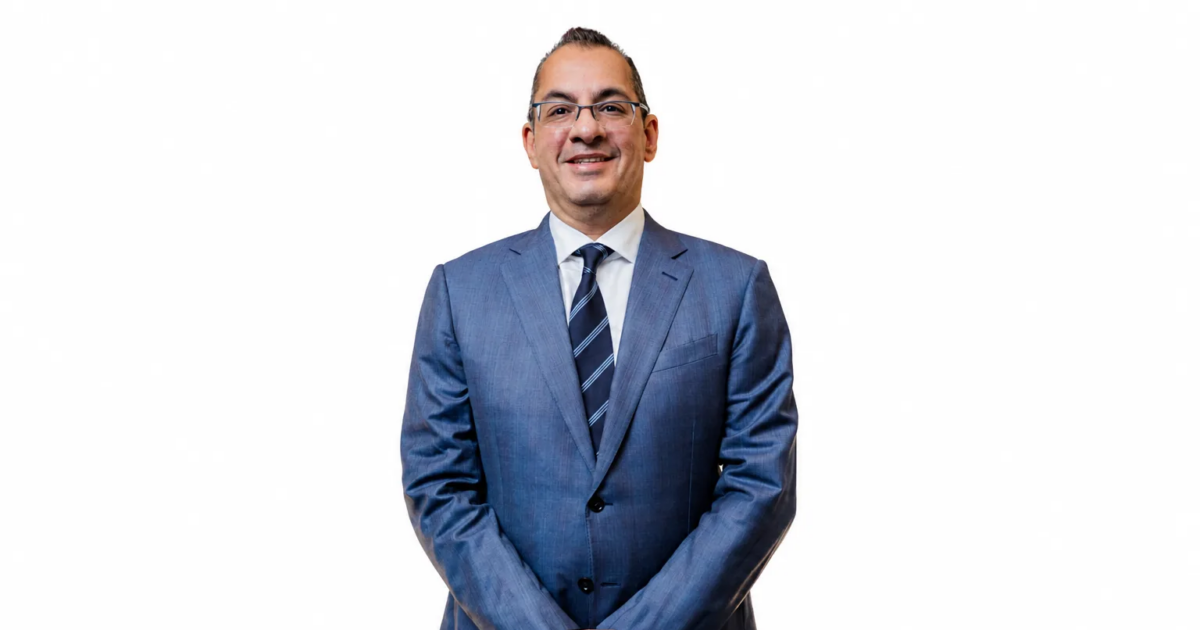
The author is Group Managing Director, Smart Applications International
Group Managing Director, Smart Applications International Limited
- healthcare
- system
- singapore
- africa
- patient
- health
- insurer
- financing