Why Africa Cannot abandon Cuba
During the West African Ebola outbreak in 2014-2015, Cuba provided the largest medical personnel consisting of over 460 health workers (including a contingent of 165 through the World Health Organization) to Sierra Leone, Liberia, and Guinea. The medical teams provided frontline support in multiple African countries including South Africa, Angola, Cape Verde, and Togo that were facing serious health crisis.
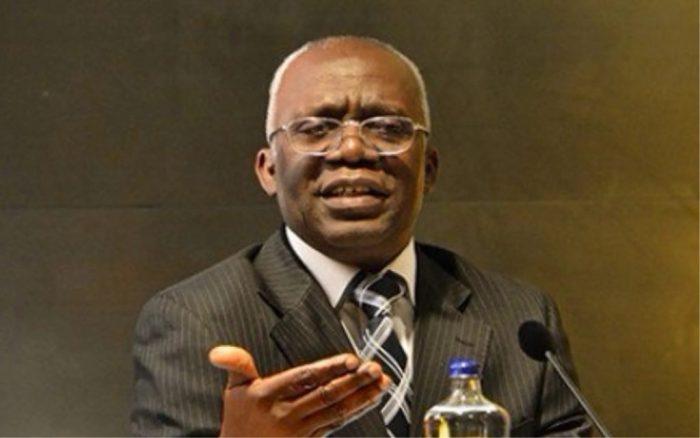
BY FEMI FALANA SAN (Speech delivered at the Rally held by the Nigeria Solidarity Movement with Cuba in Lagos on October 24, 2026) INTRODUCTION Following the 1959 Cuban Revolution, Fidel Castro made solidarity with Africa a corner stone of the foreign policy of Cuba. Hence, the government developed interest in the anticolonial movements and socialist governments in Africa.
In 1961, Cuba sent a military mission to the Kwame Nkrumah government in Ghana. And following the independence of Algeria in 1962, Cuba sent military assistance and medical supplies to the Algerian National Liberation Front. The visit of Ernesto Che Guevara to the progressive movements in the Portuguese colonies in 1964 consolidated the involvement of Cuba in African affairs.
A year later, Che Guevara was in the Democratic Republic of the Congo to offer his knowledge and experience as a guerrilla fighter. CUBA’S SUPPORT FOR LIBERATION STRUGGLE IN AFRICA Cuba became a strong ally of the defunct Organization for African Unity and the African Union in the struggle against colonialism and apartheid. In justifying Cuba’s internationalist foreign policy and deployment of troops to support anti-colonial and anti-apartheid movements across Africa, Fidel Castro famously stated, “African blood flows freely through our veins.
Many of our ancestors came as slaves from Africa to this land. As slaves they struggled a great deal. They fought as members of the Liberating Army of Cuba. We’re brothers and sisters of the people of Africa and we’re ready to fight on their behalf.” On another occasion, the Cuban leader said, “We are a Latin-American nation and a Latin-African nation as well.” In support of the independence movements that engaged in armed struggle against European colonial powers in Guinea-Bissau, Mozambique, and Angola, Cuba sent military advisers, fighters and equipment.
Thousands of Cuban troops were deployed to support the People’s Movement for the Liberation of Angola (MPLA) against the invading South African apartheid forces and rival local armed groups sided by the United States and other western governments. Not less than 55,000 Cuban troops took part in the historic battle of Cuito Cuanavale in Angola from 1987–1988.
Indeed, it was the military setbacks suffered in the battle field by South Africa that compelled the apartheid regime to enter into the political negotiations that culminated in the independence of Namibia in 1990, and South Africa in 1994. CUBA’S MEDICAL INTERVENTIONS IN AFRICA Based on its long-standing history of medical internationalism in Africa, Cuba has sent thousands of medical personnel including doctors and nurses to confront dangerous diseases in many African countries.
During the West African Ebola outbreak in 2014-2015, Cuba provided the largest medical personnel consisting of over 460 health workers (including a contingent of 165 through the World Health Organization) to Sierra Leone, Liberia, and Guinea. Many world leaders commended Cuba for the success recorded in combating the Ebola Virus disease while the late Pope Francis lauded the “heroic” doctors, nurses, and volunteers from around the world who traveled to West Africa to contain the “implacable illness”.
In 2020, Cuba dispatched hundreds of medical personnel to African countries to help various governments to combat the Covid 19 pandemic. The medical teams provided frontline support in multiple African countries including South Africa, Angola, Cape Verde, and Togo that were facing serious health crisis. Unlike Western countries that usually recommend mosquito nets and insect killers for combating the scourge of malaria fever, Cuba has collaborated with some African countries to work on vector-control programs to eradicate malaria and dengue.
In particular, Cuba has helped countries to build biolarvicide factories, trained local community health agents, and set up primary care frameworks in rural municipalities in Africa. No doubt, the dissolution of the Soviet Union in 1991 had adverse political and economic impact on Cuba. Notwithstanding the economic difficulties experienced by Cuba, compounded by the crippling sanctions imposed by the United States, the Government has continued to offer bilateral scholarships, fellowships, and grants for international students from various African countries to study Medicine, Engineering, Agronomy, Sciences, Humanities and Technology.
Apart from Cuba, no country has provided medical, educational and military assistance to African countries without any strings attached. GENOCIDAL ATTACKS ON CUBA BY THE UNITED STATES Cuba is being asphyxiated by the US in order to carry out a regime change that cannot be justified under international law. However, since the economic strangulation of Cuba has not materialised in the collapse of the Cuban government, the US government decided to cook up the charges of conspiracy and murder against Raul Castro and five other Cubans.
The planned military aggression is also meant to dive
- cuba
- africa
- movement
- country
- government
- angola
- health
- independence