The Guardian view on Serbia’s student revolution: from principled protest to power
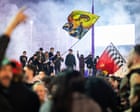
Two years after the Novi Sad tragedy gave birth to a youthful political movement, Sunday’s remarkable election has taken the country into a new era This weekend it will be two years since the collapse of a shoddily constructed train station canopy in Serbia’s second city, Novi Sad. Some of those demonstrators dared to imagine that they could become the catalyst for a democratic revolution.
Two years after the Novi Sad tragedy gave birth to a youthful political movement, Sunday’s remarkable election has taken the country into a new era
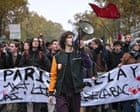
This weekend it will be two years since the collapse of a shoddily constructed train station canopy in Serbia’s second city, Novi Sad. The tragedy, killing 16 people, was swiftly attributed to state corruption and failures of regulation, sparking student-led protests across the country.
Some of those demonstrators dared to imagine that they could become the catalyst for a democratic revolution.
On Sunday, that is more or less what happened. After sustaining their protests and turning them into a political movement, the students resoundingly defeated Aleksandar Vučić’s autocratic government in a snap legislative poll called by the president himself. Their victory constitutes one of the most remarkable election outcomes in recent European history.
For well over a decade Mr Vučić and his Serbian Progressive party (SNS) have exerted a domineering grip over civil society and the media, ruling through a combination of cronyism, patronage and bullying authoritarianism. As a report by international observers confirmed on Monday, the government made full, unscrupulous use of such tactics to ensure there was no level playing field for the vote. That it was nevertheless routed by a leaderless movement of 20- and 30-somethings will have been noted across a continent in which youth protest is challenging political priorities.
As in Hungary, where a focus on corruption helped the opposition to unseat Viktor Orbán after 16 years in office, the students’ campaign for basic democratic renewal struck a deeper chord than perhaps even they thought possible. Posing the choice for voters as “Serbia or mafia?”, they put forward a Student List of civic candidates dominated by academics, but also featuring farmers and well-known athletes. A turnout of almost 70% – the highest in a Serbian election since the breakup of Yugoslavia in 1992 – delivered them a comfortable majority.
What comes next will necessarily be an experiment in doing things differently. By standing apart from established structures of politics, the student insurgents embodied a freshness of approach and won the trust of the public – including in rural areas presumed to be bastions of Vučić support. In the immediate future, the new government is likely to function as a kind of constituent assembly, dedicated primarily to cleaning up civil society and rolling back the abuses that saw Serbia plunge towards the bottom of European corruption rankings.
Politically, the priority will be to consolidate this domestic agenda by winning the forthcoming presidential election. which is due by late December. But in the longer term there will be less straightforward debates to be had. Mr Vučić’s defeat is good news for the western Balkans as a whole, where he has been a consistently disruptive presence. But on foreign policy issues such as joining the European Union and relations with Russia, opinion across the student movement is divided.
As a new government seeks to re-establish the rule of law and a properly functioning and accountable state, Brussels must do all it can to assist that process while outlining a plausible and attractive path to EU membership. Mr Vučić’s Serbia, like Mr Orbán’s Hungary, became a soft autocracy where power was so entrenched that it was hard to imagine how it could be dislodged. But now there are new and better possibilities. In extraordinary fashion, the students’ inspiring journey from principled protest to power has shown just what the art of politics can deliver.
- serbia
- student
- revolution
- protest
- guardian
- view
- power
- novi