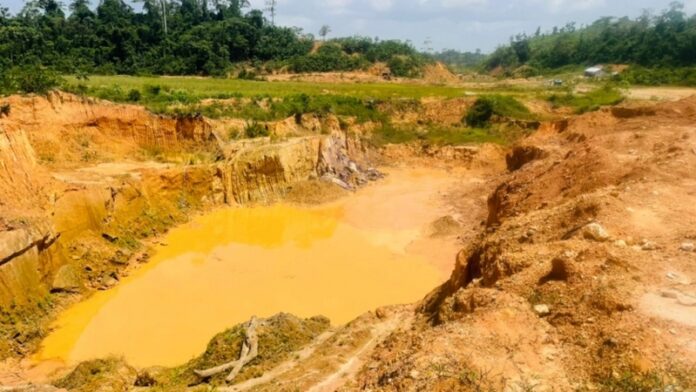
GHEL, EPA turn to hydraulic dredging to tackle galamsey damage

Ghana Heavy Equipment Limited (GHEL) and the Environmental Protection Authority (EPA) are exploring the use of hydraulic dredging technology to remove accumulated sediments from polluted rivers and reclaim lands devastated by illegal mining. The Chief Executive Officer of the EPA, Prof. Nana Ama Browne Klutse, and her GHEL counterpart, Awal Mutalib, subsequently held discussions on how their respective institutions could support the proposed restoration programme.
Ghana Heavy Equipment Limited (GHEL) and the Environmental Protection Authority (EPA) are exploring the use of hydraulic dredging technology to remove accumulated sediments from polluted rivers and reclaim lands devastated by illegal mining.
The proposed partnership is expected to introduce specialised dredging systems, pumping equipment and amphibious excavators to support the restoration of degraded waterways and surrounding landscapes.
The initiative was discussed following the launch of the Water Restoration Management Framework in Ho, where the two institutions agreed on the need to combine environmental regulation, scientific research and engineering expertise to tackle the damage caused by illegal mining.
The framework, launched at the Volta Serene Hotel from November 26 to 28, 2026, is intended to provide a coordinated approach to addressing the destruction of river systems, agricultural lands and other natural resources.
The Chief Executive Officer of the EPA, Prof. Nana Ama Browne Klutse, and her GHEL counterpart, Awal Mutalib, subsequently held discussions on how their respective institutions could support the proposed restoration programme.
A major focus was the use of hydraulic dredging as a potentially more economical way of removing silt and other deposits from affected rivers, compared with operations that depend heavily on excavators and trucks to dig out and transport materials.
Under the proposed arrangement, specialised cutter-suction dredgers, high-capacity pumps and pipeline systems could be used to extract sediments and transport suitable materials to designated reclamation sites.
Amphibious excavators and other earthmoving machinery would complement the operations, particularly in shallow waterways, marshlands, riverbanks and areas that are difficult to access with conventional equipment.
GHEL believes the approach could reduce the need for extensive equipment movement and long-distance transportation of dredged materials, while allowing larger volumes of sediment to be handled more efficiently.
However, the company says the choice of technology and the nature of the intervention at each location would depend on technical, environmental and geotechnical assessments.
The proposed work is expected to go beyond clearing river channels to include the rehabilitation of damaged riverbanks and the reclamation of suitable lands affected by illegal mining.
Through controlled pumping and material-placement systems, dredged materials considered suitable for reuse could be transported to approved locations to support land rehabilitation.
The process would, however, require environmental and engineering approval to ensure that the material used for reclamation does not create further damage.
Under the proposed partnership, the EPA would provide regulatory oversight, technical direction and environmental monitoring, while GHEL would contribute its machinery, engineering expertise and equipment mobilisation capacity.
The arrangement is intended to turn the objectives of the national restoration framework into practical interventions, although the discussions do not yet amount to the commencement of dredging or reclamation works.
At the launch, the Minister for Environment, Science and Technology, Dr Zanetor Agyeman-Rawlings, also pledged support for the initiative, stressing the importance of coordinated institutional action in addressing the country's environmental challenges.
Prof. Browne Klutse and Mr Mutalib also recognised the need to bring other technical institutions on board, particularly the Council for Scientific and Industrial Research (CSIR).
The proposed engagement would draw on scientific research, material testing, engineering advice and environmental monitoring to guide the restoration work.
Relevant government ministries, agencies, research institutions and environmental experts are also expected to contribute to the framework.
GHEL, a state-owned enterprise, says it is prepared to mobilise appropriate dredging technologies, amphibious excavators and supporting equipment in collaboration with the EPA and other institutions.
The proposed intervention comes against the background of extensive damage to Ghana's water bodies and landscapes from illegal mining, which has left communities concerned about the quality of water sources, the destruction of farmland and the long-term cost of environmental degradation.
For the partnership to deliver lasting results, the proposed operations will need to be guided by sound scientific assessments, effective supervision and sustained monitoring to prevent further damage to the affected ecosystems.
- ghel
- dredging
- epa
- material
- damage
- equipment
- restoration
- river