Millions of pupils attend school without meals, KNBS report shows
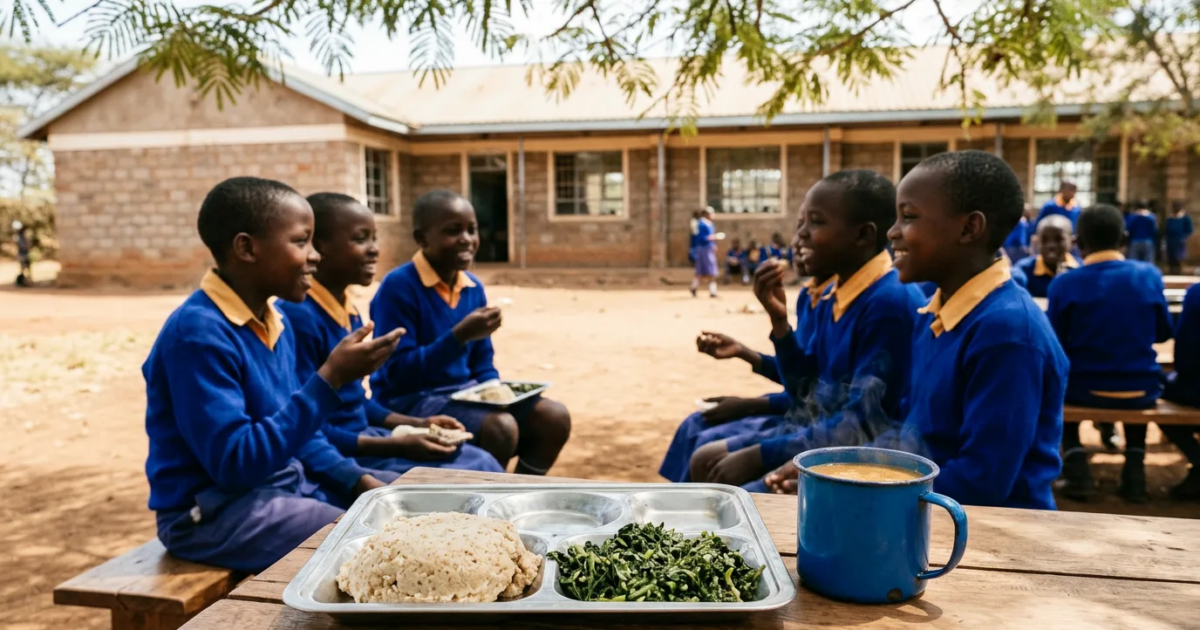
NAIROBI, Kenya Nov – Millions of Kenyan children attending day schools may be missing out on meals during the school day, with a new government report showing that more than a third of schools do not provide food to their learners. In Mandera, the Ministry of Education funded meals in 98.5 per cent of primary schools, while in Nandi and Kericho, parents were the main source of funding at 98.8 per cent each.
NAIROBI, Kenya Nov – Millions of Kenyan children attending day schools may be missing out on meals during the school day, with a new government report showing that more than a third of schools do not provide food to their learners.
The 2024 Kenya School Census by the Kenya National Bureau of Statistics (KNBS) found that only 64.2 per cent of basic learning institutions provided meals to day scholars.
This means 35.8 per cent of the schools covered did not offer meals to learners attending classes during the day.
The situation is particularly concerning in public primary schools, where only 43 per cent of institutions provided meals to day scholars.
In comparison, 79.3 per cent of private primary schools offered meals, exposing a significant difference in access to school feeding programmes.
The report found that 56.7 per cent of primary schools nationally provided meals to day scholars.
“This means more than four in every ten primary schools did not offer meals to their day learners,” KNBS Acting Director General Benjamin Avusevwa said.
The situation was better in secondary schools, where 95.9 per cent of institutions provided meals to day scholars.
However, the report shows that access to meals was not equal across school categories.
In public secondary schools, 97.8 per cent provided meals, compared to 77.3 per cent of private secondary schools.
At junior school level, 63.4 per cent of institutions provided meals, with public schools recording 56.9 per cent compared to 86.6 per cent in private institutions.
The report also reveals that parents remain the biggest financiers of school meals, placing an additional responsibility on households already struggling with the cost of education.
Nationally, parents funded 50.4 per cent of school meal programmes, followed by non-governmental organisations and community-based organisations at 32.7 per cent.
The Ministry of Education funded meals in 18.4 per cent of schools, while county governments accounted for 4.5 per cent.
The dependence on parents was particularly evident in secondary schools, where 96.1 per cent of school meal programmes were funded by parents.
In junior schools, parents financed 80.3 per cent of meals, while the Ministry of Education accounted for 14.7 per cent.
The report further shows that parents funded 73.9 per cent of meals in pre-primary schools through the various sources captured in the census.
There were notable regional differences. In Mandera, the Ministry of Education funded meals in 98.5 per cent of primary schools, while in Nandi and Kericho, parents were the main source of funding at 98.8 per cent each.
- school
- cent
- meal
- report
- parent
- institution
- scholar
- education