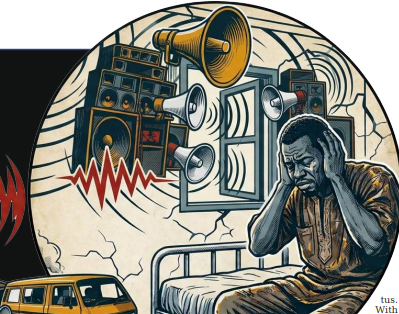
The Wellness cost of unreliable power

This is supported by an established public health framework known as the Social Determinants of Health. It is a public wellness issue, with consequences for our physical health, psychological well-being, and overall quality of life.
By Tochi Okafor The prolonged power cuts experienced over the last few months have brought back memories of growing up in the 1990s. I grew up in a low-cost neighbourhood, and incessant electricity outages were a regular feature of our lives. They drove me up the wall. I missed some of my favourite television programmes because, just when I was settling in to watch, the electricity would go off.
My siblings and I also spent considerably more time on the balcony than we would have liked, simply because it was often the only place we could get some relief from the unbearable heat inside the house. I remember the frustration, the disappointment, and the general inconvenience of missing out on life’s little pleasures. But I also remember thinking that this was just a phase.
Surely, things would improve as the country developed. Surely, more than two decades later, we would have moved past this. Yet here we are. Recent months serve as a stark reminder of the persistent issues facing Nigerians. Circumstances may have changed, and many households now have generators, inverters, and other alternatives, but the underlying struggle remains remarkably familiar.
It is particularly disheartening to realise that something I experienced over 20 years ago is still consuming the time, money, and emotional energy of adults trying to build their lives today. I work in wellness education, and I believe we need to pay more attention to how our living and working environments influence our health. This is supported by an established public health framework known as the Social Determinants of Health.
Recognised by the World Health Organization, this framework examines how the conditions in which people are born, grow, live and work shape their health outcomes. From that perspective, Nigeria’s unreliable electricity supply is not merely an infrastructure problem or an inconvenience. It is a public wellness issue, with consequences for our physical health, psychological well-being, and overall quality of life.
One aspect I find particularly important is its effect on our sense of emotional safety. Emotional safety, in this context, is the sense of stability, predictability and control we derive from our immediate environment. It is the comfort of knowing that basic things will work when we need them to. We can return home, switch on the lights, cool our living spaces, prepare meals, charge our devices and get some rest without having to negotiate another interruption.
When these ordinary expectations become uncertain, everyday life demands considerably more effort. People are forced to remain mentally prepared for disruptions that should not be a regular feature of daily living. Consider the Nigerian weather. It can be unbearably hot, yet you cannot confidently leave your air conditioner running. You switch on the generator, listen to it roar, monitor the fuel level and calculate how much longer you can afford to keep it running.
A generator that should serve as an occasional backup has become an essential part of household infrastructure, with a recurring cost attached to its use. Then there is the noise. In densely populated neighbourhoods, generators have become part of the background soundtrack of everyday life. You hear them from neighbouring compounds, shops, offices and residential buildings.
The World Health Organization identifies excessive environmental noise as a public health concern, associating prolonged exposure with sleep disturbance, annoyance, cardiovascular risks and impaired cognitive functioning. These are not trivial consequences. Sleep and recovery are fundamental to good health, yet many people have to contend with generator noise well into the night.
There is also a more immediate danger. Poorly positioned generators can expose households to carbon monoxide, a poisonous gas that cannot be seen or smelled. In March 2025, The Guardian newspaper reported the deaths of a couple in Port Harcourt, Rivers State, following suspected carbon monoxide poisoning from generator fumes inside their apartment.
It was a tragic reminder of the risks people can unknowingly face while trying to secure electricity for their homes. The US Centers for Disease Control and Prevention advises that generators should never be operated indoors, in garages or near doors, windows and vents. They should be positioned outdoors, at least 20 feet away from the home. The fact that households must increasingly depend on these machines makes generator safety an important public education issue, too.
Even something as fundamental as nutrition becomes more complicated. I am particularly conscious of the relationship between food and wellness, and I know how much unreliable electricity can interfere with meal planning, preparation and storage. You have to consider what can be prepared quickly, what needs refrigeration and how long frozen food can remain safe without power.
Food safety guidance from the US Department of Agriculture indicates that a
- health
- wellness
- cost
- life
- generator
- power
- electricity
- household