Germany news: Christmas tree fires prompt safety warning
German insurers and firefighters are warning of Christmas tree and candle fire risks after a rise in festive season incidents. Follow DW for the latest.
Follow along for the top headlines and analysis from Germany on the Saturday, November 28 and Sunday, November 29:
A Eurowings plane carrying 152 passengers returned to Düsseldorf Airport shortly after takeoff following a bird strike.
The aircraft was heading to the Spanish island of Tenerife when the crew detected vibrations in one of its engines, an airline spokesperson told the German DPA news agency.
The pilots decided to return to Düsseldorf as a safety precaution.
The Airbus A321, operating flight EW9558, landed safely at around 8:20 a.m. local time (0720 UTC/GMT).
The airline said the aircraft was undergoing a technical inspection.
Eurowings provided a replacement plane for the affected passengers, which departed Düsseldorf at 12:20 p.m., four hours after the original aircraft landed.
The replacement flight was expected to arrive in Tenerife at 4:10 p.m. local time.
Police in the western German city of Hagen have banned two suspected Islamists from attending 12 Christmas markets.
The men are Syrian brothers aged 20 and 24, a police spokesperson said.
They face a financial penalty of €500 (around $580) if they violate the ban, with higher penalties and possible police custody for repeated violations.
The Bild newspaper reported that an intelligence agency had alerted authorities to the brothers.
A lawyer reportedly representing the men told the newspaper that investigators had been unable to establish any criminal wrongdoing by his clients and that they had never intended to endanger public safety.
German Environment Minister Carsten Schneider has called for changes to the Rhine River to protect freight transport and improve water storage as climate change progresses.
Low water levels on the Rhine have disrupted shipping this year, forcing cargo vessels to carry lighter loads and increasing transport costs for businesses that rely on the waterway.
Schneider, of the center-left Social Democratic Party, wants to give the river more space rather than deepen it extensively.
His proposals include restoring tributaries and former river channels and using floodplains to store water.
"We also need to make adjustments to the river to safeguard freight transport in the long term," Schneider told the Kölner Stadt-Anzeiger newspaper, stressing the Rhine's importance to German industry.
He called on Germany's federal states to invest a substantial share of their €100 billion ($116 billion) in special infrastructure funding in water infrastructure.
Oliver Krischer, environment and transport minister of North Rhine-Westphalia, called for a "Rhine 2050" action plan involving experts and the states along the river.
He said both natural water retention areas and targeted improvements to shipping channels were needed to safeguard the Rhine's future as a transport route, water source and ecosystem.
German exports to Latin America and the Caribbean are expected to rise by 4.8% to around €45.1 billion in 2026, according to projections by the federal economic development agency Germany Trade & Invest (GTAI).
Growth in the region is expected to slightly outpace the projected 4.6% increase in German exports worldwide.
Mexico remains Germany's largest export market in the region, accounting for more than a third of shipments. Exports to Brazil are expected to grow by 6.5% and those to Colombia by 13.2%.
The trade agreement between the European Union and the Mercosur countries of Argentina, Brazil, Paraguay and Uruguay could provide a further boost.
German exports to the four countries are projected to rise by 6.1% this year, while imports are expected to jump by 17.2%.
However, GTAI warned that German companies faced increasing competition from China, with local production, financing and customer relationships becoming increasingly important.
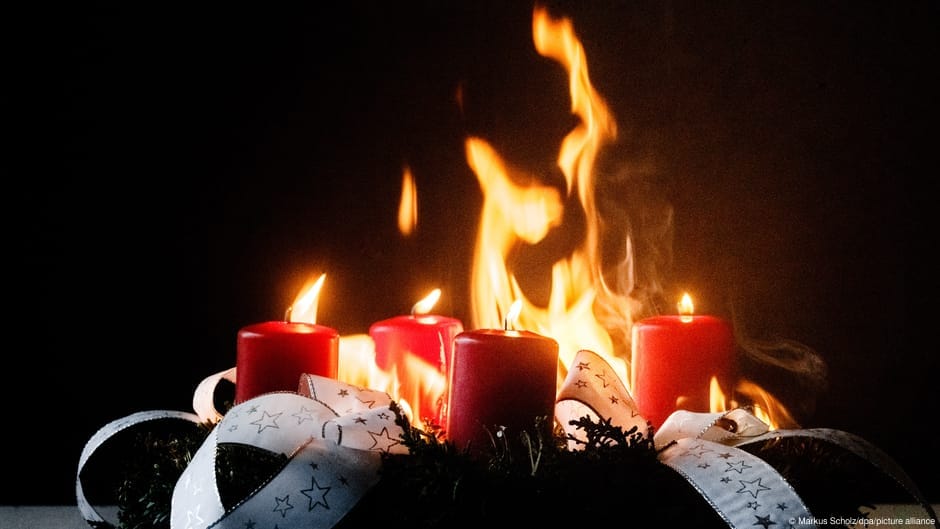
German insurers and firefighters have warned of an increased risk of house fires during the festive season following a rise in incidents last year.
Around 7,000 fires involving Christmas trees, Advent wreaths and candles were recorded in 2025, up 1,000 from the previous year, according to the German Insurance Association.
The fires caused €35 million (about $40 million) in damage, the highest figure in 15 years.
Insurers warned that many people were failing to observe basic fire safety rules, particularly when using real candles on Christmas trees and Advent wreaths.
Firefighters urged people never to leave burning candles unattended and warned that Christmas greenery becomes increasingly flammable as it dries out.
They recommended using electric candles in households with children and pets.
Insurers also warned of an increased fire risk around New Year's Eve due to improperly used fireworks.
Tino Chrupalla, co-leader of the far-right Alternative for Germany (AfD), says his party is increasingly in contact with German business leaders.
"I have already met with CEOs of DAX companies," Chrupalla told the Handelsblatt business newspaper, referring to companies listed on Germany's leading stock market index.
He said business associations were also seeking dialogue with the AfD at the urging of their member companies.
The talks focused on the party's economic and energy policies, as well as reservations businesses had about the AfD.
Chrupalla did not name any companies, saying the discussions were being conducted in strict confidence to protect participants from a public backlash.
He described the contacts as a first "step toward normalization."
Chrupalla also signaled a willingness to soften the party's tone to attract more voters without changing its core principles.
"Thirty percent support nationwide is not enough for me," he said.
The number of new HIV infections in Germany rose slightly in 2025, according to estimates published by theRobert Koch Institute (RKI) ahead of World AIDS Day on December 1.
The public health institute estimated there were 2,400 new infections, around 100 more than in 2024.
Men who have sex with men remained the most affected group, accounting for around 1,300 new infections, although the figure remained broadly stable.
Around 700 people contracted HIV through heterosexual contact and 370 through injecting drugs, with both groups showing an upward trend in recent years.
The RKI called for better access to HIV testing, treatment and preventive medication, particularly outside major cities.
For the first time, more than 100,000 people are estimated to be living with HIV in Germany, largely because advances in treatment have enabled people with the virus to live longer.
An estimated 8,700 people are unaware that they have HIV.
Around 3,400 people received an HIV diagnosis in 2025, with almost a third already experiencing advanced immune system damage.
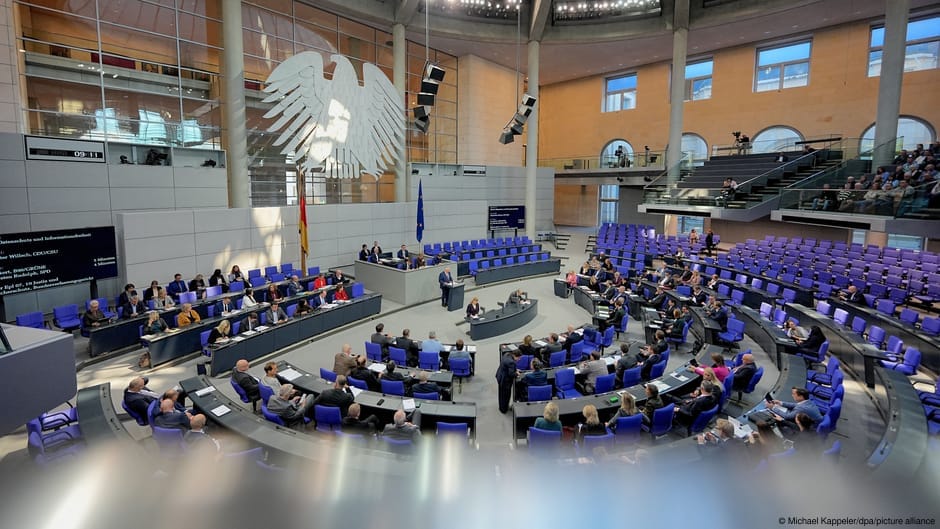
German Labor and Social Affairs Minister Alexander Schweitzer has reignited coalition tensions by presenting pension reform plans without agreement from his conservative partners.
At the heart of the dispute is a provision allowing people with 45 qualifying years in the pension system to retire early without financial penalties.
Schweitzer, of the center-left Social Democratic Party (SPD), wants to retain the provision but exclude periods of unemployment and marginal employment from the qualifying period.
He estimates that around 27% of those currently eligible would lose their entitlement.
Conservative lawmakers argue that the coalition had previously agreed to abolish the provision altogether, while employers' associations warned of rising costs for businesses and workers.
Trade unions also criticized plans to increase financial penalties for early retirement for those with fewer than 45 qualifying years.
Schweitzer defended his proposals, saying they had been thoroughly costed, and expressed confidence that a compromise could be reached.
The SPD wants the Cabinet to approve the reform before Christmas.
The DW newsroom says "Willkommen!" once again readers as we resume our reporting on all things German.
Pensions are once again causing friction within Germany's governing coalition.
Labor Minister Alexander Schweitzer, of the center-left Social Democrats, has unveiled reform plans without getting his conservative coalition partners on board.
Much of the disagreement centers on who should be entitled to retire early without taking a financial hit.
Read on to find out more about what is happening in Germany on Sunday, November 29.
It's past 2 a.m. here in Bonn, making it time to pause these updates.
But we'll be back with the sun on Sunday morning with more of what's going on in Germany this weekend.
The Christmas market on Munich’s Prater Island is anything but typical. Instead of the usual holiday fare, it's all about Harry Potter.
Until December 6, visitors can purchase fan merchandise, enjoy food and drinks inspired by the Harry Potter universe, and have their picture taken against a Harry Potter–inspired backdrop.
According to the organizers, the market was inspired by the HBO series Harry Potter and the Sorcerer's Stone, which premieres on December 25. The series is based on the world-famous fantasy novel series by author J.K. Rowling.
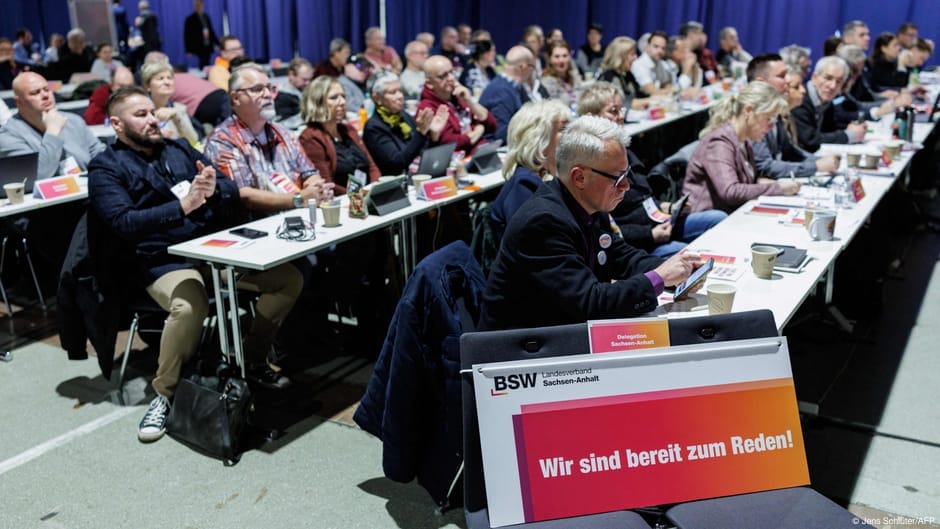
The left-wing populist party Alliance for Social Justice and Economic Reason (BSW), formerly the Sahra Wagenknecht Alliance (also BSW) voted against a measure that would have limited cooperation with the far-right Alternative for Germany party (AfD) on the federal level.
During the party conference in the eastern city of Dresden, a majority of the approximately 600 delegates voted against a motion put forth by several founding BSW members calling for a clearer distinction from the far right.
The basis for the vote came after the AfD came out on top in September's state election in the eastern state of Saxony-Anhalt with 39 seats. The victory is being seen as a major win for Germany's far right. In October, the AfD's Tobias Rausch in Saxony-Anhalt became Germany's first far-right state parliament speaker since World War II.
With the BSW's five seats, the two parties on the opposite extremes of the political spectrum would combine for a majority of the 83 seats.
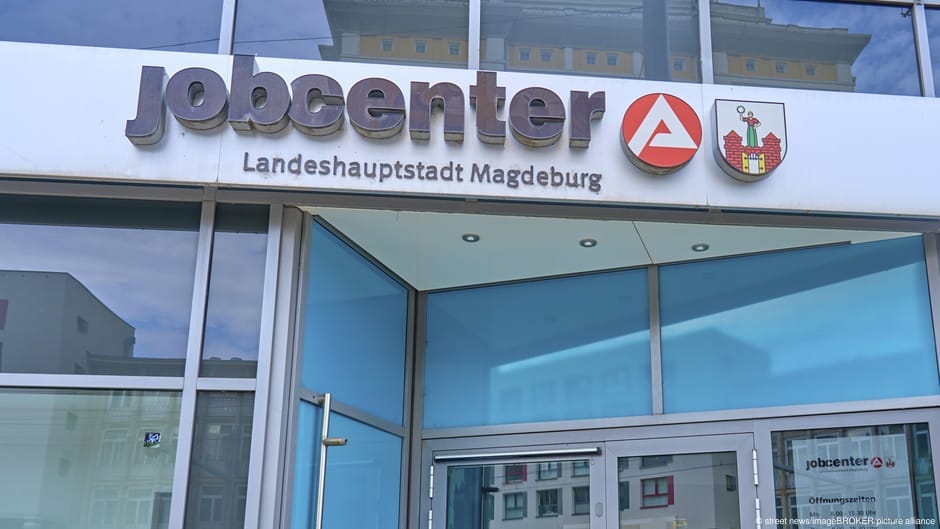
BSW Party founder Sahra Wagenknecht and party leader Fabio De Masi have advocated for the-called "Magdeburg Model," named after the capital of Saxony-Anhalt.
This approach rejects a formal coalition with the AfD, offers no support for AfD candidate in the election of a state premiere, and calls for no official tolerance for far-fight platforms. However, the approach envisions joint motions, joint voting, and possibly also written agreements with the AfD.
On Saturday, Wagenknecht made clear she does not see the AfD as a long-term strategic partner.
"None of us wants to cozy up to the AfD," Wagenknecht said. But the BSW will decide how to proceed if there is "the possibility of reasonable majorities for peace, social improvement, and a reform of public broadcasting."
The AfD and BSW see some overlap in Germany's approach to the Ukraine war, with both taking pro-Russia views critical of military support for Kyiv, while opposing or questioning sanctions on Russia, arguing that they harm the German economy.
BSW executive board members such as Christian Leye, Amid Rabieh and Klaus Ernst had sought to pass the amendment to both rule out coalitions with the AfD, and also "any formal or de facto tolerance, support for an AfD-led government, and long-term agreements on cooperation."
"Since when have we been partners with the AfD?" Leye said after the vote. "This party can only be an opponent."
"In my view, it is a racist party, a nationalist party that also has its issues with democracy. That is why it cannot be a partner," he said.
Germany's Office for the Protection of the Constitution, the domestic intelligence agency, has classified the AfD branch in Saxony-Anhalt as right-wing extremist.
Sahra Wagenknecht, the leader of the left-wing populist Alliance for Social Justice and Economic Reason (BSW), formerly the Sahra Wagenknecht Alliance (also BSW), has spoken at her party's conference.
She defended the party's decision to work with the far-right Alternative for Germany (AfD), saying they needed to take advantage of the opportunity.
"The AfD is a contradictory party," she said, adding: "But as long as there is a window of opportunity for concrete changes and improvements, we must make use of it."
The BSW's ambiguous relationship with the AfD has sparked debate within the party. The BSW has left-wing economic policies but takes a hard approach to migration.
At the conference on Saturday, BSW co-founder Klaus Ernst threatened to leave the party if it didn't draw a clear line between itself and the far right.
Wagenknecht said it was not necessary for party members to "lecture each other about what unsavory characters can sometimes be found in the AfD and just how far this party is from us in terms of its platform."
Germany has paid around €16.5 million ($18 million) to victims of terrorist and extremist attacks since the 2016 attack on the Berlin Christmas market, Federal Victim Commissioner Roland Weber has said.
"The number of people affected by these attacks is almost 3,000," Weber said.
Following the Berlin attacks alone, almost €4 million was paid out in hardship funds, according to the commissioner.
The Berlin attack was a turning point in such hardship funds, according to Weber, who said structures have been built up to respond to such situations since then.
The attack took place on December 19, 2016, when Tunisian man Anis Amri drove a truck into the middle of a busy Christmas market in the capital. Some 13 people were killed and another 109 were injured. Another 43 people, bereaved relatives, also received support.
Weber said that letters were quickly sent out to those impacted by a similar attack on a Christmas market in Magdeburg on December 20, 2024, letting them know that support was available.
- christmas
- tree
- germany
- news
- fire
- safety
- warning
- insurer