NESG: We’re rewriting Nigeria’s story of under-performance — Tinubu
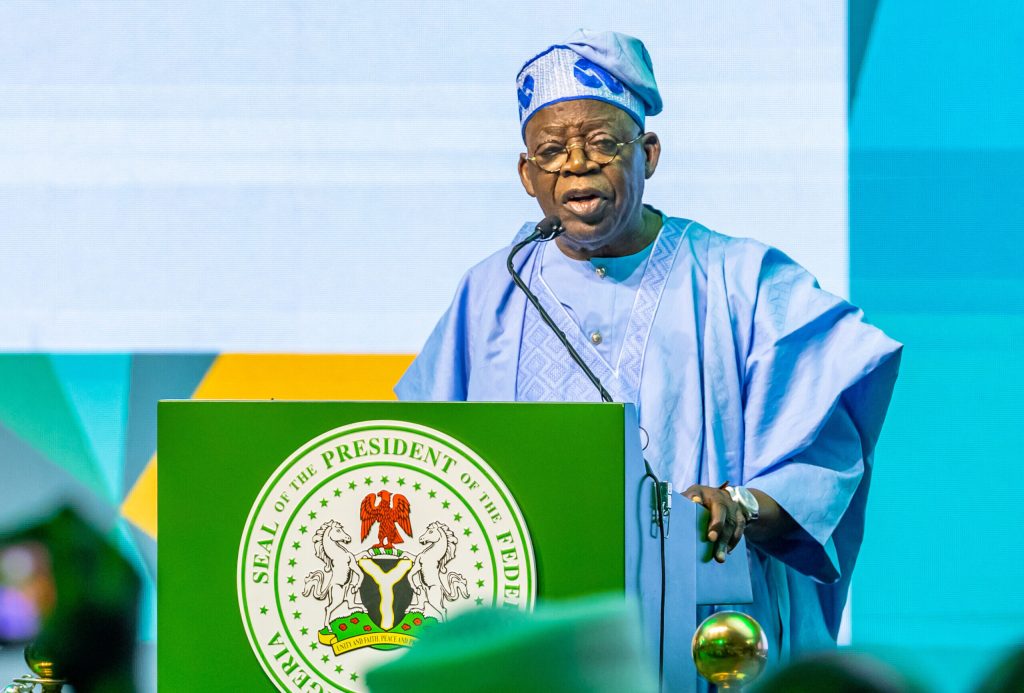
By Johnbosco Agbakwuru ABUJA — President Bola Tinubu said yesterday that his administration is rewriting Nigeria’s decades-long story of economic under-performance through far-reaching reforms designed to dismantle structural barriers, unlock the nation’s enormous potential and deliver jobs, productivity and shared prosperity. Speaking when he formally declared open the 32nd Nigerian Economic Summit Group, NESG, in Abuja yesterday, President Tinubu, who was represented by Vice President Kashim Shettima, noted that his administration began on a difficult note because there was no shortcut to…
By Johnbosco Agbakwuru ABUJA — President Bola Tinubu said yesterday that his administration is rewriting Nigeria’s decades-long story of economic under-performance through far-reaching reforms designed to dismantle structural barriers, unlock the nation’s enormous potential and deliver jobs, productivity and shared prosperity. He also said the administration is currently undertaking what it came into office to achieve — rewriting the story of a nation that had performed below its potential for far too long.
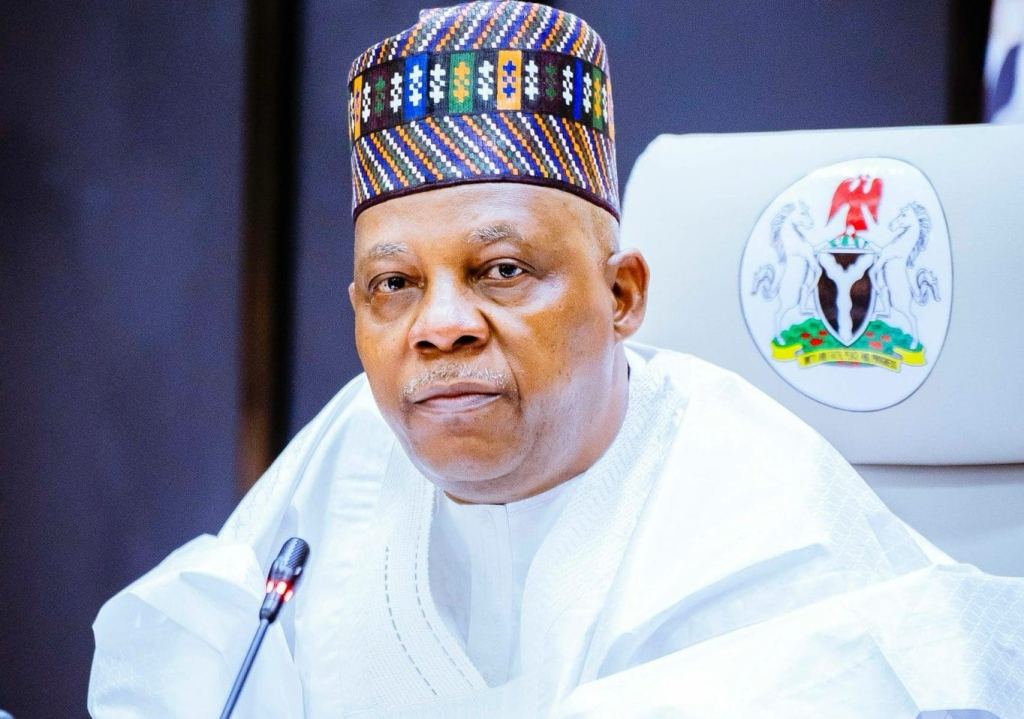
Speaking when he formally declared open the 32nd Nigerian Economic Summit Group, NESG, in Abuja yesterday, President Tinubu, who was represented by Vice President Kashim Shettima, noted that his administration began on a difficult note because there was no shortcut to economic growth. “We came to rewrite the story of a nation that has performed below its potential for far too long.
But there is no shortcut to economic growth. This is why we began with a difficult reset. For us, rescuing the economy means rescuing livelihoods and transforming the fortunes of young job seekers, farmers, manufacturers, entrepreneurs and innovators. “We cannot harness the immense opportunities offered by our growing population without first stabilising the economy.
We must also create the conditions for the public and private sectors to invest, expand and generate productive employment,” he explained. Tinubu observed that the summit’s theme, “Growth That Works: Delivering Jobs, Productivity and Shared Prosperity,” was built on the ambition of the previous edition of the annual event to achieve a prosperous and inclusive Nigeria by 2030.
He noted that his administration had “since set in motion a series of reforms to dismantle the structural barriers that have prevented our abundant human and natural resources from yielding prosperity. “These reforms are restoring confidence, strengthening our economic foundations and laying the groundwork for sustainable growth.” The President noted that the administration was encouraged by what it had accomplished so far, acknowledging that creating jobs was only half the task. ‘Need to improve quality of work’ While noting there is need to improve the quality of work, reduce underemployment and harness the potential of the country’s under-utilised workforce, Tinubu said: “Our pursuit of prosperity demands greater productivity from every worker, enterprise and investment.
We must judge infrastructure by the economic activity it generates and education by the skills and productivity it delivers. “We must judge industrial policy by the competitiveness of our firms and investment incentives by the capital, technology, exports and jobs they attract.” The President outlined what he described as the achievements of his administration’s reforms, saying they had been well-documented.
He cited figures from the National Bureau of Statistics, NBS, indicating that Nigeria’s inflation-adjusted GDP grew by 3.89% in the first quarter of 2026, compared with 3.13% a year earlier. On economic diversification, he stated that “non-oil activities accounted for 96.08% of GDP, while manufacturing grew by 3.29% and the oil sector by 2.57%,” emphasising that the gains had reinforced his administration’s confidence in the path of recovery and diversification.
President Tinubu stated, however, that his administration’s ambition must go beyond favourable statistics, even as the development narrative is changing and investor confidence is returning. Outlining his administration’s gains so far, the President said: “In the first quarter of 2026, our capital importation reached $10.37 billion, an increase of 83.83% over the corresponding period in 2025.
“This comprised both portfolio and foreign direct investment. We will, therefore, continue to ease regulatory burdens, strengthen transparency and policy predictability and expand access to finance. “Our tax reforms seek to build a modern, equitable system that finances development and gives businesses certainty. This discipline must guide our investments in all sectors of the economy, including energy, agriculture and solid minerals.
“We are reforming the electricity market to improve supply and attract investment in generation, transmission, distribution and alternative energy.” On agriculture, the President said the administration is connecting farms to storage facilities, processing centres and markets, while expanding irrigation, mechanisation, finance and rural infrastructure.
He added that government is also seeking to move beyond extraction into domestic processing, industrial production and exports in the solid minerals sector. He, however, noted that despite the gains of his administration’s economic reforms, the task remains far from finished, even as young Nigerians have demonstrated their capacity to compete globally in technology, financial services and the creative industries.
Consolidate, stabilise, Amina Mohammed urges govt On her part, the United Nations
- tinubu
- administration
- nigeria
- story
- president
- reform
- nesg
- potential