State Police: Presidency seeks private sector support for funding, blueprint
By Johnbosco Agbakwuru ABUJA—THE Presidency has challenged Nigeria’s organised private sector to develop a comprehensive financing and implementation blueprint for the proposed state police system, saying that businesses must take an active role in building the security institutions required to protect investments, create jobs and strengthen economic resilience. Chief of Staff to the President and Chairman of the Presidential Working Group on the National Policing Bill, Mr. Femi Gbajabiamila, who made the challenge, tasked the Nigerian Economic Summit Group, NESG, chambers of commerce and…
By Johnbosco Agbakwuru ABUJA—THE Presidency has challenged Nigeria’s organised private sector to develop a comprehensive financing and implementation blueprint for the proposed state police system, saying that businesses must take an active role in building the security institutions required to protect investments, create jobs and strengthen economic resilience.
Chief of Staff to the President and Chairman of the Presidential Working Group on the National Policing Bill, Mr. Femi Gbajabiamila, who made the challenge, tasked the Nigerian Economic Summit Group, NESG, chambers of commerce and business associations with producing practical proposals for financing, institutional management and accountable partnerships to support the decentralisation of policing.
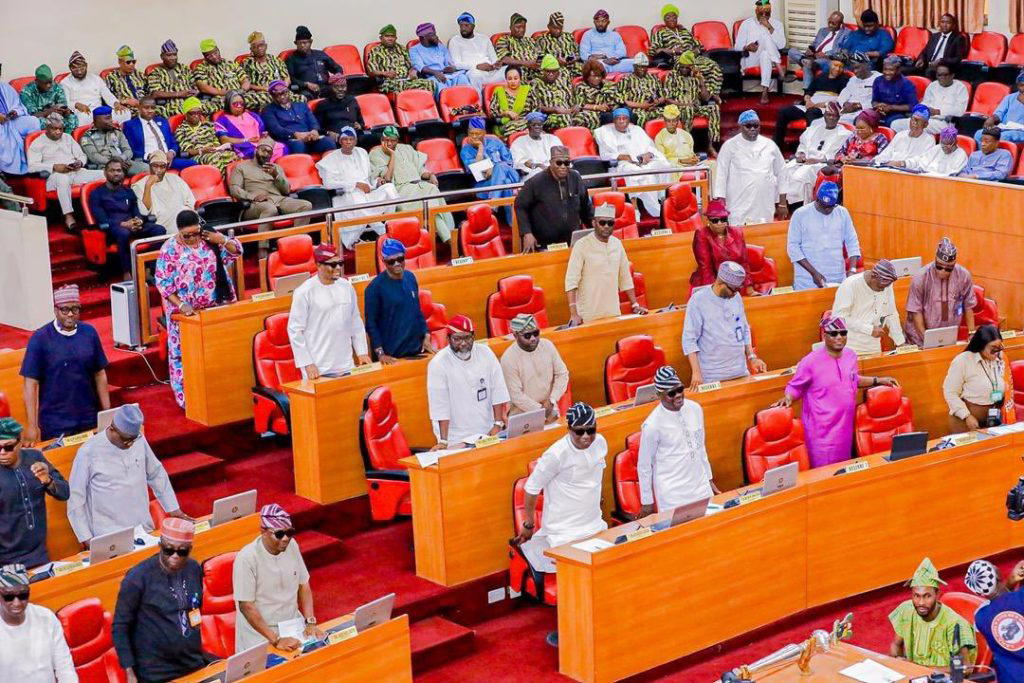
Speaking during a plenary session on “Security, Stability and Economic Resilience” at the 32nd Nigerian Economic Summit, in Abuja, on Monday, Gbajabiamila said President Bola Tinubu’s commitment to establishing state police presented an opportunity for businesses to contribute directly to the development of security institutions capable of supporting sustainable economic growth.
According to him: “I, therefore, ask the Nigerian Economic Summit Group to carry this engagement beyond our meeting. Bring forward a considered private sector contribution on financing and implementing state police, with practical proposals for accountable partnerships. ”Take that work into the legislative process and into your engagement with state governments.
For our part, we remain answerable for turning reform into protection that people can rely on,” he said. Gbajabiamila urged business leaders to engage governors and legislators on the proposed reform, drawing attention to the relationship between effective local policing, employment generation and investment decisions. ”Your participation should also improve the substance of the reform.
As the legislative process proceeds, examine the proposals for financing and oversight. Bring your experience of managing institutions and controlling expenditure to that discussion. Help us understand the security failures that prevent viable projects from proceeding,” he stated. He, however cautioned that private sector involvement must be transparent and should never compromise the independence of police institutions. ”Where businesses provide resources, those contributions need published accounts and independent scrutiny. ”Public funding must remain dependable, and a donation must never purchase influence over an investigation or preferential treatment.
The object is to strengthen a public service on which every citizen can rely,” he warned. He said providing vehicles, uniforms and other equipment at the commencement of operations would be insufficient without sustainable arrangements for personnel salaries, professional training and operational maintenance. ”Financial readiness is equally important.
A state taking on policing must be able to sustain the service after the initial purchase of vehicles and uniforms. ”Regular pay and continued training are essential to professional conduct. An institution that cannot meet its obligations to its officers becomes vulnerable to private patrons and unlawful demands on the public,” he cautioned. He assured that federal policing would continue in states not yet financially or institutionally prepared to establish their own police services. Providing an update on the legislative process, Gbajabiamila confirmed that 24 State Houses of Assembly had approved the constitutional amendment providing for state police as of October 23, meeting the required two-thirds threshold. He disclosed that the Presidential Working Group had submitted the draft National Policing Bill and 29 consequential amendment bills to the Federal Ministry of Justice on October 19 for legislative review.
The United States Mission in Nigeria has announced a major breakthrough in the fight against transnational cybercrime, with the Federal Bureau of Investigation, FBI, arresting nine suspects in Nigeria in an operation targeting scam centres stealing billions of dollars from Americans. FBI Director, Kash Patel, disclosed this in a post on X which was reposted by the US Mission in Nigeria, saying the operation, code-named Operation Blackout, is taking the fight directly to international cybercriminal networks.
According to Patel, the Nigeria operation delivered nine arrests, seizure of 53 electronic devices and identification of $11 million in potentially freezable funds across multiple countries. “Operation Blackout is taking the fight directly to the international cybercriminal networks stealing billions from Americans,” Patel said. “These scam centers exploit innocent victims, steal life savings, and operate across international borders believing they are beyond the reach of law enforcement.
They’re wrong,” he stated. He commended Nigerian law enforcement and partners in London for their cooperation. “Thanks to Niger
- state
- police
- sector
- policing
- business
- institution
- presidency
- funding