Manufacturers raise alarm over N1.35trn alternative power costs, 18,935 job losses
Urge FG to cut energy, financing costs lAcknowledge govt’s import-duty, value-added tax relief on 875 pharmaceutical raw materials By Victor Ahiuma-Young & Omotola Aremo LAGOS — Manufacturers under the aegis of Chemical and Non-Metallic Products Employers Federation, CANMPEF, said yesterday they were facing mounting pressure from soaring energy costs, expensive credit, weak consumer demand and job losses, despite improvements in the country’s key macro-economic indicators in 2025. President of CANMPEF and Vice President of the Dangote Group, Chief Devakumar Edwin, who raised the alarm at the…
*Say growth crawls at 1.41%, despite broader economic recovery *Urge FG to cut energy, financing costs lAcknowledge govt’s import-duty, value-added tax relief on 875 pharmaceutical raw materials By Victor Ahiuma-Young & Omotola Aremo LAGOS — Manufacturers under the aegis of Chemical and Non-Metallic Products Employers Federation, CANMPEF, said yesterday they were facing mounting pressure from soaring energy costs, expensive credit, weak consumer demand and job losses, despite improvements in the country’s key macro-economic indicators in 2025.
The federation also raised alarm over the worsening cost of doing business, citing an estimated N1.35 trillion spent by local manufacturers on alternative power in 2025, alongside the loss of 18,935 manufacturing jobs in the first half of the year. President of CANMPEF and Vice President of the Dangote Group, Chief Devakumar Edwin, who raised the alarm at the Federation’s 46th Annual General Meeting, AGM, in Lagos, called on the Federal Government to urgently address the high cost of energy and financing, harmonise taxes and levies and strengthen support for local production.
He said: “Nigeria’s economy grew by 3.87 per cent in 2025, up from 3.38 per cent in 2024, while headline inflation declined and the foreign exchange market became more stable. However, these improvements have yet to translate into meaningful gains for manufacturers. “Manufacturing grew by only 1.41 per cent in 2025, compared with 1.20 per cent in 2024, while its contribution to real Gross Domestic Product fell to 8.05 per cent from 8.24 per cent.’’ Edwin described the situation as a major concern for the industrial sector, stressing that macro-economic stability must translate into stronger industrial output, job creation and export growth.
“Our central message is that this stability must now translate into competitiveness in the form of sustainable jobs, increased output and exports. ‘’Although the economic reforms introduced from mid-2023 had delivered measurable improvements in inflation, foreign exchange stability and economic growth, manufacturers continue to grapple with high operating costs that undermined production and investment.
Most of these gains have yet to reach the factory floor,” the CANMPEF president stated. ‘Electricity supply is major constraint’ He identified electricity supply as one of the most significant constraints confronting manufacturers, particularly producers of chemicals, plastics, rubber, glass, ceramics and other non-metallic mineral products, many of which depended on energy-intensive production processes.
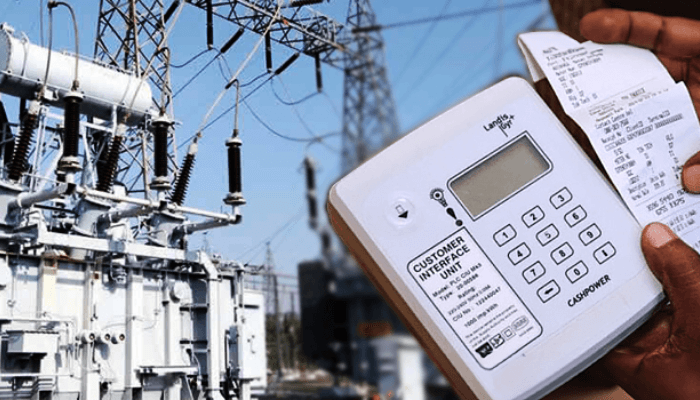
“Despite installed grid capacity exceeding 13,000 megawatts, average delivered generation remained below 5,000MW, against estimated demand of about 18,345MW. The shortfall, attributed to gas-supply constraints, transmission bottlenecks and recurring grid collapses, has forced many manufacturers to depend on alternative power sources at considerable expense,’’ Edwin said.
Citing figures from the Manufacturers Association of Nigeria, MAN, he disclosed that local manufacturers spent an estimated N1.35 trillion on alternative power in 2025, representing a 23 per cent increase over the previous year. He said the situation was particularly challenging for producers of glass, ceramics, lime and other non-metallic minerals, which operations depended on energy-intensive kilns and furnaces, urging“the government to prioritise gas supply to industries, settle outstanding debts in the power sector to support electricity generation, establish a predictable electricity tariff framework and encourage captive and embedded power generation, including renewable energy solutions for industrial clusters.
He also expressed concerns over the high cost of borrowing, noting that manufacturers continue to face lending rates that made long-term investments in production equipment and plant expansion difficult. He called for sustained monetary easing and expanded access to affordable, long-tenor financing, particularly for small and medium-sized manufacturers.
Beyond energy and financing, Edwin highlighted the impact of weak consumer purchasing power on demand for locally manufactured products. Although headline inflation declined from 24.48 per cent in January to 15.15 per cent in December 2025 on the National Bureau of Statistics’ rebased series, the Federation said household purchasing power had yet to recover fully from the effects of the 2023 currency devaluation.
According to MAN figures cited by Edwin, manufacturers lost 18,935 jobs in the first half of 2025, compared with 10,891 jobs in the corresponding period a year earlier. “Although capacity utilisation improved to 61.3 per cent in the first half of 2025 from 57.6 per cent in the second half of 2024, job losses underscored the fragile nature of the sector’s recovery,’’ it said.
CANMPEF further identified multiple taxes, levies and regulatory charges as additional burdens on businesses, warning that overlapping mandates and f
- power
- job
- manufacturer
- cent
- alarm
- cost
- energy
- production