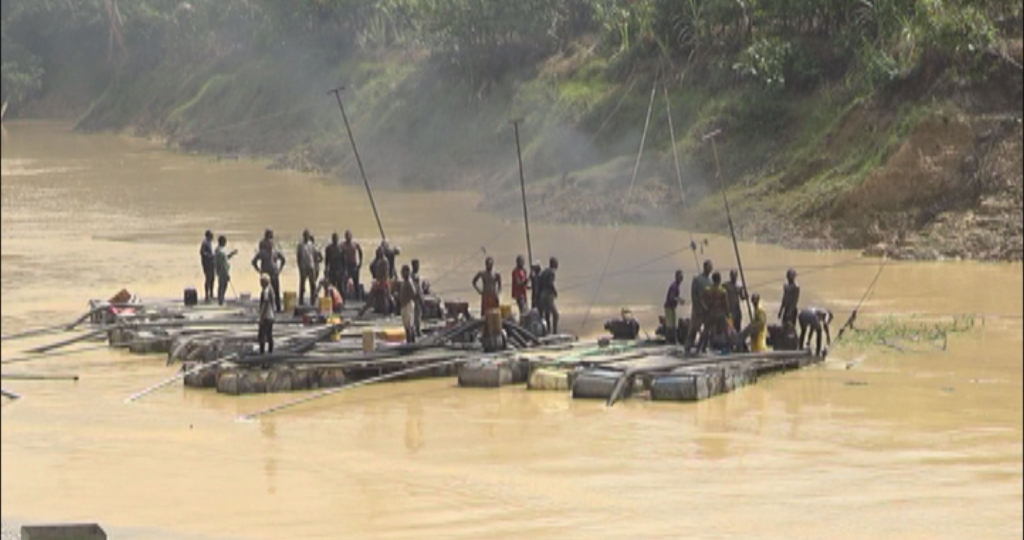
Time for lamentation is over; declare a targeted state of emergency over galamey – Awula Serwah

Executive Director of Eco-Conscious Citizens, Awula Serwah, has called on the government to declare a targeted state of emergency in areas affected by illegal mining, popularly known as galamsey, to protect the country’s water bodies, farmlands and forest reserves. Ms Serwah expressed disappointment with what she described as the public’s inadequate response to the destruction caused by illegal mining.
Executive Director of Eco-Conscious Citizens, Awula Serwah, has called on the government to declare a targeted state of emergency in areas affected by illegal mining, popularly known as galamsey, to protect the country’s water bodies, farmlands and forest reserves.
She said the government must move beyond expressing concern about the destruction caused by illegal mining and take decisive action to remove miners from affected areas, deploy response teams to prevent their return and involve local communities in efforts to protect the environment.
Speaking in an interview on Joy FM’s Super Morning Show on Thursday, October 29, during a discussion on the fight against galamsey, Ms Serwah said the time had come for the government to act rather than continue lamenting the scale of the problem.
“The time for lamentations is over. Let's stop this illegal mining. Declare a targeted state of emergency,” she said.
She called for the immediate removal of illegal miners from water bodies, farmlands and forest reserves, followed by the deployment of response teams to affected areas to ensure that the operations do not resume.
“Go in there, remove them, remove them from our water bodies, from our farmland, from our forest reserves. And then let's station response teams close by. And then get the communities involved,” she added.
Ms Serwah expressed disappointment with what she described as the public’s inadequate response to the destruction caused by illegal mining.
She said Ghanaians must demand greater accountability from political leaders and put stronger pressure on the authorities to end the practice.
“Ghanaians are being taken for a ride, and I'm sad to say that, you know, we deserve the rulers we have. We are not angry enough,” she said.
“But when I say angry, I don't advocate violence. It's counterproductive, and it's not anything I'll ever advocate,” she said.
Ms Serwah said that citizens had not shown enough willingness to organise even peaceful protests to challenge the continued destruction of the environment.
“We are not angry enough even to do a sit-down demonstration to say that you cannot continue poisoning us. Stop this illegal mining,” she said.
She warned that the continued pollution of water bodies and destruction of land posed a threat to the health and livelihoods of people across the country.
She also challenged the argument that illegal mining should be tolerated because it provides jobs and livelihoods for people.
She said the financial returns associated with galamsey had made the activity attractive to some people, but said that this should not be used to justify the environmental damage it causes.
“And let's stop this idea of livelihood. It's more greed,” she said.
According to Ms Serwah, the money people believe they can make from illegal mining is often greater than what they would earn from conventional employment, making the activity more attractive despite its consequences.
“Because you see, when you have a job nine to five, you're not going to earn the kind of money you believe you'll earn from illegal mining. So it's not a question of livelihood,” she said.
She warned that the focus on illegal miners often overlooked the many farmers whose livelihoods were threatened by the destruction of agricultural land.
Ms Serwah said more than 2.5 million peasant farmers were at risk of losing their livelihoods because of illegal mining activities.
“In fact, over 2.5 million peasant farmers are at risk of losing their livelihoods because of the activities of the environmental terrorists,” she said.
She pointed to the destruction of shea butter plantations, oil palm farms and cocoa farms, arguing that the impact of galamsey extended far beyond the mining communities themselves.
“We don't think about them, the peasant farmers, the persons who have planted shea butter plantations which are being destroyed, palm oil plantations, cocoa farmers. All we think about is the mining,” she said.
Ms Serwah further questioned the commitment of the authorities to ending galamsey, arguing that the government must demonstrate a willingness to hold those responsible for the practice accountable.
She said the identities of people allegedly involved in illegal mining had been made public in a report and noted that the President had acknowledged the possibility that some members of his own political camp were involved.
“And we know who they are. They were named in the report. And that administration, His Excellency the President has said that some of his own people might be involved,” she said.
The environmental campaigner also cited the case of the Atruinso community as an example of what she believes is a failure to protect people who stand up against illegal mining.
According to her, activists who were trying to protect a local stream were arrested and prosecuted, while the miners they were opposing were allowed to go free.
“The Atruinso community, what did we do? We chose to arrest and prosecute the activists on trumped-up charges and allow the miners to go free. The activists were trying to protect the stream,” she said.
Ms Serwah said it took two years for the charges against the activists to be dropped, a situation she described as evidence of the country's failure to treat the fight against galamsey with the seriousness it deserves.
“It took us two years to have the charges dropped. So we are not very serious, and we don't seem to understand that we are being poisoned,” she said.
Ms Serwah warned that the effects of galamsey went beyond visible damage to rivers and forests, arguing that the destruction of the environment also threatened food security and public health.
She said consumers could be exposed to risks because they might not know where their food came from or the conditions under which it was produced.
“I'm not being dramatic. When we eat, we don't know where the food is coming from. Our environment is being destroyed. Our forest reserves are being desolated,” she said.
- serwah
- mining
- livelihood
- time
- state
- emergency
- destruction
- lamentation