Opening the EU debate again is clearly a political minefield. But we have to do it

Opening the EU debate again is clearly a political minefield. Andy Burnham must tread cautiously, but Brexit was a very grave act of self-harm – and he is right to address it Andy Burnham’s opening debate on whether Britain should rejoin the EU is divisive, painful and politically risky.
Andy Burnham must tread cautiously, but Brexit was a very grave act of self-harm – and he is right to address it
Andy Burnham’s opening debate on whether Britain should rejoin the EU is divisive, painful and politically risky. That is why it should be welcomed. To jeopardise his popularity so soon after coming to office might seem reckless, but the issue is urgent and not going away. Brexit is continuing to damage the nation’s economy. The prime minister’s job is to challenge, if not reform it.
The Brexit decade has evoked a bizarre sense of guilt among Britons. Opinion polls show nearly 60% regard it as a mistake, with just a third still in favour. Almost a quarter of those who voted for Brexit now regret it. While early forecasts of economic disaster were proved wrong, the accumulated cost of cutting links with Britain’s biggest trading partner is estimated at 6-8% of GDP.
This is huge. It must rank as the greatest act of self-harm by a British government in modern times.
A year ago Keir Starmer began to ease some of the barriers, with modest deals on youth exchange and meat exports. Burnham wants to take this further, with negotiations resuming in Brussels next month. Yesterday in the Commons he cited damage to the car industry, while agriculture remains mired in dozens of pages of regulation. Fish rots in inspection sheds, and cars and passengers queue for hours at borders.
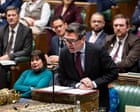
Yet if something must be done, the question remains: what? Burnham emphasises that he would not renege on Labour’s 2024 election pledge to honour the referendum in this parliament. But he certainly wants a revival of the debate and has a personal hope to see Brexit reversed one day. For now he seeks “an honest discussion … an open conversation” on where future negotiations might lead. He murmured the possibility of free movement of people for EU passport holders. The subject’s delicacy was demonstrated as Westminster Brexiters reacted like scalded cats. “Betrayal … catastrophe”, cried Reform UK’s Nigel Farage.
A reason for Burnham to proceed cautiously is that the public’s regret over Brexit is not matched by agreement on what should take its place. While 55% of all Britons would support rejoining the EU, that falls to 35% if the condition is surrendering the UK’s previous opt-outs – which would mean joining the euro and participating in the Schengen passport-free travel zone.
There could be a middle-ground Brexit model, including a bespoke place for Britain within a wider European economic area. But this in turn might be unacceptable to some existing EU countries. An alternative could include membership of the European Free Trade Association or a customs union.
The truth is Britain has always been ambivalent in its attitude to European unions. Ireland and Denmark had in the past reversed anti-EU referendums by negotiating opt-outs with Brussels. David Cameron attempted no such remedy in 2016. He simply resigned.
During the post-referendum Commons debates it was clear that many MPs would have favoured a “soft Brexit” option, its form as yet unclear. A responsible parliament at the time might have formed a coalition to pursue such an option. As it was, Jeremy Corbyn’s Labour party preferred to exploit Theresa May’s internal divisions and leave the way open for Boris Johnson and his “hard Brexiters”. Manning Westminster’s party barricades took precedence over seeking a sensible compromise with Brussels.
Burnham must therefore tread with care. Westminster’s political culture slithers instinctively into conflict mode without thought for the message that this sends to the outside world. Plenty of Europeans remain sceptical of whether Britain truly wants to rejoin the EU, and will resist any demand for extensive opt-outs or concessions. But that is for another day. For now, Labour is committed to honour its referendum manifesto promise.
Burnham is right to open the conversation. But he must first detoxify Brexit and diminish its prominence – and that of the party whose existence depends on it, Reform. For the time being, as there is no question of rejoining the EU, there is no issue of British sovereignty. The negotiations should be boring, over regulations, conventions and protocols. These would inevitably involve compromise – but compromise that ensures both parties come away with something gained.
One solution would be to do what was not done after 2016: establish a strong cross-party Commons committee to monitor the November talks and take Burnham’s conversation forward. This should concentrate on reducing barriers to trade and growth, and promoting cultural and security relations with Europe. To put it mildly, Europe needs such concentration, and badly. On that, surely Westminster can agree.
- debate
- brexit
- minefield
- andy
- burnham
- opening
- britain
- act