UNICEF commends Taraba over education reforms
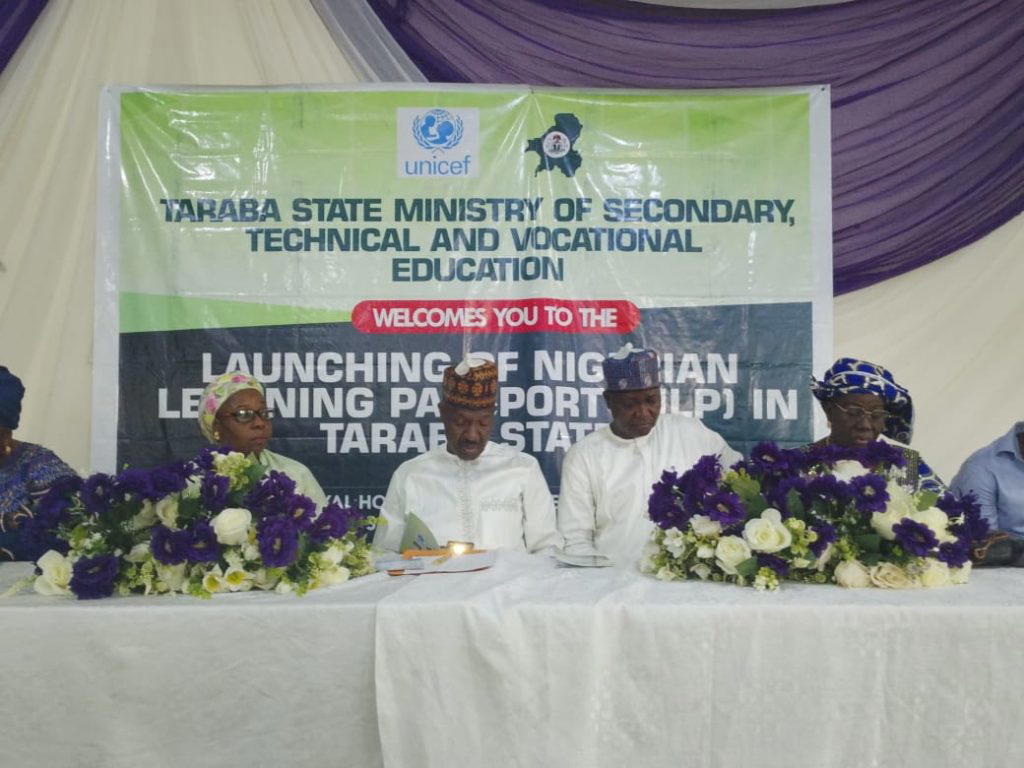
… As state launches Learning Passport in 50 pilot schools By Femi Bolaji JALINGO — The United Nations Children’s Fund (UNICEF) has commended the Taraba State Government for its education reforms, particularly the introduction of free and compulsory basic and secondary education, abolition of illegal school fees and distribution of free learning materials. The commendation was given by UNICEF Chief of Field Office, Bauchi, Dr Nuzhat Rafique, during the official launch of the Nigeria Learning Passport (NLP) in Jalingo.
… As state launches Learning Passport in 50 pilot schools By Femi Bolaji JALINGO — The United Nations Children’s Fund (UNICEF) has commended the Taraba State Government for its education reforms, particularly the introduction of free and compulsory basic and secondary education, abolition of illegal school fees and distribution of free learning materials.
The commendation was given by UNICEF Chief of Field Office, Bauchi, Dr Nuzhat Rafique, during the official launch of the Nigeria Learning Passport (NLP) in Jalingo. Rafique, who was represented by the Education Officer, UNICEF Bauchi Field Office, Raphael Aiyedipe, said the state’s education policies had contributed to an increase in school enrolment from approximately 760,000 to more than one million pupils since the inception of the current administration.
She also applauded the government for promoting inclusive education for children with special needs, while strengthening teacher recruitment and professional development. According to her, the rollout of the digital learning platform was made possible through partnerships with Microsoft, the Global Partnership for Education (GPE), Airtel, IHS Towers and TECNO.
She explained that the programme was designed to address connectivity barriers, reduce the number of out-of-school children and ensure continuity of learning, particularly in vulnerable communities. In his address, Governor Agbu Kefas reaffirmed his administration’s commitment to making education accessible to every child in the state, describing it as a cornerstone of sustainable development and national progress.
Kefas, who was represented by the Head of Service, Dr Hamidu Kara, said the Nigeria Learning Passport represented a major step towards ensuring that no child was left behind in the state’s educational development. “The Nigerian Learning Passport represents a bold step forward in our commitment to ensure that no child is left behind in their educational journey, especially in these challenging times,” he said.
He explained that the digital platform would provide flexible, accessible and inclusive learning opportunities, particularly for children affected by crises or disruptions to conventional schooling. The governor added that the initiative aligned with his administration’s free education agenda and urged stakeholders, teachers and students to embrace and promote the platform.
Also speaking, the Commissioner for Secondary, Technical and Vocational Education, Dr Augustina Godwin, announced that the pilot phase of the programme would commence in 50 schools across the state. She assured that the government would expand the initiative to more schools to enable additional students to benefit from the digital learning platform.
- education
- learning
- unicef
- state
- school
- child
- taraba
- passport