education

Allowing children to write BECE early defeats 9-year basic education policy – Nortsu-Kotoe

Allowing children to write BECE early defeats 9-year basic education policy – Nortsu-Kotoe

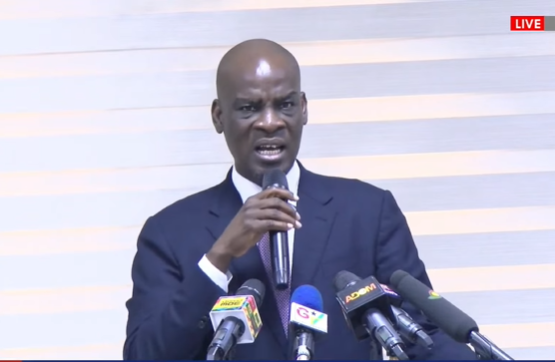
Chairman of Parliament’s Education Committee, Peter Kwasi Nortsu-Kotoe, has defended the requirement for candidates to complete nine years of basic education before writing the Basic Education Certificate Examination (BECE), arguing that allowing pupils to sit the examination earlier undermines the country’s education policy. Speaking on Joy FM’s Top Story on Monday, Mr Nortsu-Kotoe said allowing children to write the BECE after spending fewer years in basic school could defeat the purpose of the nine-year basic education structure.

Chairman of Parliament’s Education Committee, Peter Kwasi Nortsu-Kotoe, has defended the requirement for candidates to complete nine years of basic education before writing the Basic Education Certificate Examination (BECE), arguing that allowing pupils to sit the examination earlier undermines the country’s education policy.

He said the policy introduced under the 1987 education reforms requires pupils to complete six years of primary education and three years of junior high school before progressing to senior high school or technical education.

Speaking on Joy FM’s Top Story on Monday, Mr Nortsu-Kotoe said allowing children to write the BECE after spending fewer years in basic school could defeat the purpose of the nine-year basic education structure.

“The policy is that you do six years in primary school, do three years in junior high school before you continue to senior high school or technical. If we allow everybody to be doing so, I don't think it will help the people, and the policy will be defeated,” he said.

He acknowledged that some children may be academically advanced and capable of passing the BECE at a younger age but maintained that academic ability should not be used to bypass the prescribed period of basic education.

According to him, permitting such exceptions could encourage schools and parents to disregard the established education structure.

Mr Nortsu-Kotoe also dismissed concerns that the restriction could prevent exceptionally gifted children from achieving their potential, arguing that all pupils should receive the education prescribed at the basic level.

He was responding to questions about the government's position on exceptionally gifted children writing the BECE ahead of schedule, and whether restricting the practice could deny some pupils the opportunity to progress earlier following the education minister's announcement of a two-year ban on pupils in JHS 1 and JHS 2 who attempt to write the BECE before completing the required period.

  • education
  • bece
  • policy
  • school
  • child
  • pupil
  • nortsu
  • kotoe

Summaries and tags are generated automatically. Stay informed with VidiaNews.

Related news

Gifted children should not be punished for advancing faster – Offinso North MP
education

Gifted children should not be punished for advancing faster – Offinso North MP

Member of Parliament for Offinso North and member of Parliament’s Education Committee, Fred Kyei Asamoah, has challenged the government to provide evidence to justify its decision to prevent exceptionally gifted children from writing the Basic Education Certificate Examination (BECE) ahead of schedule. He questioned the basis for the government’s position, insisting that the Education Ministry should present data showing that early BECE candidates have performed poorly or that their progression has negatively affected the education system.

Read →
BECE directive must make room for exceptionally talented pupils – NCPTA
education

BECE directive must make room for exceptionally talented pupils – NCPTA

The National Council of Parent-Teacher Associations (NCPTA) has called on education authorities to make room for exceptionally gifted pupils under the directive restricting students from writing the Basic Education Certificate Examination (BECE) ahead of the prescribed school progression. The General Secretary of the NCPTA, Raphael Kofi Gapson, says while the directive is necessary to prevent parents and schools from deliberately pushing children into examinations before they are adequately prepared, exceptions should be made for pupils who demonstrate exceptional academic ability.

Read →
Early BECE candidates to face two-year examination ban – Education Minister
education

Early BECE candidates to face two-year examination ban – Education Minister

The Minister for Education, Haruna Iddrisu, has directed the Ghana Education Service (GES) to impose a two-year examination ban on pupils who attempt to sit the Basic Education Certificate Examination (BECE) before their designated examination year. Mr Iddrisu issued the instruction at the launch of the 2026 National Education Week, held at the Ghana Tertiary Education Commission (GTEC), where he outlined measures intended to strengthen discipline, improve educational administration and promote fairness within the country’s basic education system.

Read →
Regular JHS pupils must complete three years before BECE – WAEC
education

Regular JHS pupils must complete three years before BECE – WAEC

Regular Junior High School (JHS) pupils must complete all three years of the programme before sitting the Basic Education Certificate Examination (BECE), the West African Examinations Council (WAEC) has reiterated. In April 2026, Education Minister Haruna Iddrisu announced plans to restrict the examination to students in JHS 3, arguing that allowing younger students to sit the examination contravened existing GES and WAEC guidelines.

Read →
Education Minister warns AI could breed lazy learners, calls for digital education policy
education

Education Minister warns AI could breed lazy learners, calls for digital education policy

The Minister for Education, Haruna Iddrisu, has cautioned against the misuse of artificial intelligence (AI) in schools, warning that excessive dependence on the technology could encourage intellectual laziness among learners and undermine their ability to think independently. Addressing participants at the 2026 National Education Week and Evidence Summit in Accra, Mr Iddrisu said the government was committed to harnessing technology to improve educational outcomes, but would not support an approach that undermined the role of teachers in the classroom.

Read →