FG tasks education academy with digital skills revolution

…Jegede demands policy overhaul, AI integration, teacher training reform By Joseph Erunke, Abuja The Federal Government has designated the Nigerian Academy of Education (NAE) as the country’s apex national institution for digital literacy and leadership development, as part of efforts to align the education system with emerging technologies and future workforce demands. The President of the Academy, Emeritus Professor Olugbemiro Jegede, disclosed the new national mandate at the opening of the NAE 2026 Annual Congress in Abuja, where he urged the government to move beyond piecemeal reforms and…
…Jegede demands policy overhaul, AI integration, teacher training reform By Joseph Erunke, Abuja The Federal Government has designated the Nigerian Academy of Education (NAE) as the country’s apex national institution for digital literacy and leadership development, as part of efforts to align the education system with emerging technologies and future workforce demands.
However, the Academy has called for an urgent review of the National Policy on Education, a comprehensive overhaul of teacher education and professional development, and fundamental changes to classroom teaching and learning to achieve the objective. The President of the Academy, Emeritus Professor Olugbemiro Jegede, disclosed the new national mandate at the opening of the NAE 2026 Annual Congress in Abuja, where he urged the government to move beyond piecemeal reforms and address structural weaknesses in the education sector.
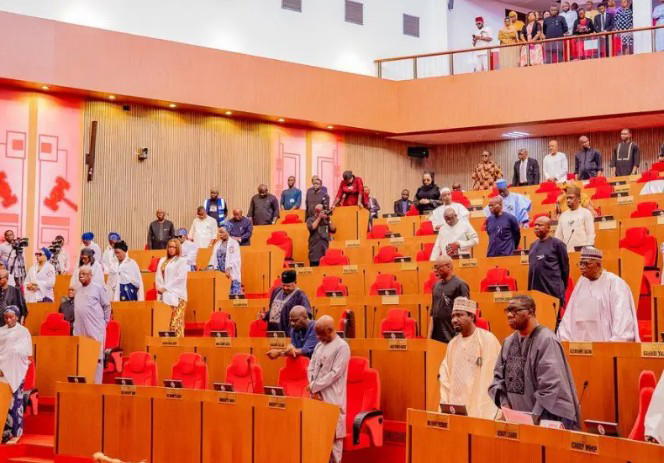
The congress was attended by the Minister of Education, members of the National and State Assemblies, heads of educational parastatals and other stakeholders. Under the new arrangement, the Academy is expected to spearhead the development of Nigeria’s national digital skills framework and provide intellectual leadership for policies aimed at preparing students and the future workforce for a technology-driven economy.
Its responsibilities will include promoting the integration of artificial intelligence (AI), emerging technologies, innovative teaching methods and evidence-based practices into education policies and classroom delivery. Speaking at the event, Jegede warned that Nigeria could not build a competitive economy on an education system still dependent on outdated teaching methods and policies that no longer reflect contemporary realities.
“Nigeria stands at a volatile crossroads where obsolete educational paradigms collide with an unforgiving 21st-century reality. The era of comfortable, incremental reforms is over,” he declared. Describing the Academy as the intellectual engine for Nigeria’s future-ready economy, Jegede said it would no longer restrict itself to issuing advisory recommendations while critical challenges confronting the education sector persisted.
“We are here to intentionally disrupt the archaic architectures holding our nation back,” he said. The NAE president identified a comprehensive review of the National Policy on Education as one of the most urgent measures required to reposition the sector, arguing that changes in technology, the economy and society had made a reassessment imperative.
He also urged the Federal Government to enforce existing laws and regulations governing the composition of governing boards of educational institutions and parastatals, stressing the need for institutional accountability and compliance with established standards. On teacher development, Jegede advocated a fundamental restructuring of teacher education and professional training to equip educators with the skills required to operate effectively in digital learning environments.
He said the transformation must extend beyond policy documents to actual classroom practices, calling for a comprehensive review of instructional methods to reflect contemporary educational demands. The Academy president also advocated policies guaranteeing equitable access to digital technologies in schools across the country. He warned against a situation in which students’ access to modern learning tools was determined by their geographical locations, stressing that learners in rural and underserved communities must not be excluded from the opportunities offered by emerging technologies.
According to him, achieving meaningful digital transformation would require coordinated action by the Federal Ministry of Education, state ministries of education, the legislature and other relevant institutions rather than isolated interventions by individual agencies. Jegede further challenged members of the Academy, particularly newly inducted Fellows, to deploy their academic expertise in addressing the country’s educational challenges.
“The Academy has no room for sedentary scholars or armchair theoreticians. Nigeria requires your raw intellect and your immediate, unyielding involvement to reshape our pedagogical destiny,” he said. He urged education experts to contribute actively to developing digital competencies, promoting emerging technologies and building an education system capable of producing graduates who can compete in the global labour market.
Jegede maintained that the Academy’s new mandate should be assessed not by the volume of policy recommendations it produces but by the measurable impact of its interventions on teaching, learning and national human-capital development. The 2026 Annual Congress also featured the investiture of four distinguished academics as Fellows of the Academy. Among those honoured was Professor Josiah Olusegun Ajiboye, the Academy’s First Vice-President, in recognition of his academic standing and contribu
- education
- academy
- policy
- jegede
- technology
- teacher
- national
- development