No job or academic qualification should come at the cost of anyone’s dignity – Jane Naana Opoku-Agyemang

Vice President Professor Jane Naana Opoku-Agyemang has condemned sexual exploitation in workplaces and educational institutions, insisting that no job or academic qualification should come at the cost of anyone’s dignity. In the education sector, Professor Opoku-Agyemang said the Ministry of Education and the Ghana Education Service had established procedures for reporting, investigating and sanctioning sexual harassment in schools.
Vice President Professor Jane Naana Opoku-Agyemang has condemned sexual exploitation in workplaces and educational institutions, insisting that no job or academic qualification should come at the cost of anyone’s dignity.
She said people in positions of authority must not exploit their influence over employment, promotion or academic progression to demand sexual favours from those under their supervision.
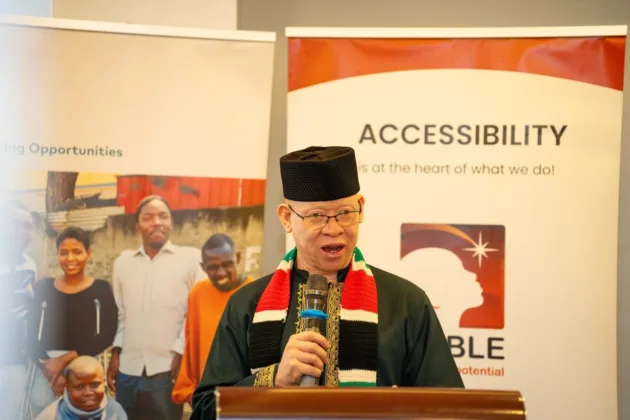
Addressing a Sex for Jobs Conference organised by the Ark Foundation, the Vice President described such practices as abuses of power that undermine individual dignity, erode confidence in institutions and deprive the country of the full potential of its people.
“No job or academic qualification should come at the price or the cost of anyone’s dignity, and no person entrusted with authority has the right to demand that dignity,” she stated.
Professor Opoku-Agyemang stressed that although the government had a responsibility to establish the necessary legal and policy frameworks to combat sexual harassment and exploitation, legislation alone would not be enough without effective implementation.
She noted that government officials could not be present in every workplace, classroom or interview room to monitor conduct, making it imperative for institutions to take responsibility for addressing misconduct.
“Policies can only go so far without implementation,” she cautioned, urging institutions to confront wrongdoing even when doing so might be inconvenient.
The Vice President outlined several government interventions to strengthen the prevention of and response to sexual harassment and gender-based violence.
She cited the launch of the revised National Gender Policy by the Ministry of Gender, Children and Social Protection, which provides for stronger institutional responses to gender-based violence.
She also highlighted the Ministry’s collaboration with the ECOWAS Gender Development Centre to train stakeholders in the judicial, health and social sectors to improve the prevention of and response to gender-based violence and sexual harassment.
Government, she added, had committed to establishing centres and shelters to support victims and survivors.
In the education sector, Professor Opoku-Agyemang said the Ministry of Education and the Ghana Education Service had established procedures for reporting, investigating and sanctioning sexual harassment in schools. National guidelines also provide a framework for tertiary institutions to develop and enforce their own policies.
However, she emphasised the need to move beyond policy commitments to ensure that victims and survivors could access justice.
She called for independent and confidential reporting channels, particularly in situations where individuals accused of misconduct wield considerable influence over the employment, promotion or academic prospects of complainants.
Such mechanisms, she said, must protect complainants from intimidation, threats, retaliation and the possible loss of opportunities.
She further called for complaints to be investigated promptly, fairly and thoroughly, with appropriate sanctions imposed on those found culpable.
Institutions, she said, must demonstrate leadership and accountability by putting in place properly resourced safeguards, taking complaints seriously and ensuring that survivors have access to the necessary support.
Professor Opoku-Agyemang said the responsibility for ending sexual harassment and exploitation extended beyond government to employers, educational institutions, public and private organisations, and citizens.
She urged stakeholders to work towards a society where practices such as “sex for jobs” and “sex for grades” were not accepted as unfortunate realities but recognised and confronted as serious abuses of power.
“Behind every account of sexual harassment or exploitation, there is a human being whose ambitions, confidence and sense of security may have been profoundly shaken,” she said.
She added that institutions owed victims and survivors a duty to take their complaints seriously, respect their dignity and privacy, and hold individuals who abused positions of authority accountable.
The Vice President expressed hope that the conference would renew stakeholders’ commitment to confronting exploitative practices and making workplaces and educational institutions safer for everyone.
She said every workplace, public institution and educational establishment must be a place where people could pursue their ambitions without fear of sexual harassment or exploitation.
- dignity
- job
- institution
- qualification
- cost
- harassment
- gender
- opoku